
Planting
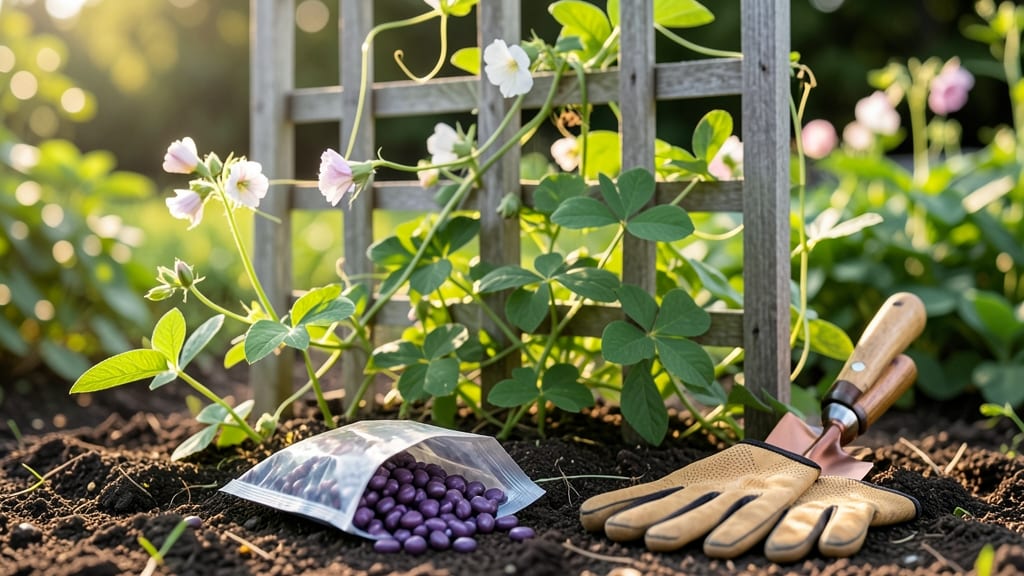
Planting purple hull peas for a 100-pound harvest starts with the right spacing math—because too few seeds leave you hungry, and too many crowd your vines into stunted, bitter pods.
Picture this: rows of 🌱 Purple Hull Peas climbing toward the sky, pods plump and sweet, ready to snap straight from the vine. That dream hinges on one critical decision: how many seeds to drop into the soil.
Get it wrong, and you’ll either waste space or watch your plants fight for every drop of water and nutrient.
Most gardeners guess, but the pros use a simple formula: 3-4 seeds per foot in rows spaced 18-24 inches apart. That’s the sweet spot for 6a zones like yours, where spring’s last frost lingers until mid-April.
For a 10-foot row, that’s about 30-40 seeds—enough to fill your basket without overcrowding.
Below, I’ll walk you through the exact spacing for your garden size, whether you’re tucking peas into a raised bed or stretching them across a full plot. You’ll also learn how to adjust for trellises, companion plants, and the one mistake that kills yields faster than drought.

Purple hull pea planting math: spacing for maximum yield
Purple hull peas thrive when given the right space to spread their vines and produce those prized sweet, tender pods. The key to a 100-pound harvest lies in precise spacing math—whether you're planting in rows, hills, or vertical trellises.
Too close, and your plants will compete for nutrients and sunlight. Too far apart, and you’ll waste precious garden real estate. Let’s crunch the numbers to get it right.
First, understand that purple hull peas need about 2-3 inches between seeds and 18-24 inches between rows for optimal airflow and sunlight penetration. This spacing ensures each plant gets enough room to develop a strong root system and vine structure, which directly impacts your yield per square foot.
For a 100-pound harvest, you’ll need to plan carefully based on your garden’s layout and growing conditions.
Here’s the breakdown: A single purple hull pea plant can produce about ½ to 1 pound of pods under ideal conditions. To hit that 100-pound target, you’ll need roughly 100-200 plants, depending on how aggressively they grow.
But spacing isn’t just about numbers—it’s about planting method and garden geometry. Let’s compare your options in the table below to see which setup works best for your space.
| Planting Method | Seeds per 100 sq ft | Rows per 100 sq ft | Yield Potential (lbs) | Best For |
|---|---|---|---|---|
| Flat Rows (18" apart) | 100-120 seeds | 5-6 rows | 50-75 lbs | Large plots, easy harvest |
| Hills (24" apart) | 60-80 seeds | 3-4 hills | 40-60 lbs | Small gardens, better drainage |
| Vertical Trellis (12" apart) | 150-180 seeds | 1-2 rows | 75-100 lbs | Small spaces, high yield |
| Container (5-gallon pot) | 4-6 seeds | N/A | 1-2 lbs | Balconies, patios |
If you’re aiming for that 100-pound harvest, the vertical trellis method is your best bet for maximizing yield in limited space. By planting 150-180 seeds per 100 square feet along a trellis, you create an ideal environment for vines to climb, reducing disease risk and increasing pod production.
Plus, vertical growing saves space—perfect for urban gardens or small backyards.
For flat-row planting, stick to 100-120 seeds per 100 sq ft with rows spaced 18-24 inches apart. This method is ideal for larger plots and makes harvesting easier since pods hang down for easy picking.
Just be sure to thin seedlings to the recommended spacing once they’re 2-3 inches tall to avoid overcrowding.
If you’re working with hills, plant 60-80 seeds per 100 sq ft in mounds spaced 24 inches apart. Hills improve drainage and make it easier to tend to plants, especially in heavy clay soils.
However, hills require more soil prep and may not yield as much as rows or trellises. Weigh your options based on your garden’s layout and soil type.
Don’t forget to consider companion planting to further boost your yield. Pairing purple hull peas with corn or cucumbers can improve growth by fixing nitrogen in the soil. Just avoid planting them near onions or garlic, as these can stunt pea growth.
Strategic companion planting can add an extra 10-15% to your harvest without extra effort.
Once your peas are in the ground, monitor their growth closely. If you notice yellowing leaves or stunted vines, it’s a sign of overcrowding or nutrient deficiency.
Thin out plants immediately to restore proper spacing. Regularly check for pests like pea aphids and treat with neem oil if needed—healthy plants produce more pods.
With the right spacing math and a little patience, you’ll be on your way to a bountiful purple hull pea harvest. Start small if you’re new to growing peas, and scale up as you gain confidence.
Before you know it, you’ll be sharing jars of sweet, homegrown peas with neighbors—or even selling them at a local farmers' market!
🌱
How to adjust planting quantities for different garden sizes
Not every gardener has a sprawling backyard, but that doesn’t mean you can’t grow a 100-pound harvest of purple hull peas. The key lies in adjusting your planting quantities based on your garden’s size—whether it’s a 5-gallon container, a 4x8-foot raised bed, or a half-acre plot.
Let’s crunch the numbers so you can scale your pea production without sacrificing plant health or space.
Start by understanding the seed-to-harvest ratio for purple hull peas. A single plant typically produces 1-2 pounds of peas under ideal conditions. To hit 100 pounds, you’ll need roughly 50-100 mature plants, depending on variety vigor and growing conditions.
But spacing is everything—crowded plants yield smaller pods and attract pests, while over-spaced plants waste garden real estate.
For small gardens, focus on vertical growth. Purple hull peas thrive on trellises, saving space while improving airflow. A 6-foot trellis can support 8-10 plants in a 2x2-foot area, boosting your yield per square foot.
Use bamboo stakes or wire cages to keep vines organized and reduce disease risk.
When scaling up, soil quality becomes critical. Amend your beds with compost or aged manure before planting to ensure nutrients are available. Purple hull peas are nitrogen-fixers, but they still benefit from a balanced fertilizer (5-10-10) at planting. Avoid over-fertilizing—too much nitrogen reduces pod production.
Pro tip: Interplant fast growers like lettuce or radishes between pea rows. Once the peas are harvested, the space is ready for summer crops. This succession planting strategy maximizes your garden’s productivity year-round.
Start small, track your yields, and adjust next season based on what works best for your space.
Remember, less is more when it comes to pea planting. Overcrowding leads to stunted growth and pest pressure, while proper spacing ensures healthy, high-yielding plants. With these calculations, you’ll be well on your way to a 100-pound harvest