
Planting
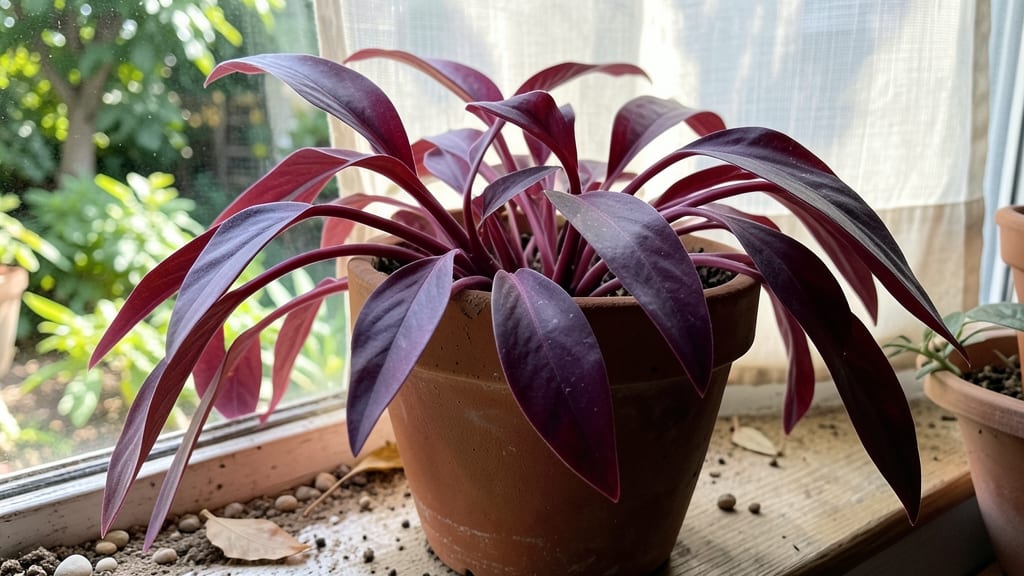
The purple heart plant thrives in USDA hardiness zones 9 through 11, requiring warm climates year-round to survive. It cannot tolerate frost and must be grown as an annual or overwintered indoors in cooler regions.
The purple heart plant, native to tropical regions of Central and South America, demands consistent warmth to flourish. 🌿 In its ideal zones, it naturally blooms year-round, but even a light frost will cause irreversible damage to its delicate foliage.
For gardeners outside these zones, understanding its exact temperature needs—between 60°F and 90°F—is key to replicating its native environment. The plant's vibrant foliage thrives on high humidity, which is often lacking in drier climates, making indoor cultivation or container gardening essential strategies for success.
This tropical beauty's sensitivity to cold stems from its evolutionary history—it evolved without seasonal temperature drops. Even brief exposure to 40°F or below can blacken its leaves permanently. That's why many gardeners in cooler regions treat it as a seasonal container plant, bringing it indoors before the first frost.
The good news? With proper care, you can enjoy its striking colors for multiple years, even if you're not in its native zone.
💡 In This Article
- Understanding Purple Heart Plant’s Temperature and Climate Needs
- How to Grow Purple Heart in Non-Native Zones
Understanding purple heart plant’s temperature and climate needs
The purple heart plant, scientifically known as Tradescantia pallida, originates from the tropical regions of Central and South America, where temperatures rarely drop below 60°F and rarely exceed 90°F. This plant has evolved in environments with consistently warm climates, making it highly sensitive to temperature fluctuations.
Its leaves contain a waxy coating that helps retain moisture, but this protective layer also makes it vulnerable to cold stress. When exposed to temperatures below 50°F, the plant's cellular membranes begin to rupture, leading to irreversible damage and leaf blackening.
Humidity plays a critical role in its survival, as the plant thrives in environments with 60-80% relative humidity. In its native habitat, the plant receives consistent moisture from the air, which is often lacking in drier climates like those found in zones 8 and below.
This is why purple heart plants often struggle in indoor settings with forced-air heating or air conditioning, which can dry out the leaves and cause them to curl or crisp at the edges. 🌿 The plant's roots also prefer well-draining soil that stays consistently moist but never waterlogged, mimicking the tropical conditions of its natural environment.
What makes the purple heart plant so finicky is its inability to acclimate to cooler temperatures. Unlike some tropical plants that can tolerate brief exposure to 50°F, purple heart plants show immediate signs of distress when temperatures dip below 55°F.
The cold sensitivity is rooted in its cellular structure—its proteins and enzymes, which function optimally in warm conditions, begin to denature in cooler temperatures.
This is why even a light frost (32°F) will cause the leaves to turn black and crispy within hours, a process known as "cold shock."
On the other hand, the plant can handle surprisingly high temperatures, up to 95°F, as long as humidity levels remain high. In its native habitat, the plant often grows in shaded or partially shaded areas, where temperatures can spike during the day but drop slightly at night.
This diurnal temperature variation helps the plant regulate its growth and flowering cycles. However, in hot, dry climates, the plant may require additional shade to prevent leaf scorch, which appears as brown, papery patches on the foliage.
For gardeners in zones 9-11, the purple heart plant can thrive outdoors year-round with minimal care, provided it receives partial shade and consistent moisture.
In these ideal conditions, the plant can grow up to 2-3 feet tall and spread 3-4 feet wide, producing vibrant purple foliage that adds a striking contrast to any garden.
The key to success lies in replicating its native tropical environment, whether through careful placement in the garden or by providing the right conditions indoors.
Understanding these temperature and climate needs is essential for anyone looking to cultivate this stunning plant. Even a slight deviation from its preferred conditions can lead to stress, stunted growth, or even death.
By paying close attention to temperature, humidity, and soil moisture, you can create the perfect environment for your purple heart plant to flourish. 🌱