
Planting
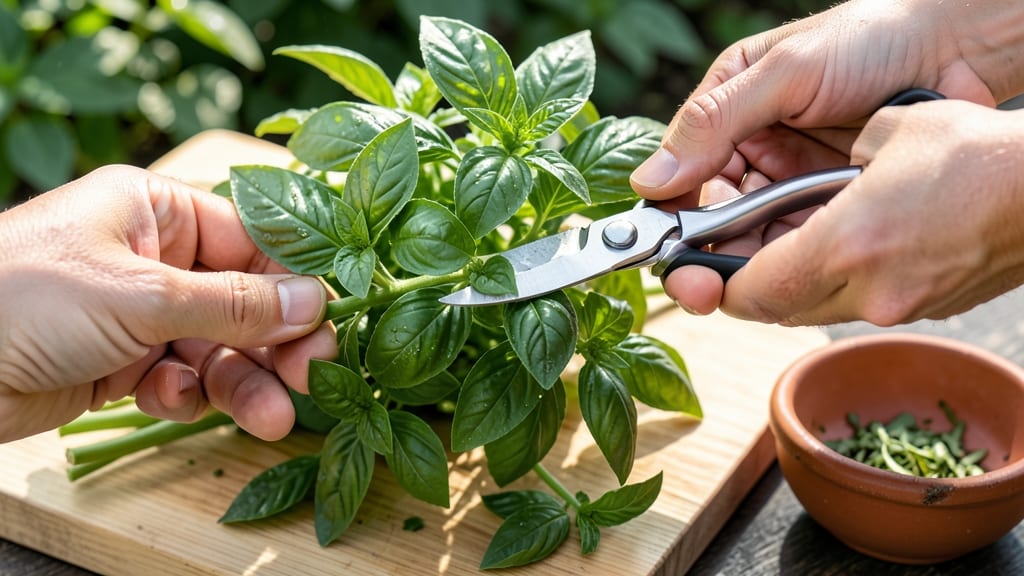
Cutting fresh basil off your plant the right way turns a handful of leaves into a bushier, more productive herb factory. ✂️ The secret isn’t just snipping—it’s knowing where and when to cut to trigger new growth while keeping your plant happy.
I’ve gone from struggling with leggy stems to harvesting pounds of basil by mastering this simple technique that most gardeners overlook.
You’ll need just two things: sharp scissors or pruning shears (cleaned with rubbing alcohol to prevent disease) and a sunny windowsill or garden spot. The key move? Always cut just above a leaf node—that’s where new branches will sprout.
Start harvesting when your basil has 6-8 sets of leaves, and never take more than one-third of the plant at once. This keeps your basil thriving instead of stressed.
Within 2-3 weeks, you’ll see thick, dark-green stems filling in where you cut, and the flavor of your basil will deepen as the plant focuses energy on new growth. The best part?
Proper pruning extends your harvest season by 4-6 weeks, giving you fresh leaves long after store-bought basil would wilt. It’s the difference between a few sad stems and a never-ending supply of the good stuff.
This method works for container-grown basil on patios, windowsill pots, or even garden beds—just adjust your pruning frequency based on how fast your plant grows. The only mistake you’ll make is waiting too long to start. Grab those shears and let’s get growing!
📚 In This Guide
- What you need
- Instructions
- Tips and common mistakes
- Wrapping up and next steps
What you need
- ● Clean, sharp pruning shears or scissors – Small, sharp blades (2–4 inches) work best. Avoid dull tools to prevent crushing stems.
- ● Basil plant (3–6 inches tall or older) – Mature plants (4+ weeks old) yield the best harvests. Look for healthy, bushy growth with at least 6–8 leaves per stem.
- ○ Water spray bottle (optional but helpful) – Mist stems lightly before cutting to reduce stress on the plant.
- ● Small bowl or container – For collecting cuttings or storing fresh basil.
- ● Rubbing alcohol or bleach solution (1:10 ratio) – Wipe tools down before/after use to prevent bacterial spread.
- ● Plastic bag with holes or damp paper towel – Store harvested basil in the fridge (3–5 days) or at room temp (1–2 days).
- ● Gardening gloves (if you prefer) – Protects hands from sap and dirt.
- ● Pencil or marker – Label containers if propagating new plants from cuttings.
Step-by-step instructions for pruning basil like a Pro
Here's my foolproof method for harvesting basil while keeping your plant thriving and productive.
✂️ Step 1: Identify the Right Stems to Harvest
Look for stems that have at least 4-6 pairs of leaves—these are mature enough to cut without stunting growth. I always start with the largest, most established stems first. Avoid cutting the very top leaves unless you're harvesting for microgreens, as these drive new growth.
Check the stem's thickness—thicker stems indicate more stored energy for regrowth. Thin stems may still be edible, but cutting them can slow down your plant's recovery. If you're unsure, wait a few days and watch for new leaf pairs to form before harvesting.
🌿 Step 2: Make Clean Cuts at the Right Angle
Use sharp, sterilized pruning shears or a clean knife to make a 45-degree angle just above a leaf node where the stem meets the main branch. This angle prevents water from pooling on the cut, which can cause rot. I always dip my tools in rubbing alcohol between cuts to prevent bacterial spread.
Never rip leaves by hand—this damages the stem and invites pests. If you're cutting multiple stems, work systematically from the bottom up. This ensures you're not over-pruning the top of the plant, which can lead to leggy, weak growth.
🌱 Step 3: Encourage Bushier Growth After Harvesting
Within 2-3 days of pruning, you'll notice new side shoots emerging from the leaf nodes below your cuts. This is your plant's natural response to being trimmed. To maximize bushiness, pinch off any flower buds that form—basil puts all its energy into blooming instead of leaf production.
Water the plant deeply but gently after harvesting to help it recover. Avoid overhead watering, which can spread disease through fresh cuts. If your basil starts growing tall and sparse, it's time to prune again—this time, cut back by one-third of the plant's height to encourage a fuller shape.
☀️ Step 4: Maintain Optimal Conditions for Recovery
Place your basil in a spot with 6-8 hours of bright, indirect light daily—direct midday sun can scorch fresh cuts. If you're growing indoors, rotate the pot a quarter turn every few days to prevent leaning. You'll see new leaves emerging within 7-10 days if conditions are right.
Fertilize lightly with a balanced liquid fertilizer (like 10-10-10) one week after pruning to support regrowth. Over-fertilizing now can burn tender new shoots. If your basil starts yellowing, it's either getting too much water or not enough light—adjust accordingly.
Tips & tricks for pruning basil like a Pro
Here's what nobody tells you about keeping your basil thriving after each harvest.
The Leaf Pair Rule: Always count those leaf pairs before cutting—4-6 pairs is your sweet spot for regrowth. I learned this the hard way after snipping too close and watching my plant struggle for weeks. The bottom two leaves should stay intact; they're the plant's energy factories for new growth. If you're unsure, wait until you see that sixth pair clearly forming.
Cutting Technique That Changed Everything: That 45-degree angle isn't just for looks—it's about water management. When you cut straight across, water pools on the flat surface and can rot the stem. The angled cut lets water run off while still exposing plenty of surface area for new shoots. Pro tip: Use a clean, sharp knife or shears every time—dull tools crush stems and invite pests. I keep rubbing alcohol handy to sterilize between cuts.
Flower Buds Are the Enemy: The moment you see those tiny white flower buds forming, pinch them off immediately. Basil redirects all its energy to flowering when buds appear, leaving your leaves bitter and growth stunted. I check my plants weekly during peak growing season—it's amazing how quickly those buds can appear if you're not paying attention. This simple step keeps your basil producing tender leaves for months longer.
Light and Rotation Strategy: Your basil needs that 6-8 hours of bright, indirect light daily, but here's the secret: rotate your pot a quarter turn every few days. Plants grow toward light sources, so without rotation, you'll end up with a lopsided basil factory. I set a reminder on my phone every 3 days—it takes 30 seconds but makes a huge difference in even growth. And if you notice leaves curling or yellowing, it's either too much direct sun or not enough water.
Pro Tips for Cut Fresh Basil Off Plant
- Here's what nobody tells you about keeping your basil thriving after each harvest.
- The Leaf Pair Rule: Always count those leaf pairs before cutting—4-6 pairs is your sweet spot for regrowth. I learned...
- Cutting Technique That Changed Everything: That 45-degree angle isn't just for looks—it's about water management. Whe...
Frequently asked questions
Got questions about harvesting basil like a pro?
Here are answers to the most common queries—from timing to troubleshooting—so you can keep your basil thriving and your kitchen stocked with fresh leaves!
When is the best time to cut basil?
Harvest basil in the morning after the dew has dried but before the heat of the day. This ensures the leaves are hydrated and full of flavor. Avoid cutting after heavy rain or late in the evening, as moisture can stress the plant.
How often should I trim my basil plant?
Trim basil every 2–4 weeks to encourage bushier growth. For continuous harvests, pinch off 1–2 inches of stems regularly. If you’re growing basil for long-term use, a monthly pruning keeps it productive and prevents legginess.
What if my basil turns yellow after cutting?
Yellowing leaves after pruning can signal over-trimming or underwatering. Cut back only 1/3 of the plant at a time and ensure it gets 1–1.5 inches of water per week. Yellowing at the base may indicate root rot—check for soggy soil and adjust watering.
Can I use scissors or should I pinch leaves by hand?
Both work! Use clean scissors or pruning shears for thicker stems (avoid crushing). For tender leaves, pinching with your fingers is gentler and promotes branching. Just avoid tearing leaves—always cut just above a leaf node (where new growth appears).
What do I do with basil stems after cutting?
Don’t toss those stems! Use them in cooking (blanch and freeze for pesto) or regrow roots in water for a new plant. For immediate use, strip leaves from stems and add to salads, sauces, or teas. Stems add depth to broths and marinades too!
Wrapping up and next steps
Cutting fresh basil from your plant isn’t just about harvesting—it’s about encouraging lush, flavorful growth for months to come! 🌿 By mastering the right techniques (like pinching young stems or using clean pruners), you’ll enjoy a steady supply of vibrant leaves while keeping your basil bushy and thriving.
Ready to put your new skills to work? Grab your pruners and head to the garden—your next harvest is just a snip away!
💡 Pro tip: Start small, stay consistent, and soon you’ll be the green-thumb hero of your kitchen!