
Planting
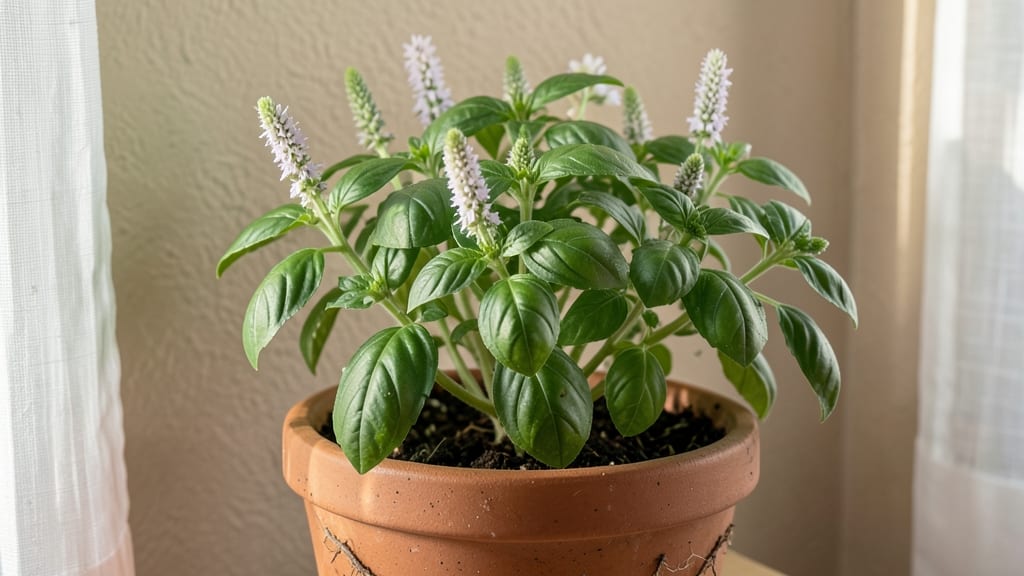
When your basil plant grows flowers, it’s actually telling you to take action—those blooms signal the end of your leafy harvest. 🌿 I’ve learned the hard way that letting basil flower means bitter leaves and wasted plants, but with the right tricks, you can keep your basil producing tender, sweet leaves all season long.
The moment you see those tiny white flower buds appear, it’s time to pinch them off. This might sound harsh, but trust me—it’s the secret to continuous leaf production. Even if you miss a few flowers, don’t panic: pruning the stems below the blooms can sometimes reset growth.
The goal is to keep your plant focused on leaves, not seeds.
With consistent pinching and proper care, your basil will stay bushy and productive for months—not just a few weeks. The leaves will stay sweet, aromatic, and perfect for cooking, while the plant keeps growing taller and fuller.
Just remember: sunlight, water, and regular pruning are your best friends in this battle against flowers.
This method works for both container-grown basil and in-ground plants, whether you’re growing in a sunny windowsill or a backyard garden. Once you master bloom control, you’ll never buy store-bought basil again—and your kitchen will always smell like summer.
Why Basil Blooms Too Soon
When your basil plant starts throwing up flowers instead of lush green leaves, it’s usually a sign that something’s off in its environment or care routine. Understanding the root causes helps you adjust your approach and keep your basil focused on leaf production—where it truly shines.
Here’s why those pesky blooms appear and what triggers them:
🌱 The Science: Basil (Ocimum basilicum) is an annual herb that naturally shifts its energy from leaf growth to flowering as it matures. This is a survival instinct—once it flowers, it produces seeds to ensure the next generation.
However, gardeners often want to harvest leaves long before this stage.
- When it happens: If you’ve had your basil plant for 3–4 months or longer without pruning or harvesting, it’s likely reaching its biological tipping point.
Older plants (especially those past their prime) prioritize reproduction over leaf production. - Actionable fix: Start harvesting leaves early and often (pinch off the top sets of leaves when the plant is young) to delay flowering. Replace mature plants with fresh starts every 8–12 weeks to maintain peak leaf quality.
☀️ The Science: Basil is a short-day plant, meaning it detects changes in daylight length and temperature to trigger flowering. While it thrives in 6–8 hours of direct sunlight daily, too little light can actually stress the plant, causing it to bolt (flower prematurely) as a survival mechanism.
- When it happens:
- Indoor plants near windows with indirect light or shady outdoor spots (e.g., under trees or north-facing windowsills).
- Seasonal shifts (e.g., shorter winter days) can accelerate flowering, especially in varieties like Genovese or Thai basil, which are sensitive to light changes.
- Actionable fix:
- Move plants to a south- or west-facing window or use grow lights (12–16 hours/day) for indoor basil.
- In gardens, ensure full sun exposure (6+ hours) and avoid planting in low-light areas.
- Pro tip: 💡 If your basil starts stretching toward light (a sign of etoliation), it’s already stressed—act fast to prevent bolting.
🌡️ The Science: Basil is a warm-weather lover and bolts when exposed to cold snaps, frost, or sudden temperature drops below 50°F (10°C). Even nighttime temperatures dipping into the 40s°F (4–9°C) can trigger flowering as a protective response.
- When it happens:
- Early spring or late fall plantings when nights are cool.
- Indoor drafts near AC vents, open windows, or heaters.
- Outdoor plants in regions with unpredictable weather (e.g., coastal areas with chilly evenings).
- Actionable fix:
- Extend the season: Use row covers, cold frames, or containers you can move indoors during cold snaps.
- Monitor nighttime temps: If nights drop below 55°F (13°C), consider relocating potted basil to a warmer spot.
- Choose cold-hardy varieties: ‘Spicy Globe’ or ‘Sweet Basil’ tolerate slightly cooler temps better than delicate types like ‘Lemon Basil’.
📊 The Science: Basil flowering is often linked to nutritional stress, particularly low nitrogen (which fuels leaf growth) or excessive phosphorus/potassium (which promotes blooming). Over-fertilizing with high-phosphorus fertilizers (like bone meal) can also send mixed signals to the plant.
- When it happens:
- Under-fertilized soil: If your basil isn’t getting enough nitrogen-rich fertilizer (e.g., balanced 10-10-10 or fish emulsion), it may bolt to conserve energy.
- Over-fertilized soil: Too much phosphorus (P) or potassium (K) (e.g., from compost tea or tomato fertilizers) can trigger premature flowering.
- Poor soil quality: Compacted, nutrient-depleted, or sandy soil lacks the micronutrients basil needs to stay vegetative.
- Actionable fix:
- Feed regularly: Use a balanced liquid fertilizer (like 20-20-20) every 2–3 weeks during the growing season.
- Avoid phosphorus-heavy amendments: Skip bone meal or superphosphate near basil beds.
- Test your soil: A simple DIY soil test kit can reveal if your garden lacks nitrogen or other essentials.
- Pro tip: ✨ Epsom salt (magnesium sulfate) can help prevent bolting if your soil is deficient in magnesium—sprinkle it lightly around the base every 4 weeks.
🌿 The Science: Not all basil varieties are created equal when it comes to bolting. Some types are more prone to flowering early, especially under stress, while others stay leafy longer.
- When it happens:
- Fast-bolting varieties: Thai basil, Purple Basil, or Lemon Basil tend to flower quicker than Genovese or Sweet Basil when stressed.
- Hybrid vs. heirloom: Some hybrid basils (bred for disease resistance) may bolt faster than traditional varieties.
- Actionable fix:
- Choose slow-bolting varieties: Opt for ‘Genovese,’ ‘Spicy Globe,’ or ‘Sweet Basil’ if you want to delay flowers.
- Harvest aggressively: Pinch off flowers immediately if they appear, even on resistant varieties.
- Start seeds indoors: Grow basil from seed 4–6 weeks before the last frost to give it a head start before outdoor conditions trigger bolting.
💧 The Science: Basil is sensitive to both drought and overwatering, both of which can stress the plant and prompt it to bolt. Drought stress signals the plant to reproduce quickly, while waterlogged roots suffocate it, forcing an early survival response.
- When it happens:
- Underwatering: Soil dries out completely between waterings, especially in containers or sandy soil.
- Overwatering: Soggy soil (common in clay pots or poorly drained garden beds) leads to root rot and stress.
- Inconsistent watering: Skipping watering days or letting the plant wilt before hydrating.
- Actionable fix:
- Water deeply but infrequently: Aim for 1–1.5 inches of water per week, letting the top 1–2 inches of soil dry out between waterings.
- Use well-draining soil: Mix potting soil with perlite or vermiculite (20% amendment) to prevent waterlogging.
- Mulch to retain moisture: Apply straw or shredded leaves around the base to keep roots consistently hydrated.
- Pro tip: 🔥 Morning watering is best—it reduces evaporation and prevents fungal issues that stress the plant.
Fixing Basil Blooms for Leafy Harvests
Now that you understand why your basil keeps flowering, let’s tackle the fixes—practical, step-by-step solutions to keep your plants lush and leafy. Whether your basil is bolting, flowering, or just showing early signs of stress, these targeted fixes will help you regain control.
Cause: Heat, drought, or age triggers flowering. Fix: Reset your basil’s growth cycle with these quick actions.
1.
Prune Aggressively to Delay Blooms 🔪 Step 1: Snip off flower buds and stems at the base—don’t wait until they open! Even tiny buds signal the plant to shift energy from leaves to seeds. 🌿 Step 2: Cut back 1/3 of the plant’s height to encourage bushier, leafier regrowth.
Use clean, sharp scissors to avoid damaging stems. ⏰ When to do it: Early morning (when plants are hydrated) or evening (to reduce stress).
2. Adjust Watering for Stress-Free Growth
💧 Step 1: Water deeply 1–2 times per week (not daily shallow watering). Basil hates soggy roots but needs consistent moisture. 🌡️ Step 2: Check soil moisture: Stick your finger 1 inch deep—if dry, water.
If damp, wait. Overwatering causes root rot, which weakens plants and triggers early blooming. 💡 Pro Tip: Use mulch (straw or shredded leaves) to retain moisture and keep roots cool.
3.
Shield from Extreme Heat 🌞 Step 1: Move pots to partial shade (4–6 hours of sunlight max) if temps exceed 85°F (29°C). 🌿 Step 2: For garden basil, provide afternoon shade with a sheer cloth or nearby taller plants. ✨ Bonus: Mist leaves lightly in the morning to cool them down naturally.
Cause: Poor growing conditions or neglect. Fix: Set up a basil-friendly environment to keep blooms at bay.
1.
Master the Light Balance 🔥 Step 1: Basil needs 6–8 hours of sunlight daily, but not scorching midday heat. 🍳 Step 2: If growing indoors, place near a south-facing window or use a grow light (12–14 hours/day). 💡 Pro Tip: Rotate pots weekly so all sides get even light—prevents lopsided growth and stress.
2. Feed for Leafy Power, Not Flowers
🥗 Step 1: Use a balanced liquid fertilizer (10-10-10 or 20-20-20) every 2–3 weeks during growing season. 🚫 Avoid: High-nitrogen fertilizers after flowering starts—they won’t reverse the process. 🌱 Step 2: Top-dress with compost for a slow-release nutrient boost.
3.
Choose the Right Variety 🌿 Step 1: Opt for slow-bolting varieties like: - Genovese (classic, but prone to flowering—prune often!) - Spicy Globe (compact, slower to bolt) - Thai Basil (more heat-tolerant, but still needs care) 💡 Pro Tip: Start with container-grown basil—it’s easier to control than in-ground plants.
If your basil is already covered in blooms, don’t panic—you can still salvage it!
1.
The Nuclear Option: Full Reset 🔄 Step 1: Cut the plant back to 4–6 inches tall, just above a set of leaves. 🌱 Step 2: Pinch off any new flower buds that appear in the next 2 weeks. 💧 Step 3: Repot if roots are crowded (overcrowding stresses plants).
2.
Save Seeds (If You Must) 🌼 Step 1: If you want seeds for next year, let 1–2 flowers fully mature and dry on the plant. 🔪 Step 2: Once seeds form, snip the stem and hang it upside down in a paper bag to collect seeds. 🚫 But: If you’re growing for leaves, remove all flowers—they drain energy from your harvest.
✅ Water consistently (no drought stress). ✅ Prune regularly (pinch off buds weekly). ✅ Avoid heatwaves (shade cloth or indoor move). ✅ Fertilize lightly (focus on leaves, not flowers). ✅ Harvest leaves often (encourages bushier growth).
Remember: Basil is resilient! With these fixes, you’ll enjoy months of leafy harvests instead of bitter flowers. 🌿🍃
Frequently asked questions
Why do basil plants grow flowers instead of leaves?
Basil flowers signal the plant is shifting energy from leaf production to seed-making—a natural survival instinct. This happens when your plant matures (after 3-4 months), gets stressed from heat, cold, or poor light, or lacks proper care like pruning. Flowers mean bitter leaves, so pinch them off early to keep your basil productive!
Can I eat basil flowers?
Yes! Basil flowers are edible and add a mild, sweet flavor to dishes. You can use them fresh in salads, garnishes, or even dried for teas. Just remove any tiny buds first—they can be slightly bitter. Flowers also attract pollinators, so they’re great for your garden ecosystem!
How do I stop my basil from flowering?
Pinch off flower buds as soon as you see them—even tiny ones! Use clean fingers or scissors to snip stems at the base. For established plants, cut back 1/3 of the height to encourage leafy regrowth. Combine this with proper sunlight (6-8 hours/day), consistent watering, and regular harvesting to delay blooms.
What's the best way to harvest basil without causing flowers?
Always harvest from the bottom up—never take more than 1/3 of the plant at once. Use clean scissors to cut just above a leaf node (where new growth emerges). This encourages bushier growth and prevents the plant from thinking it's time to flower. Harvest frequently (every 2-3 weeks) for maximum leaf production!
Can I save basil seeds from flowers?
Let 1-2 flowers fully mature and dry on the plant, then collect the seeds. Once seeds form, snip the stem and hang it upside down in a paper bag to catch them. Store seeds in a cool, dry place for next year's planting. Just remember—removing most flowers keeps your plant focused on leafy growth!