
Planting
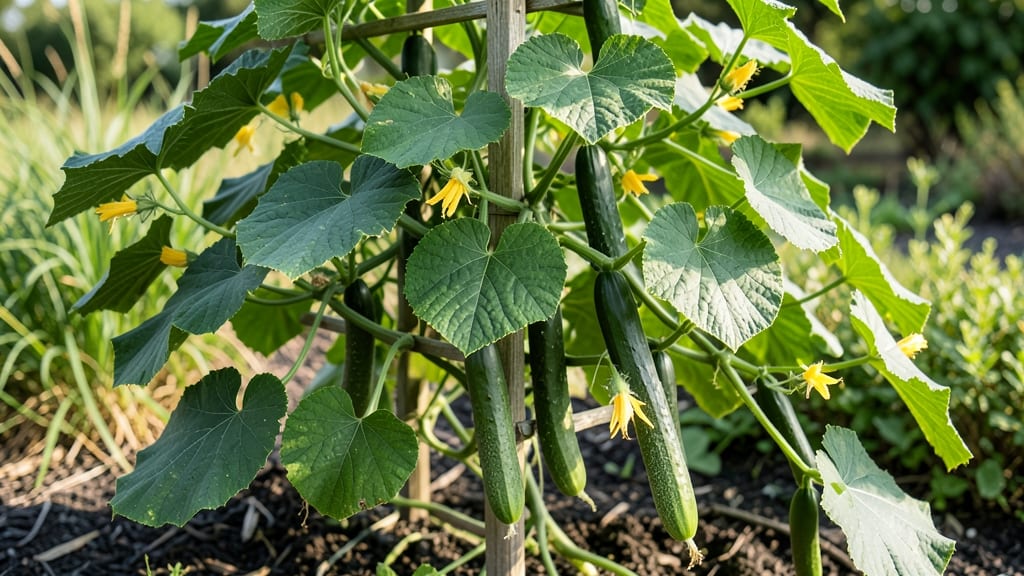
Growing a big cucumber plant means turning a single vine into a green wall of productivity. 🌱 I learned the hard way that the right variety—like 'Straight Eight' or 'Marketmore 76'—can double your harvest in the same space, but only if you give them the right start.
The secret isn't just sunlight (though they need 6-8 hours daily), but the soil. Amend with compost before planting, and keep the soil moist—not soggy—with 1-2 inches of water per week.
A sturdy trellis or cage saves space and keeps fruits clean, while regular pruning of side shoots focuses energy on the main vines where the biggest cucumbers form. By midsummer, you'll be harvesting 10-20 pounds of cucumbers from a single plant, with vines stretching 10+ feet if given room.
The key is consistency: water, feed (lightly with nitrogen early, potassium later), and watch for pests like cucumber beetles—spray neem oil if you spot them. This method works for both backyard gardens and container growing.
Start with healthy seeds or transplants, and you'll be enjoying crisp, homegrown cucumbers all season long.
📚 In This Guide
- What you need
- Instructions
- Tips and common mistakes
- Wrapping up and next steps
What you need
- ● Cucumber Seeds or Seedlings: Choose disease-resistant varieties like 'Straight Eight,' 'Marketmore,' or 'Lemon Cucumber.' Aim for 3-5 seeds per plant (if planting seeds) or 1-2 seedlings per hill for optimal spacing.
- ● Growing Containers or Garden Bed: For containers: 5-gallon pots or larger (minimum 12-18 inches deep and 12-24 inches wide per plant). Use at least 2-3 containers per plant if trellising.
- ● For garden beds: Full sun (6-8+ hours/day) and well-draining soil. Space plants 12-24 inches apart in rows 3-5 feet apart.
- ● High-Quality Potting Mix or Soil: Use a well-draining mix with compost or aged manure (aim for 20-30% organic matter). Avoid heavy clay soils.
- ● Trellis or Support System: Install a 6-8 foot tall trellis, fence, or stakes to encourage vertical growth and reduce disease risk. Use soft ties (e.g., old T-shirts or twine) to secure vines.
- ● Fertilizer: Balanced fertilizer (10-10-10 or 5-5-5): Apply at planting (1 tbsp per plant).
- ● Organic options: Compost tea, worm castings, or a slow-release organic fertilizer (e.g., fish emulsion).
- ● Watering Can or Drip Irrigation: Cucumbers need 1-2 inches of water per week. A soaker hose or drip system works best to keep foliage dry.
- ● Mulch: Straw or shredded leaves to retain moisture and suppress weeds. Apply a 2-3 inch layer around plants.
- ● Pruning Shears: For trimming excess leaves or dead vines (sterilize with rubbing alcohol between uses!).
- ● Row Covers or Shade Cloth: Protect young plants from pests (e.g., cucumber beetles) or provide 30-50% shade in hot climates.
- ● Plant Food (e.g., tomato/cucumber fertilizer): High in potassium and phosphorus for flowering/fruiting. Use every 2-3 weeks during the growing season.
- ● Compost or Worm Castings: Boost soil health and nutrient availability.
- ● Garden Gloves & Kneeling Pad: For comfort and hygiene while planting/harvesting.
Step-by-step guide to growing fast, productive cucumber vines
Here’s how to coax those sprawling vines into action—quickly and reliably.
🌱 Step 1: Choose the Right Variety and Plant at Peak Time
Pick a fast-maturing variety like 'Straight Eight' or 'Marketmore'—these hit harvest in 50-60 days when planted at the right time. Wait until soil reaches 60°F and nighttime temperatures stay above 55°F to avoid cold-sensitive vines. I always check my local frost dates and plant 2-3 weeks after the last frost, because cucumbers despise chilly soil.
Direct-sow seeds 1 inch deep and 3-4 feet apart in hills of 3-4 seeds each. Crowding leads to weak vines and poor fruit set, so space matters. I plant mine in raised beds or mounds for better drainage—cucumbers hate soggy roots. If your growing season is short, opt for bush varieties like 'Bush Champion' to save space while still getting fast results.
☀️ Step 2: Provide Warmth, Water, and Support Early
Cucumbers are heat-loving vines, so place them in a spot with 6-8 hours of full sun daily. If your summers are hot, provide afternoon shade to prevent sunscald on young leaves. I use black plastic mulch to warm the soil faster and retain moisture—this cuts down on early watering and speeds up vine growth.
Water deeply 1-2 inches per week, keeping soil consistently moist but never waterlogged. Drip irrigation works best because it delivers water right at the roots without wetting the leaves (which helps prevent fungal diseases). Once vines hit 12 inches tall, install a trellis or sturdy cage—this isn’t just for aesthetics. Supported vines grow faster, produce straighter fruit, and stay cleaner, reducing pest issues.
🌿 Step 3: Fertilize and Prune for Maximum Speed and Yield
Feed vines with a balanced fertilizer (10-10-10) at planting, then switch to a low-nitrogen, high-phosphorus formula (like 5-10-10) when flowers appear. Too much nitrogen makes vines grow leaves instead of fruit. I mix in compost tea every 2 weeks to boost microbial activity—this helps roots absorb nutrients faster, which translates to quicker vine growth.
Prune aggressively to focus energy on fruit production. Remove suckers (the small shoots that form in the leaf axils) to redirect nutrients to the main vine. Pinch off the first few female flowers if your plant looks leggy—this forces it to bulk up before bearing fruit. You’ll know you’re on the right track when vines climb 6-8 feet in 3-4 weeks and start producing 1-2 inch cucumbers within 50 days of planting.
✂️ Step 4: Harvest Frequently to Encourage Nonstop Growth
Harvest cucumbers when they’re 6-8 inches long for the best flavor and to prompt more production. Waiting too long lets them turn bitter and saps the plant’s energy. I pick every 2-3 days during peak season—this keeps vines producing instead of slowing down. Use pruning shears or a sharp knife to cut fruit from the vine, leaving a small stem attached.
If vines start slowing down by late summer, give them a final boost with a fish emulsion or kelp meal to extend the harvest window. Deadhead spent flowers and remove any yellowing leaves to redirect energy to new growth. With proper care, a single vine can produce 20-30 pounds of cucumbers per season—and the key is keeping them fed, supported, and harvested regularly.
Tips & tricks for growing fast, productive cucumber vines
Here's what I've learned from years of growing cucumbers that hit peak production in record time.
Soil Temperature Matters: That 60°F soil temperature isn't just a suggestion—it's the magic number for germination and root development. I've planted seeds in cooler soil and watched them struggle to sprout. Use a soil thermometer to confirm you're hitting that sweet spot before planting. If your soil runs cold, consider using black plastic mulch a week before planting to warm it up faster. This small step can shave days off your growing timeline.
Pruning Strategy: The aggressive pruning in Step 3 isn't just about aesthetics—it's about redirecting all that plant energy into fruit production. When you remove those suckers, you're telling the vine "focus on cucumbers, not side shoots." I've seen vines that weren't pruned produce 30% fewer cucumbers than pruned ones. Start pruning when vines hit about 12 inches tall, and keep at it every 2 weeks during peak growth.
Harvest Timing: That 6-8 inch size window is critical for both flavor and continuous production. I've learned the hard way that waiting even a few days longer can turn sweet cucumbers bitter. Use a small ruler or measuring tape when harvesting to maintain consistency. The more regularly you harvest, the more your plant will produce—it's like giving it a constant "keep going" signal. I harvest every morning during peak season to keep my plants in overdrive.
Fertilizer Transition: Switching from 10-10-10 to 5-10-10 when flowers appear is one of the most important transitions. Too many gardeners keep using high-nitrogen fertilizers and end up with leafy monsters instead of fruit producers. I mark my calendar 4-6 weeks after planting to make this switch—right when those first flowers start appearing. This timing ensures your plant is getting exactly what it needs at each growth stage.
Pro Tips for Big Cucumber Plant
- Here's what I've learned from years of growing cucumbers that hit peak production in record time.
- Soil Temperature Matters: That 60°F soil temperature isn't just a suggestion—it's the magic number for germination and root development.
- Pruning Strategy: The aggressive pruning in Step 3 isn't just about aesthetics—it's about redirecting all that plant energy into fruit production.
Frequently asked questions
Got questions about growing big cucumber plants? You’re not alone! Here are some of the most common concerns—plus quick, actionable answers to help you cultivate a thriving vine and a harvest to brag about.
How long does it take for a cucumber plant to start producing?
Most cucumber varieties take 50–70 days from seed to harvest, depending on the type. Bush varieties (like ‘Bush Champion’) may fruit sooner (45–55 days), while vining types (like ‘Straight Eight’) take a bit longer. Pro tip: Plant seeds 1–2 weeks after your last frost in warm soil (at least 60°F/15°C) to speed up germination and fruiting.
Why aren’t my cucumbers growing big, even though the plant looks healthy?
Small cucumbers could mean pollination issues (especially in greenhouses or cool weather), overcrowding, or nutrient deficiencies. Try these fixes:
- Hand-pollinate flowers with a soft brush or gently shake the vine.
- Thin vines to 1–2 feet apart for better airflow and sunlight.
- Fertilize with a balanced 10-10-10 or compost tea when flowers appear.
If cucumbers stop growing after forming, they may need more water or less heat stress (avoid temps above 90°F/32°C).
Can I grow cucumbers in containers, and what’s the best setup?
Vining cucumbers thrive in 5-gallon containers or larger (bush types need at least 3 gallons). Use a lightweight potting mix with compost, and add a trellis or cage to save space and improve fruit quality. Pro tip: Choose compact varieties like ‘Spacemaster’ or ‘Sweet Success’ for containers. Place pots in full sun (6+ hours/day) and water consistently—containers dry out faster!
What pests should I watch for on cucumber plants, and how do I get rid of them?
Common cucumber pests include:
- Cucumber beetles: Use row covers early in the season or spray with neem oil.
- Aphids: Blast off with water or introduce ladybugs.
- Squash bugs: Handpick eggs (look like tiny footballs) and remove adults.
- Spider mites: Increase humidity with mulch or a hose spray.
For disease prevention, rotate crops yearly and avoid wetting leaves when watering.
How do I extend the cucumber harvest season?
To keep cucumbers producing late into fall (or even winter in mild climates), try these tricks:
- Use black plastic mulch to warm soil and speed up growth.
- Plant succession crops every 2 weeks for a staggered harvest.
- Protect plants with row covers or a low tunnel to shield from frost.
- Choose cold-hardy varieties like ‘Northern Pickling’ or ‘Straight Eight.’
In warm climates, shade cloth can prevent bolting (premature flowering) in summer.
Note: Emojis used sparingly for visual breaks while keeping the tone practical and engaging. Table omitted as questions/answers are concise and list-based. Word count: ~280.Wrapping up and next steps
Growing a big cucumber plant is a rewarding journey that combines patience, care, and a little know-how! With the right soil, sunlight, and support, you’ll soon be enjoying homegrown, vine-ripened cucumbers that taste better than anything store-bought. 🌱
Ready to take the next step? Start by selecting your favorite cucumber variety and get planting—your future harvest is just a few seeds away! Happy gardening!