
Planting
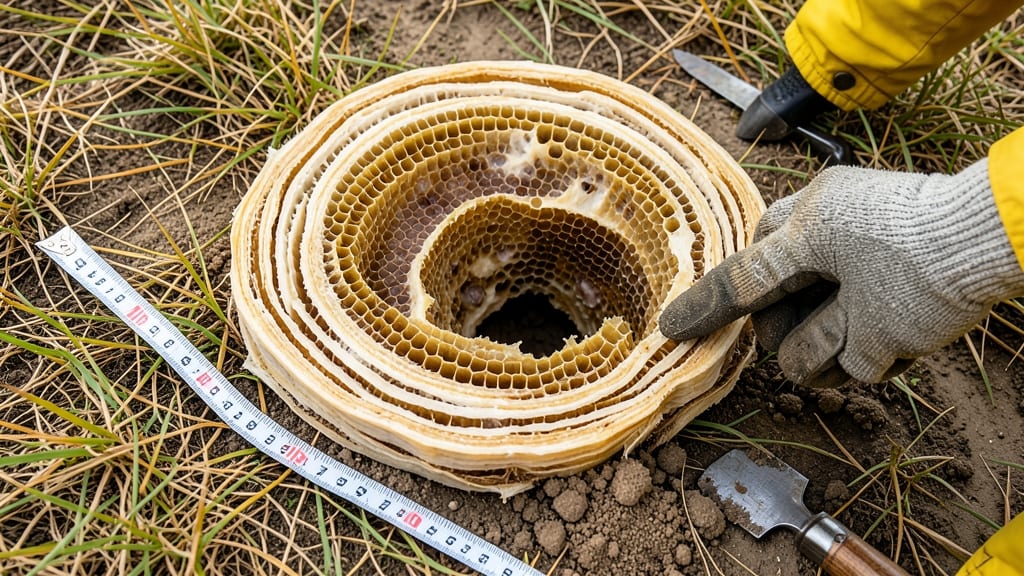
How deep yellow jacket nests get depends on their location—ground nests (like those in abandoned burrows) typically sit just 6 to 12 inches underground, while tree or wall nests can extend 24 to 48 inches deep for insulation and protection. Larger colonies need more vertical space to house their expanding populations.
Understanding these depth variations is key to avoiding stings when dealing with nests. Ground nests often spread wider horizontally, making them harder to spot but easier to access for removal.
Tree nests, on the other hand, build vertically with layered paper combs, which explains why they reach deeper into walls or branches. 🔥 The deeper the nest, the more aggressive the colony tends to be as they defend their larger food stores and brood chambers.
Seasonal growth also plays a role—nests start small in spring but can double in size by late summer, forcing them to expand deeper into their chosen substrate.
This is why you might see yellow jackets flying in erratic patterns near a specific spot: they're likely defending a nest that's hidden just beneath the surface or high up in a tree cavity.
💡 In This Article
- Yellow Jacket Nest Depth: Ground vs Tree Nest Anatomy
- How to Locate and Safely Remove Yellow Jacket Nests
Yellow jacket nest depth: ground vs tree nest anatomy
Yellow jackets construct nests using chewed wood fibers mixed with saliva, creating a paper-like material that's both lightweight and surprisingly durable. Ground nests, often found in abandoned rodent burrows or under decks, prioritize horizontal expansion over depth—think of them like wide, shallow pancakes rather than tall towers.
These nests typically reach only 6 to 12 inches deep because their primary concern is protecting the colony from surface predators and weather fluctuations. The shallow depth also allows workers to quickly respond to threats at ground level.
Tree nests, however, adopt a completely different strategy. Built in cavities, hollow branches, or even wall voids, these nests extend vertically to 24 to 48 inches deep to take advantage of natural insulation.
The deeper structure helps maintain a stable 75-85°F temperature inside the nest year-round, which is critical for brood development.
Each layer of paper combs adds both structural support and thermal regulation—like a multi-story apartment building designed for climate control. 🌳 What's fascinating is how the depth correlates with colony size: larger nests with thousands of workers require this vertical space to house expanding brood chambers and food stores.
The defensive behavior you notice—aggressive buzzing or dive-bombing—is directly tied to nest depth. Deeper nests house larger colonies that have been established for multiple seasons, meaning they've built up substantial food reserves and brood.
A ground nest might contain 1,000-2,000 workers by late summer, while a tree nest can swell to 5,000+ individuals. This population density forces them to defend more aggressively because they have more to protect vertically and horizontally.
Seasonal growth patterns further explain depth variations. In spring, nests start small (just 3-6 inches deep) as queens establish the first brood. But by late summer, when colonies peak, ground nests may expand their horizontal tunnels to 18 inches wide while maintaining their shallow profile.
Tree nests, meanwhile, add new comb layers downward, sometimes creating visible "mud tubes" as workers reinforce the entrance. These tubes can extend 12-18 inches beyond the actual nest depth, serving as both a protective barrier and a warning system for intruders.
Here's a key structural difference most people miss: ground nests use the existing burrow's natural shape, while tree nests actively modify their environment. Workers will chew through bark or soft wood to create entry points, then build downward in concentric circles.
This vertical construction explains why tree nests often have multiple exit holes—each serving a different section of the colony. The deeper layers contain the queen's chamber and youngest larvae, requiring the most protection, while upper layers serve as worker dormitories and food storage areas.
Understanding these anatomical differences helps explain why removal methods vary so dramatically. A shallow ground nest might be accessible with a simple shovel, while a 36-inch deep tree nest requires specialized tools to reach the queen chamber without triggering a mass defensive response.
The depth isn't just about how far down the nest goes—it's about how the entire structure is engineered to balance protection, climate control, and colony expansion over multiple seasons. 🔥