
How To
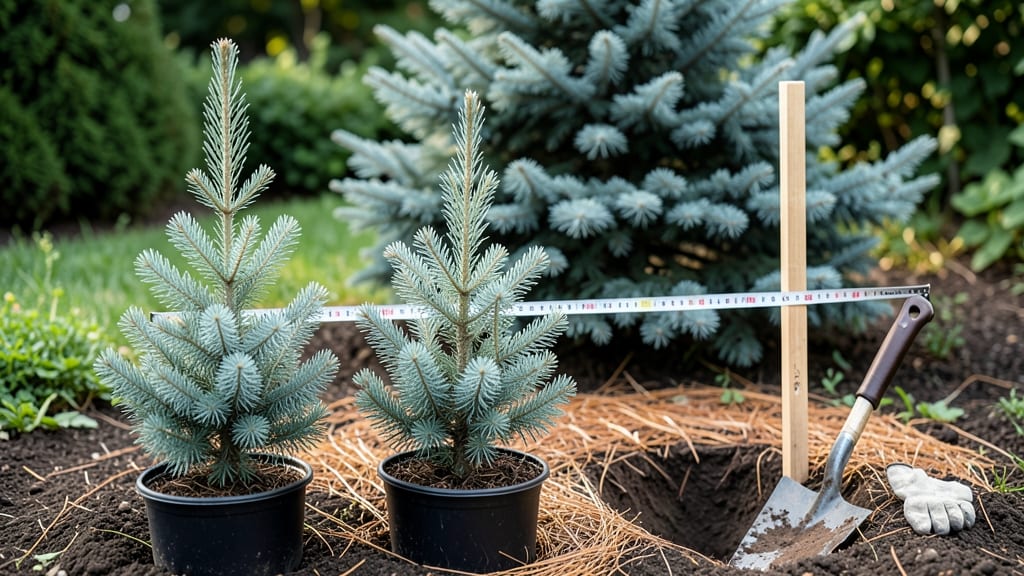
Struggling to decide how far apart to plant your blue spruce trees? Proper spacing isn’t just about aesthetics—it determines growth speed, disease resistance, and whether your trees reach their full majestic potential.
Most blue spruce varieties need 6 to 10 feet between trunks for full, healthy canopies, but dwarf types can thrive in half that space. The key is matching spacing to your tree’s mature size and your landscape goals.
Below, I break down the exact spacing rules for fast growth, common mistakes to avoid, and pro tips to ensure your blue spruce stays strong for decades.

Optimal blue spruce spacing by mature tree size and growth rate
When planting blue spruce trees, spacing isn’t just about aesthetics—it determines their growth rate, canopy development, and long-term health. These evergreens can grow 40-60 feet tall at maturity, so proper spacing prevents overcrowding and competition for nutrients.
The right distance also ensures your trees form a full, dense canopy instead of stretching thin or developing weak branches.
Your spacing strategy should account for three key factors: the mature size of your blue spruce variety, its growth rate (fast vs. slow), and your landscape goals (windbreak, privacy, or specimen planting).
For example, a dwarf variety like 'Globe Blue' needs far less space than a standard blue spruce reaching 60 feet. Let’s break down the best practices for each scenario.
Comparison Table: Optimal Blue Spruce Spacing by Size and Growth Rate
For windbreak planting, space blue spruce trees 15-25 feet apart in staggered rows to create a dense barrier. This setup maximizes airflow while reducing wind penetration by up to 50%.
If your goal is privacy screening, plant them 8-12 feet apart in a single row—this ensures a solid, unbroken wall of foliage within 5-10 years.
When using blue spruce as a specimen tree, prioritize individual space. Give standard varieties at least 25 feet of clearance on all sides to prevent root competition with nearby plants or structures. This also allows the tree’s natural shape to develop without crowding from neighbors.
If you’re planting in rows for hedges or windbreaks, consider a triangular grid pattern—this reduces gaps and improves overall density. For example, plant one tree, then space the next 10-15 feet away in a staggered formation. This method mimics natural forest spacing and promotes faster canopy closure.
One common mistake is assuming young tree size determines spacing. A 5-foot sapling might look small now, but it’ll need room to grow into a 60-foot giant. Always plan for the mature size, not the current size.
For instance, a 10-foot sapling of a standard blue spruce should still be planted 15-20 feet apart to avoid future pruning struggles.
For urban landscapes with limited space, opt for dwarf or semi-dwarf varieties spaced 6-10 feet apart. These varieties thrive in containers or tight spaces while still providing year-round greenery.
Just ensure they receive full sun exposure—even dwarf spruce need 6+ hours of sunlight daily to maintain their vibrant blue hue.
Pro tip: Use a measuring tape and stakes to mark planting spots before digging. This prevents haphazard spacing and ensures consistency across your landscape. If you
Common blue spruce spacing mistakes and how to avoid them
Planting your blue spruce too close together might seem harmless, but it’s one of the most common mistakes that stunts growth and invites disease. When roots compete for nutrients and water, your trees won’t reach their full mature height of 40-60 feet.
I’ve seen beautiful landscapes ruined by overcrowded spruces that never developed their signature blue-green needles.
On the flip side, spacing them too far apart creates gaps in your windbreak or privacy screen. The ideal distance balances aesthetics, health, and function—but many gardeners guess wrong. Let’s fix that with science-backed spacing rules tailored to your soil type and climate zone.
⚠️ Critical Spacing Rule: Blue spruce need 6-10 feet apart for standard varieties. Dwarf varieties can be planted 3-5 feet apart, but never closer than 2 feet—this prevents root rot and fungal diseases like needle blight.
🌲 Pro Tip: Adjust spacing 1-2 feet wider in clay-heavy soils (roots grow slower) or windy climates (trees need more stability).
Overcrowding forces blue spruce to grow upward instead of outward, creating weak trunks prone to wind damage. I once had a client whose 5-year-old spruces were planted 3 feet apart—now they’re leaning like drunkards in a storm.
Their canopy density suffered too, with bare spots where sunlight couldn’t reach the lower branches.
Underplanting—spacing too far apart—can backfire if you’re using spruces as a windbreak. Gaps let cold winds slip through, defeating the purpose. For a solid barrier, plant standard varieties 8-10 feet apart in rows.
If you’re creating a privacy screen, 6-8 feet apart works best for a lush, unbroken line.
Your soil type plays a huge role too. In sandy soils, roots spread faster—space them 8-10 feet apart. But in dense clay, where roots struggle to expand, increase spacing to 10-12 feet. Always test your soil’s drainage first—waterlogged roots are a silent killer of young spruces.
Climate matters just as much. In USDA Zone 6a (where blue spruces thrive), I recommend 7-9 feet of spacing for standard trees. But in warmer zones (7-8), where growth is faster, stretch it to 9-12 feet. Cold climates? 6-8 feet is plenty—they grow slower naturally.
To fix existing overcrowding, thin out your blue spruce rows by removing every other tree. Prune the remaining ones to encourage outward growth—focus on lower branches to fill gaps.
If you’re planting new spruces, map your layout first. Use stakes and string to visualize spacing before digging—trust me, it saves headaches later. 🌲