
Planting
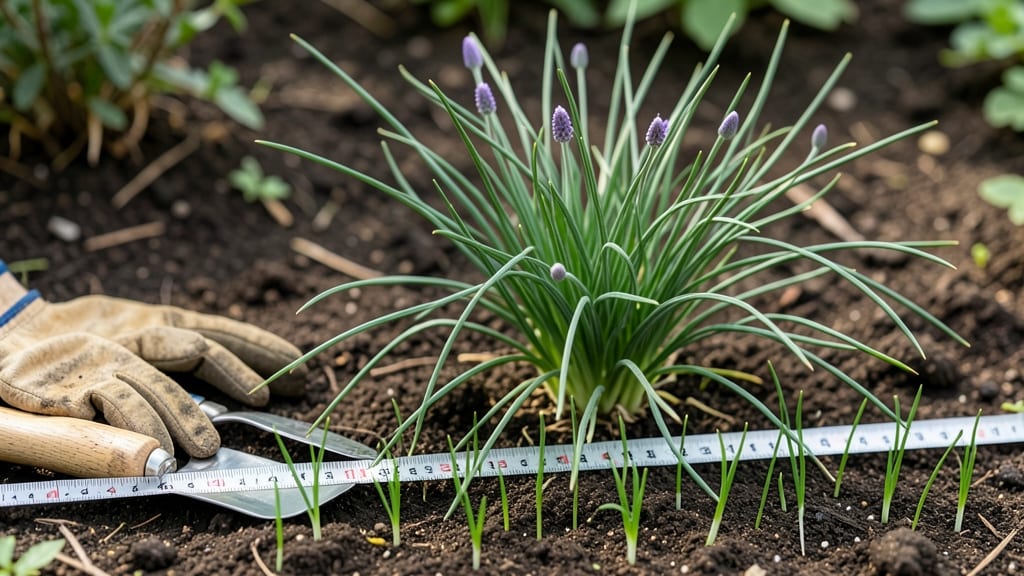
Planting chives 6 to 12 inches apart is the secret to a thriving, productive patch that keeps coming back year after year.
Struggling to decide how far apart to plant chives? Get it wrong, and your garden could end up with either sparse patches or overcrowded clumps that compete for nutrients—neither of which will give you the lush, flavorful harvest you’re after.
These hardy 🌱 herbs thrive in USDA Zone 6a and beyond, but their spacing needs shift depending on whether you’re growing clumping varieties or the more spreading types. Too close, and you’ll fight for space; too far, and you waste precious garden real estate.
In this guide, I’ll break down the exact spacing you need for healthy growth, how to adjust for different soil and sunlight conditions, and why proper airflow is your best defense against pests. Ready to grow chives like a pro?

Optimal spacing for chives: clumping vs. spreading varieties compared
When planting chives, spacing makes all the difference between a thriving herb patch and one that struggles. The two most common types—common chives (Allium schoenoprasum) and Chinese chives (Allium tuberosum)—have very different growth habits, meaning their spacing needs vary too.
Get this right, and you’ll enjoy abundant harvests with minimal competition.
Common chives grow in tight clumps and spread slowly, while Chinese chives form longer, sprawling mats. Planting them too close leads to overcrowding, which stunts growth and invites pests.
Conversely, spacing them too far apart wastes garden space and reduces yield. Let’s break down the ideal spacing for each type and how to adapt it to your garden.
The key to successful chive spacing lies in understanding their mature size and growth patterns. Common chives typically reach 12-18 inches tall but stay compact, while Chinese chives can spread up to 2 feet wide.
This difference directly impacts how far apart you should plant them to ensure healthy airflow and nutrient access.
For common chives, planting them 6-12 inches apart gives each clump enough room to thrive without competing for sunlight or nutrients. This spacing also makes it easier to harvest leaves without disturbing neighboring plants.
If you’re growing them in containers, reduce the spacing to 3-6 inches to maximize your yield in limited space.
Chinese chives, on the other hand, need more elbow room due to their spreading nature. Planting them 12-18 inches apart prevents them from forming a dense mat too quickly, which can lead to fungal issues or pest infestations.
If you’re using them as a ground cover, you can space them slightly closer—around 9-12 inches apart—but avoid overcrowding.
One common mistake gardeners make is ignoring soil quality when spacing chives. Poor soil can stunt growth, making plants appear underwatered or nutrient-deficient, which might trick you into thinking they need more space. Always amend your soil with compost before planting to ensure healthy roots and optimal growth.
Another pro tip: If you’re planting chives in rows, leave 18-24 inches between rows to allow for easy access when harvesting or weeding. This also improves air circulation, reducing the risk of mold or mildew, which can be a problem in humid climates.
For container gardening, choose pots that are at least 6 inches deep and provide drainage holes to prevent root rot.
Finally, remember that chives are perennial herbs, meaning they’ll come back year after year. Proper spacing now will pay off in years of abundant harvests with minimal maintenance.
Whether you’re growing common chives for your kitchen or Chinese chives for decorative purposes, getting the spacing right is the first step to a thriving garden.
Ready to plant? Grab your garden gloves, mark your spacing with stakes or string, and enjoy the process of growing one of the easiest and most versatile herbs around! 🌱
How to adjust chive spacing for different garden conditions
Your chives thrive when planted with just the right spacing, but garden conditions can drastically change what works best. Poor soil or low sunlight might require wider gaps, while containers demand completely different spacing rules. Let’s break down how to adjust your planting plan for maximum success.
Start with the standard spacing of 6–12 inches apart for most chive varieties in ideal conditions. However, if your garden has clay-heavy soil or partial shade, you’ll need to widen that gap to 12–18 inches to prevent competition.
Containers? Space them 3–4 inches apart but use deeper pots to compensate.
🌱 Adjusting Chive Spacing by Condition
- 🌿 Rich, well-draining soil: 6 inches apart – Chives grow vigorously and won’t need extra room.
- 💧 Heavy clay soil: 12–18 inches apart – Prevents root competition and improves drainage.
- ☀️ Full sun (6+ hours/day): 6–8 inches apart – Encourages bushier growth with more sunlight.
- 🌳 Partial shade (3–4 hours sun): 10–12 inches apart – Slower growth means wider spacing.
- 🪴 Containers (6+ inch depth): 3–4 inches apart – Use 1–2 plants per 6-inch pot for airflow.
- ✂️ Pruning regularly: Reduce spacing to 4–6 inches – Thinning promotes airflow and pest resistance.
Don’t forget to prune chives every 4–6 weeks to encourage bushier growth and better airflow. Cut back one-third of the foliage just above the base to stimulate new shoots. This also reduces the risk of fungal diseases like powdery mildew, which thrives in crowded, damp conditions.
For container gardening, choose pots with drainage holes and fill them with a lightweight potting mix. Since space is limited, opt for dwarf varieties like 'Tuberosum' chives, which stay compact.
Place containers where they’ll get at least 4–5 hours of sunlight daily—even a windowsill works if it’s bright enough.
If you’re planting chives near companion plants, like carrots or tomatoes, space them 8–10 inches apart to avoid root interference. Chives naturally repel pests like aphids, so their presence can benefit neighboring plants while keeping your own garden healthy and thriving.
Pro tip: Mark your spacing with biodegradable plant markers or sticks to avoid overcrowding as chives mature. A little planning now means bigger harvests and healthier plants all season long. 🌱