
Planting
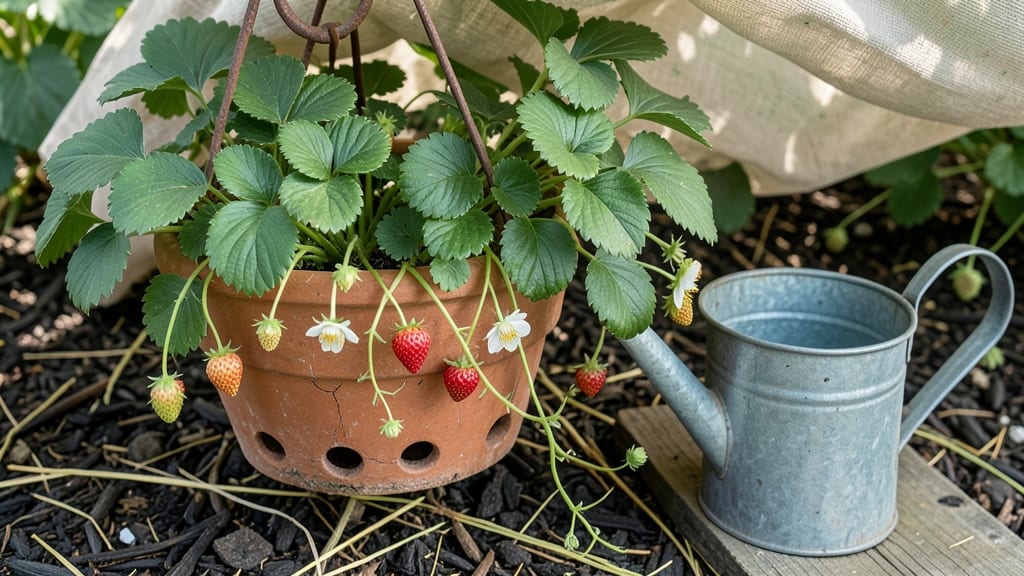
How to take care of a hanging strawberry plant means unlocking year-round berries with minimal space. 🌱 I’ve grown them in containers for five years, and the secret isn’t just sunlight—it’s the right balance of water, pruning, and winter prep. These trailing plants thrive when treated like a delicate vine, not a ground cover.
The biggest mistake? Overwatering or letting roots dry out. Your hanging pot needs well-draining soil mixed with compost, and water only when the top inch feels dry. Too much moisture leads to root rot, while too little stunts fruit production. A 5-gallon fabric grow bag works perfectly for most varieties.
By summer, you’ll see lush green runners and sweet red berries within 6-8 weeks of planting. Prune old leaves in early spring to encourage new growth, and fertilize lightly with a balanced 10-10-10 mix every 4-6 weeks. The key is consistency—hanging strawberries reward patience with months of harvests.
Winter care is simple: move pots to a sheltered spot, reduce watering, and cover with burlap if temperatures drop below 20°F. With these adjustments, your plants bounce back stronger each spring, ready for another season of juicy, vine-ripened strawberries.
📚 In This Guide
- What you need
- Instructions
- Tips and common mistakes
- Wrapping up and next steps
What you need
- ● Hanging basket: 12–18 inches in diameter (with drainage holes) or a self-watering planter for convenience. Pro tip: Look for baskets labeled "strawberry-friendly" or with a depth of at least 8–10 inches.
- ● Potting mix: 5–10 gallons of high-quality, well-draining potting soil (avoid garden soil—it compacts!). Mix in perlite or pumice (1 part perlite to 4 parts soil) for aeration.
- ● Strawberry plants: 3–6 bare-root or potted plants (choose everbearing or day-neutral varieties for year-round harvests).
- ● Fertilizer: Balanced, slow-release fertilizer (10-10-10 or 5-5-5) for planting.
- ○ Liquid fish emulsion or compost tea (optional, for a nutrient boost during fruiting).
- ● Watering can or drip irrigation system: A can with a rose nozzle (for gentle watering) or a small drip system to avoid overwatering.
- ● Mulch: 2–3 inches of straw or pine bark to retain moisture and suppress weeds.
- ● Pruning shears: Sharp, clean shears (disinfect with rubbing alcohol between cuts).
- ● Hanging planter hook or bracket: If your basket lacks built-in hanging hardware.
- ● Plant support: Small coconut coir or moss to cushion roots if using a shallow basket.
- ● Shade cloth (30–50% coverage): For hot climates to protect plants during peak sun.
- ● Grow lights (LED or fluorescent): If growing indoors or in low-light areas (12–16 hours of light daily).
- ● Soil moisture meter: To monitor water levels without overdoing it.
- ● A location with 6–8 hours of sunlight daily (partial shade in hotter climates).
- ● Access to soft, filtered water (chlorine-free if possible).
- ● Patience! Strawberries take 3–6 months to fruit after planting.
Step-by-Step care routine for your hanging strawberry plant
Keep your strawberries producing sweet berries all season with these proven care techniques.
💧 Step 1: Water Deeply and Consistently
Strawberries in hanging baskets dry out faster than ground plants. Water thoroughly until water runs out the drainage holes, then wait until the top 1-2 inches of soil feel dry before watering again. I use a watering can with a narrow spout to direct moisture right to the roots without disturbing the soil surface.
Morning watering prevents fungal diseases that thrive in damp evening conditions. You'll know your watering routine is right when the soil stays evenly moist but never soggy—strawberry roots need oxygen to thrive. During hot spells, check moisture levels twice daily, especially if your basket sits in direct sun.
☀️ Step 2: Position for Optimal Light Exposure
Strawberries need 6-8 hours of direct sunlight daily for maximum fruit production. Place your hanging basket where it gets morning sun and afternoon shade during peak summer heat—this prevents scorching while maintaining energy for fruiting. I rotate my baskets weekly to ensure even sun exposure on all sides.
Watch for yellowing leaves on the shadier side—that's your signal to move the basket. If you notice berries staying small or developing poorly, your plant needs more light. A south-facing location works best in most climates, but east or west exposures can work with proper rotation.
✂️ Step 3: Prune and Maintain for Continuous Harvest
Remove spent flowers and fruit after harvest to redirect the plant's energy toward new growth. I pinch off any berries forming on the first-year runners—these take energy away from establishing a strong root system. Use clean, sharp scissors to make cuts just above a leaf node to encourage bushier growth.
After your first harvest, trim back any leggy growth by one-third to promote compact, productive plants. This is especially important in hanging baskets where space is limited. You'll see new leaves emerging within a week—that's your signal everything is working. Fertilize lightly with a balanced 10-10-10 formula every 4-6 weeks during growing season.
🌿 Step 4: Protect and Prepare for Seasonal Changes
When temperatures dip below 40°F, move your hanging basket to a sheltered location or bring it indoors near a sunny window. Strawberries are hardy but prefer consistent warmth. I wrap the basket in burlap during cold snaps to protect against wind and temperature fluctuations.
In late summer, reduce watering slightly to harden off the plant before dormancy. You'll notice new growth slow down and leaves turn slightly reddish—that's normal. After the first frost, trim back all foliage to 2 inches above the soil line. This encourages vigorous spring regrowth and prevents disease buildup in the old stems.
Tips & tricks for perfect hanging strawberry care
A few simple adjustments can transform your hanging strawberry plant from struggling to thriving. Here's what I've learned after years of trial and error with these delicate plants.
Soil Moisture Secret: The key to Step 1's watering routine is checking moisture at the 1-2 inch depth—this is where the roots actively absorb water. Use a wooden skewer or your finger to test; if it comes out clean, it's time to water. I've found that adding a 1-inch layer of mulch (like shredded bark) on top helps retain moisture while preventing fungal growth from surface evaporation. This small change keeps the roots happy without overwatering.
Light Exposure Hack: For Step 2's 6-8 hours of sunlight, I've noticed that moving baskets just 1 foot closer to the light source can make a dramatic difference in berry size. If your space is limited, consider a small adjustable light stand with LED grow lights for 2-3 hours daily during winter months when natural light is scarce. The goal is consistent exposure—even distribution matters more than total hours.
Pruning Precision: When trimming back leggy growth in Step 3, focus on cutting just above a leaf node where new growth emerges. I've seen plants recover beautifully when pruned this way, but cutting too close to the base can damage the plant's ability to regenerate. Also, save those trimmed leaves! Dry them and store in a jar to make homemade strawberry leaf tea—a natural pest deterrent and fertilizer booster.
Seasonal Protection Tip: For Step 4's cold weather prep, I've found that wrapping baskets in burlap isn't just about temperature—it also protects against wind damage that can stress plants. When moving indoors, place baskets near east-facing windows where they'll get gentle morning light without afternoon heat exposure. This mimics their natural seasonal cycle beautifully.
Pro Tips for Take Care Of A Hanging Strawberry Plant
- A few simple adjustments can transform your hanging strawberry plant from struggling to thriving.
- Soil Moisture Secret: The key to Step 1's watering routine is checking moisture at the 1-2 inch depth—this is where the roots actively absorb water.
- Light Exposure Hack: For Step 2's 6-8 hours of sunlight, I've noticed that moving baskets just 1 foot closer to the light source can make a dramatic difference in berry size.
Frequently asked questions
about hanging strawberry plants—because even the sweetest berries come with a few curious quirks! Here’s what you’ve been wondering:How often should I water my hanging strawberry plant?
Hang on—literally! Water when the topsoil feels just dry (about 1–2 inches deep). Hanging pots dry faster, so aim for every 1–2 days in hot weather and every 3–4 days when cooler. Drip irrigation or a self-watering planter keeps roots happy without soggy roots. Pro tip: Water in the morning to avoid fungal risks!
When is the best time to harvest strawberries?
Pick when berries are fully red, plump, and slightly soft to the touch—usually 20–30 days after flowering. Avoid harvesting when wet to prevent rot. Fun fact: Strawberries continue ripening off the plant, so don’t wait too long! Use scissors or twist gently to avoid damaging the plant.
Can I grow strawberries in a hanging planter year-round?
Not quite! Hanging strawberries thrive outdoors in USDA Zones 5–9. In colder climates (below 10°F), bring pots indoors to a bright, cool spot (50–60°F) or mulch heavily. Warning: Avoid freezing temps—they’re tender! For tropical zones, opt for everbearing varieties like ‘Albion’ or ‘Seascape’ for extended harvests.
What do I do if my strawberries get pests or diseases?
Common culprits: aphids, slugs, or powdery mildew. Blast pests off with water, use neem oil for fungus, or introduce ladybugs (nature’s pest control!). Ensure good airflow and avoid overhead watering. Quick fix: Remove infected leaves immediately to stop spread!
How do I revive a struggling hanging strawberry plant?
Yellow leaves? Check for overwatering or nutrient deficiency. Prune damaged runners, repot if roots are crowded, and fertilize with a balanced 10-10-10 mix. Boost tip: Move to a sunnier spot (6+ hours of light) and reduce watering slightly. Patience pays off—healthy plants bounce back!
Wrapping up and next steps
Caring for a hanging strawberry plant is a rewarding journey that brings sweet, homegrown berries to your doorstep—literally! 🍓 With the right balance of sunlight, water, and support, your plant will thrive and produce fruit year after year.
Remember, patience and consistency are key, so don’t hesitate to experiment with pruning or fertilizing to find what works best for your space.
Now that you’re armed with these hanging strawberry care secrets, why not take the next step? Share your progress with fellow gardeners, try growing a new variety, or even expand your hanging garden with herbs or flowers. Happy planting—your future berry harvest awaits! 🌱✨