
Planting
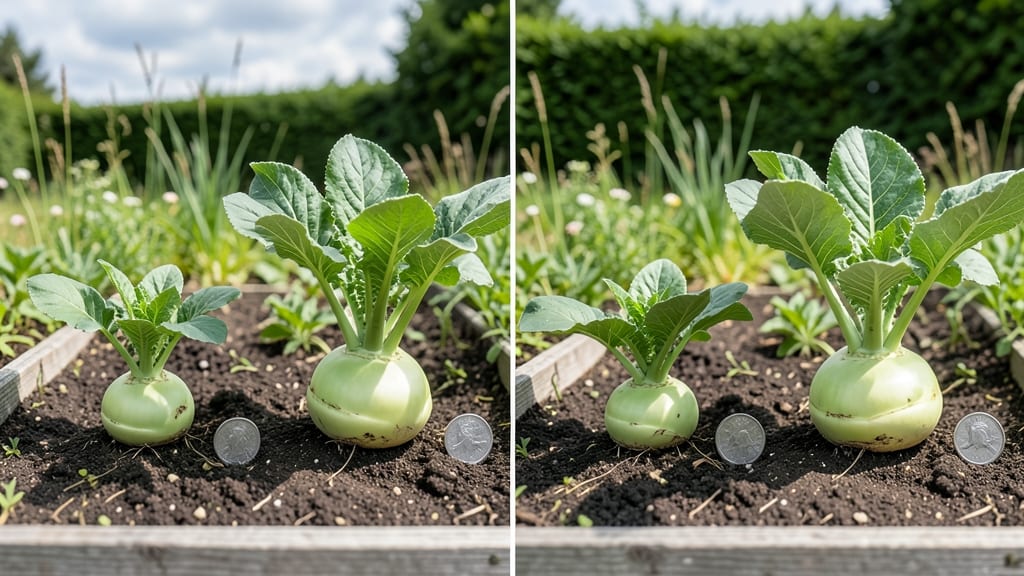
Kohlrabi grows from a tiny seed to a crisp, edible bulb in just 60 days—and knowing each stage turns guesswork into confidence. 🌱 I’ve watched my own plants go from delicate sprouts to harvest-ready bulbs, and the secret is paying attention to leaf shape, stem thickness, and growth speed.
This isn’t a slow-motion crop; it’s a race against time, but with the right care, you’ll have fresh, sweet bulbs long before summer’s end.
The first 10 days are all about germination and those first true leaves—round, deep green, and slightly wrinkled. Keep soil moist but not soggy, and give them full sun (6+ hours daily).
Once the leaves mature into lobed, maple-like shapes, you’re in the fast lane: the bulb starts swelling beneath the soil. This is when watering becomes critical—consistent moisture prevents bitter flavors and cracked bulbs.
By day 45, your kohlrabi will look like a tiny turnip with a thick, smooth stem. That’s your cue to check bulb size—2 to 3 inches in diameter means harvest time. The leaves stay edible, but the bulb is sweeter when firm, not woody.
One wrong move here (like waiting too long) turns your prize into a tough, fibrous mess. Trust me, I’ve made that mistake.
Even in small spaces, kohlrabi thrives—12-inch spacing works for most varieties, and containers as small as 5-gallon buckets can produce a harvest. The key is speed: plant in early spring or late summer, and you’ll avoid the heat that makes bulbs tough.
Now, let’s break this down stage by stage so you can grow them like a pro.
📚 In This Guide
- What you need
- Instructions
- Tips and common mistakes
- Wrapping up and next steps
What you need
- ● Seeds: 1–2 packets of kohlrabi seeds (choose varieties like 'Purple Vienna' or 'White Vienna' for classic flavors).
- ● Potting soil or garden soil: 10–20 lbs of well-draining, organic-rich soil (pH 6.0–7.0).
- ● Containers or garden bed: For containers: 5–6" deep pots (1 plant per pot) or a raised bed (12" deep).
- ● For in-ground planting: A sunny spot with at least 6 hours of sunlight daily.
- ● Compost or fertilizer: 1–2 cups of balanced organic fertilizer (10-10-10) or compost per plant.
- ● Watering can or hose: With a gentle spray nozzle for consistent moisture.
- ● Hand trowel or transplanting tool for seedling care.
- ● Mulch (straw or shredded leaves) to retain soil moisture.
- ○ Garden twine and stakes (optional, for trellising if growing tall varieties).
- ● Pruning shears for harvesting.
- ● Patience! Kohlrabi thrives in cool weather (50–75°F) and matures in 50–60 days.
- ● Consistent watering (1–1.5 inches per week) to prevent bitterness.
- ● Thin seedlings to 3–4" apart (if direct-sowing) for optimal growth.
How to grow kohlrabi through its key development stages
Kohlrabi transforms from a tiny seed into a sweet, bulbous harvest in just 60 days—here's how to guide each stage.
🌱 Step 1: Start Seeds Indoors or Direct-Sow When Soil Warms
Kohlrabi seeds germinate best in 55-65°F soil, so wait until nighttime temperatures stay above 45°F before planting. I like to direct-sow after the last frost because kohlrabi hates transplanting—those delicate seedlings don't take root well when disturbed. Plant seeds ½ inch deep and 1 inch apart in rows spaced 18 inches apart.
Thin seedlings to 3-4 inches apart once they develop their first true leaves—that's when you'll see the real leaves (not the initial seed leaves) about 2 inches tall. Use scissors to snip unwanted plants at soil level rather than pulling, which disturbs the roots of remaining seedlings.
🌿 Step 2: Monitor Growth and Thin for Optimal Bulb Formation
Within 3-4 weeks, you'll notice the stems begin to swell slightly at the base—this is the bulb forming. Kohlrabi bulbs develop best when they receive plenty of space and sunlight. If you notice leaves yellowing or stunted growth, your plants are crowded and need thinning.
Thin again to 6-8 inches apart when bulbs reach 1 inch in diameter. This spacing ensures each plant gets enough nutrients and light to develop properly. Avoid letting bulbs touch, as this can lead to poor formation and disease. Water at the base rather than overhead to keep foliage dry and prevent fungal issues.
☀️ Step 3: Provide Consistent Moisture and Sunlight
Kohlrabi thrives in full sun (6-8 hours daily) but can tolerate partial shade in hot climates. Keep the soil consistently moist—1 inch of water per week—but never soggy. I water deeply in the morning to allow foliage to dry before evening, which prevents rot.
Watch for signs of stress: if leaves curl or the bulb feels tough, it needs more water. If the bulb develops a woody texture, it's overcrowded or under-watered. Kohlrabi bulbs should feel firm but not hard when gently squeezed. Fertilize lightly with a balanced 10-10-10 mix every 3-4 weeks to encourage steady growth.
⏰ Step 4: Harvest at Peak Sweetness Before Bulbs Get Woody
Kohlrabi is ready to harvest when bulbs reach 2-3 inches in diameter—this usually happens 50-60 days after sowing. The bulb should feel firm and smooth, not fibrous. If left too long, the bulb becomes tough and woody, and the plant bolts (sends up a flower stalk).
Harvest by twisting the bulb gently from the stem—it should come away cleanly. Leave the leaves attached for a few days if storing; they help preserve moisture. For continuous harvests, sow seeds every 2 weeks in early spring and late summer, spacing plantings to ensure a steady supply.
Tips & tricks for perfect kohlrabi growth
Here's what nobody tells you about growing kohlrabi—these tricks will help you avoid common pitfalls and maximize your harvest.
Soil Temperature Secret: Kohlrabi seeds need that precise 55-65°F soil temperature range to germinate properly. I've learned the hard way that planting too early—when nighttime temps drop below 45°F—results in slow germination or seeds that simply rot in the cold ground. Use a soil thermometer if you're unsure, especially in spring or fall plantings. The wait is worth it for those tender bulbs!
Thinning Technique: When you thin seedlings to 3-4 inches apart in Step 1, don't just yank them out—use clean scissors to snip at soil level. This prevents disturbing the roots of your remaining plants. I've seen gardens where people pull weeds and accidentally uproot kohlrabi seedlings, then wonder why their plants struggle later. A quick snip keeps everything healthy and growing strong.
Bulb Formation Watch: That second thinning to 6-8 inches apart when bulbs reach 1 inch in diameter is crucial. I've noticed that bulbs left too close develop uneven shapes and tough textures. The extra space gives each plant room to develop that perfect firm, smooth bulb we all love. Think of it like giving each plant its own personal growing space in a crowded apartment!
Harvest Timing: The 50-60 day window is tight—don't wait until the bulbs reach 3 inches if you want tender, sweet harvests. I've had to pull woody, fibrous kohlrabi from my garden because I waited too long. Harvest when they're 2-3 inches and firm but not hard. The leaves attached help preserve moisture, so don't trim them right away if you're storing for a few days.
Pro Tips for Kohlrabi Plant Stages
- Here's what nobody tells you about growing kohlrabi—these tricks will help you avoid common pitfalls and maximize your harvest.
- Soil Temperature Secret: Kohlrabi seeds need that precise 55-65°F soil temperature range to germinate properly.
- Thinning Technique: When you thin seedlings to 3-4 inches apart in Step 1, don't just yank them out—use clean scissors to snip at soil level.
Frequently asked questions
Got questions about growing kohlrabi? You’re not alone! Here are answers to the most common queries about this fast-growing, versatile veggie—from planting to harvest.
How long does it take for kohlrabi to mature from seed?
Kohlrabi typically reaches harvest readiness in 50–60 days from seed, depending on the variety. Fast-maturing types like ‘Purple Vienna’ can be ready in as little as 45 days, while larger varieties may take up to 70 days. Check your seed packet for exact days-to-maturity!
Can kohlrabi survive frost? What’s the best temperature for planting?
Kohlrabi is cold-hardy and tolerates light frosts (down to 25°F/-4°C), but it grows best in cool weather (50–70°F/10–21°C). Plant seeds 2–4 weeks before your last frost or in early spring/fall for optimal growth. Avoid planting in scorching summer heat—it’ll bolt prematurely!
What’s the difference between harvesting the bulb and the leaves?
The bulb (stem) is the star—harvest it when it’s 2–3 inches wide (like a small turnip) for the best flavor. The leaves are edible too (like a mild cabbage) and can be picked young for salads. Pro tip: If you wait too long, the bulb turns woody and pithy—harvest early for tender, sweet results!
Why are my kohlrabi plants attracting pests like cabbage worms or aphids?
Kohlrabi is part of the Brassica family, so it’s a magnet for pests like cabbage worms, aphids, and flea beetles. Prevent issues with:
- Row covers (physical barriers for young plants)
- Neem oil or insecticidal soap (organic sprays)
- Companion planting (try herbs like dill or thyme to repel pests)
- Handpick larger caterpillars (drop them in soapy water)
Can I grow kohlrabi in containers? What’s the best pot size?
Kohlrabi thrives in containers 12+ inches deep and wide—just ensure good drainage. Use a high-quality potting mix and plant 1–2 seeds per pot (thin to the strongest seedling). Varieties like ‘Early White Vienna’ are ideal for containers. Bonus: Grow it on a balcony or patio for easy pest control!
Wrapping up and next steps
Growing kohlrabi from seed to harvest is a rewarding journey that unfolds in just 60 days! Whether you're a seasoned gardener or a curious beginner, understanding each stage—from germination to bulb formation—helps you nurture a thriving crop.
With the right soil, sunlight, and care, you’ll enjoy a bountiful harvest of crisp, nutritious kohlrabi to savor in salads, roasts, or stir-fries.
Ready to dig in? Start by planning your next planting session—whether it’s succession sowing for continuous harvests or experimenting with different varieties. Happy gardening! 🌱