
Planting
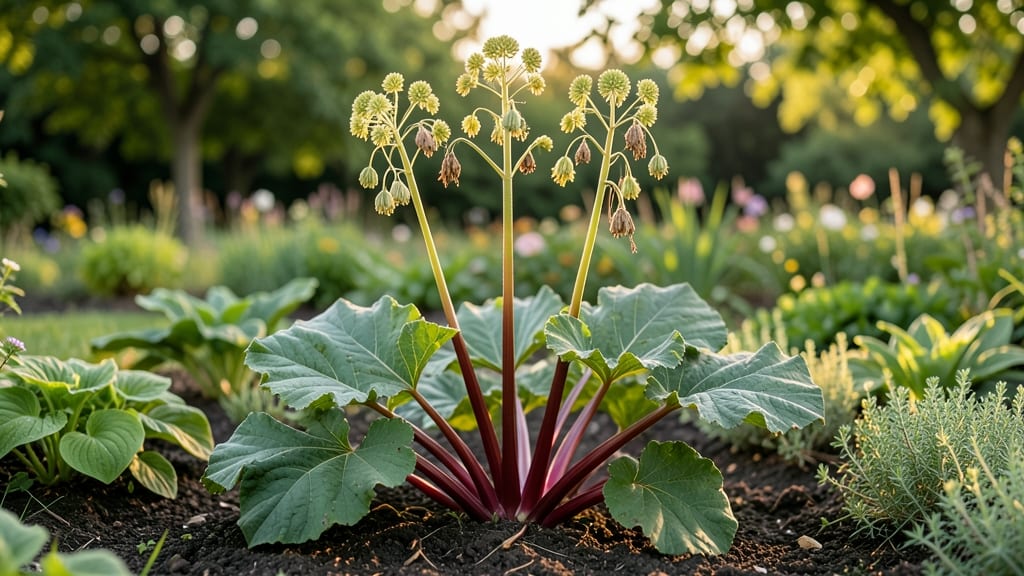
Your rhubarb plant going to seed means fewer stems and smaller harvests—unless you act fast. 🌱 The flower stalks steal energy from your prized tart stems, and once they form, your plant prioritizes seeds over growth.
I’ve watched this happen three times, and each time, I learned how to redirect that energy back to the harvest.
The culprit is usually stress—too much sun, drought, or overcrowding—but even healthy plants will eventually go to seed as they age. The fix starts with removing those flower stalks as soon as they appear, which forces the plant to focus on producing stems instead.
You’ll also need to check your watering and soil nutrients, because stressed plants bolt faster.
Within weeks, you’ll see new green shoots pushing through the soil, and your harvest will bounce back stronger than before. The key is consistency: keep an eye on those stalks, and don’t let them get taller than your hand.
This method works for both young and mature plants, so you can save your harvest for years to come.
Fair warning: if your rhubarb is over five years old, it might be time to divide it anyway—older plants produce smaller stems and are more likely to go to seed. But for now, focus on those flower stalks and watch your harvest grow back to full size.
📚 In This Guide
- What you need
- Instructions
- Tips and common mistakes
- Wrapping up and next steps
What you need
- ● Pruning shears or sharp garden scissors – Clean, sterilized tools (to avoid disease spread).
- ○ Gloves – Optional but recommended (to protect hands from thorns and sap).
- ● Compost or mulch – 1-2 inches of organic matter (to nourish the plant post-pruning).
- ● Balanced fertilizer (10-10-10 or similar) – 1-2 tbsp per plant (to replenish nutrients after cutting flowers).
- ● Watering can or hose with a gentle spray nozzle – For post-pruning hydration.
- ● Plant growth regulator (e.g., hydrogen peroxide 3%) – Diluted to 1:10 ratio (spray on cut stems to slow regrowth of flower stalks).
- ● Shade cloth (lightweight) – If your rhubarb bolts early (provides temporary shade to reduce stress).
- ● Label markers – To track pruned plants (helpful if managing multiple beds).
How to prevent rhubarb from flowering and save your harvest
Here’s the straightforward method I’ve used for years to keep my rhubarb plants focused on leaf production—no flowers, no wasted energy.
✂️ Step 1: Identify and Remove Flower Stems Early
Rhubarb sends up flower stalks in early spring, usually between March and May. The moment you spot a thick, upright stalk emerging from the center of the plant, act fast. These stalks rob energy from your harvest, so you’ll want to cut them off at the base with clean, sharp pruning shears. I like to do this on a dry morning when the plant is firm—this prevents sap from spraying everywhere.
Don’t wait until the stalk is tall or leafy. The earlier you remove it, the less energy the plant wastes. If you miss one, don’t panic—just snip the next one as soon as it appears. You’ll know you’re doing it right when the center of the plant stays tight and leafy instead of sending up unwanted flowers.
🌱 Step 2: Monitor for New Flower Stalks Weekly
After the first cut, check your rhubarb every 5-7 days for new flower stalks. These can pop up anywhere along the crown, so scan the entire plant. I keep a small notebook nearby to track when I last checked—this prevents missed stalks. If you’re growing multiple plants, prioritize the oldest or most productive ones first, as they’re more likely to flower.
Here’s the thing—some varieties are more prone to flowering than others. If your rhubarb keeps sending up stalks despite your efforts, consider switching to a less aggressive variety like ‘Victoria’ or ‘Canadian Red’. These tend to stay focused on leaf production longer, giving you more harvest time.
☀️ Step 3: Adjust Care to Discourage Flowering
Rhubarb plants flower more when they’re stressed or over-mature. To keep them producing leaves, make sure they’re getting consistent water—about 1 inch per week, especially during dry spells. Let the soil dry slightly between waterings, but don’t let it get bone-dry. You’ll know it’s right when the top 1-2 inches of soil feel slightly damp but not soggy.
Also, avoid over-fertilizing with high-nitrogen feeds in late summer or early fall. Too much nitrogen can encourage late-season growth, which then triggers flowering the following spring. Instead, apply a balanced 10-10-10 fertilizer in early spring and again after harvest. This keeps the plant strong without sending mixed signals about when to flower.
⏰ Step 4: Time Your Harvest Strategically
Harvesting rhubarb too early or too late can stress the plant and encourage flowering. Wait until the stalks are at least 10-12 inches tall and 1.5 inches thick before cutting. Use a sharp knife to slice just above the crown—this minimizes damage and keeps the plant healthy. I harvest in early spring when the stalks are firm and crisp, then again in late spring or early summer before the plant gets too stressed.
Stop harvesting by mid-summer to let the plant recover. This gives it time to store energy for next year’s growth instead of sending up flower stalks. If you see the leaves yellowing or the stalks getting thin, it’s a sign to pause harvesting and let the plant rest.
🌿 Step 5: Divide and Renew Old Plants Every 4-5 Years
Older rhubarb plants are more likely to flower because they’ve maxed out their productive years. To keep your harvest strong, divide the crowns every 4-5 years in early spring. Dig up the plant carefully, then separate the crowns into smaller sections, each with 3-5 buds. Replant the strongest sections in fresh soil with plenty of compost.
This refreshes the plant and gives you a clean slate for the next growing season. I’ve found that divided rhubarb plants bounce back faster and are far less likely to flower prematurely. Plus, you’ll end up with extra plants to share or sell—it’s a win-win!
Tips & tricks for preventing rhubarb flowering
A few simple tricks will help you keep your rhubarb focused on leaf production instead of wasting energy on flowers. Here's what I've learned from years of gardening.
Timing is Everything: In Step 1, when you spot that first flower stalk between March and May, act immediately. I've seen gardeners wait until the stalk is leafy and tall, but by then, the plant has already wasted valuable energy. Cutting it off at the base the moment you notice it makes all the difference. Think of it like catching weeds before they spread—the earlier you act, the easier the job.
Variety Matters: Some rhubarb varieties are more stubborn about flowering than others. In Step 2, when you're monitoring every 5-7 days, pay special attention to older plants or varieties like 'Strawberry' rhubarb, which are notorious for sending up flower stalks. If you're struggling with persistent flowering, consider switching to 'Victoria' or 'Canadian Red'—these varieties tend to stay focused on leaf production longer, giving you more harvest time throughout the season.
Watering Wisdom: Step 3 emphasizes consistent watering, but here's the thing—rhubarb actually prefers slightly drier conditions between waterings. The key is to let the top 1-2 inches of soil dry out between waterings, but never let it become completely bone-dry. I've found that using a moisture meter helps me strike the perfect balance. When the soil feels slightly damp at this depth, that's your sweet spot for preventing stress that could trigger flowering.
Harvest Strategy: In Step 4, when you're timing your harvest, remember that rhubarb stalks continue to grow throughout the season. The first harvest in early spring gives you the most tender, crisp stalks, but don't be tempted to keep harvesting past mid-summer. This is when the plant needs to rest and store energy for next year. I've seen many gardeners make this mistake and end up with plants that flower aggressively the following spring.
Pro Tips for Rhubarb Plant Going To Seed
- A few simple tricks will help you keep your rhubarb focused on leaf production instead of wasting energy on flowers.
- Timing is Everything: In Step 1, when you spot that first flower stalk between March and May, act immediately.
- Variety Matters: Some rhubarb varieties are more stubborn about flowering than others.
Frequently asked questions
Why does my rhubarb plant flower?
A rhubarb plant flowers as a natural part of its life cycle, signaling it’s maturing. While it won’t go to seed like some plants, flowering can reduce its energy for leaf production—the part you harvest. The flowers themselves are edible (tasty in syrup or baked goods!), but removing them early helps prioritize leaf growth.
When is the best time to stop rhubarb from flowering?
Act fast! Snip off flower stalks as soon as they appear in early spring (March–April for most climates). If you wait until buds form, the plant diverts energy to seed production, weakening leaf harvests. Pro tip: Wear gloves—rhubarb leaves contain oxalates, which can irritate skin.
What if I miss the window and flowers form?
Don’t panic! Even if flowers bloom, you can still harvest leaves, but yields may drop. Cut the flower stalk at the base to redirect energy to leaves. For next year, prune earlier. Bonus: Use the flowers in recipes (like rhubarb-blossom fritters) to avoid waste!
Will removing flowers harm the plant?
No—removing flowers helps the plant! It prevents seed production, which drains nutrients. Think of it like trimming a bush: pruning encourages healthier, bushier growth. Just avoid cutting into the crown (the center hub) where new leaves emerge.
Can I still eat rhubarb if it flowers?
Flowers are edible and add a mild, slightly tangy flavor. Use them in syrups, jams, or baked goods (like rhubarb-blossom scones). Just avoid the seeds inside the flower buds—they’re bitter. Leaves remain safe to harvest (cooked only, as they’re toxic raw).
Wrapping up and next steps
Don’t let your rhubarb plant’s seed phase steal your harvest—now you’ve got the tools to stop those flowers in their tracks! With patience, pruning, and a few simple tricks, you’ll keep your plant focused on leafy, tangy stalks instead of seeds. 🌱
Ready to boost next year’s crop? Start by reviewing your pruning schedule and adjusting nutrients for a stronger plant. Happy gardening—your taste buds (and future harvests) will thank you! 🥰