
Planting
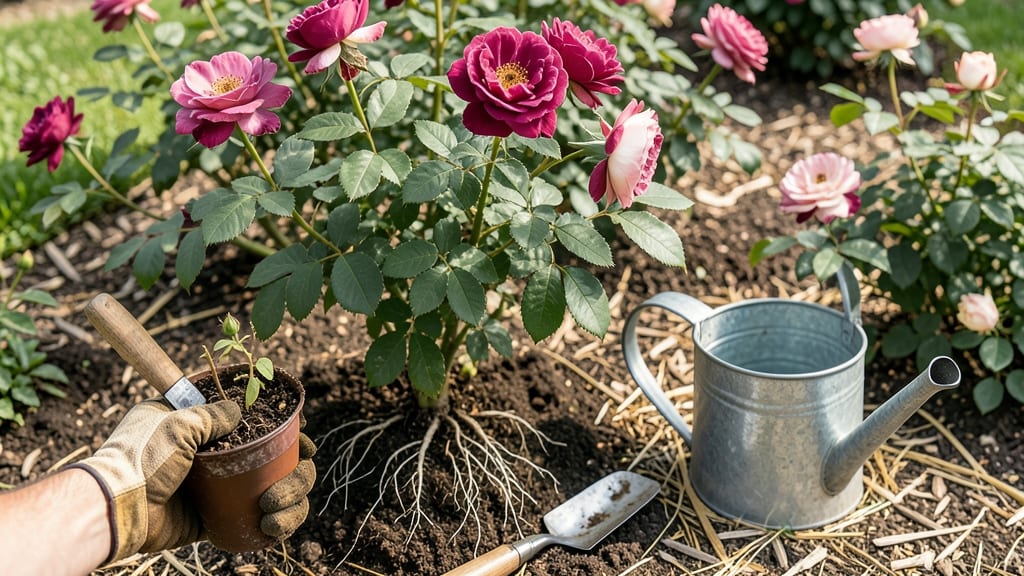
Transplanting blooming roses at the best time means choosing late summer—when the heat isn’t brutal and roots can settle before winter.
Moving your 🌹 without causing shock can feel like a high-stakes gamble, but late summer (August through early September) is the secret window that turns it into a foolproof strategy.
The key? Timing the transplant when temperatures are mild, roots are still active, and the plant isn’t stressed by extreme heat or dormancy.
Why does this matter? Transplanting at the wrong time—like early spring or fall—can leave your roses vulnerable to shock, disease, or even death. But with the right prep, you’ll give them the best shot at thriving in their new home without skipping a beat.
In this guide, I’ll walk you through the exact steps to transplant your blooming roses with confidence, including soil prep, watering schedules, and how to protect them from stress. Let’s get those roots settled for a stunning bloom season next year.


Why late summer is the Only Safe Time to Transplant Blooming Roses
Transplanting blooming roses feels risky—especially when their delicate flowering canes are already pushing energy into growth. But late summer (mid-August through early September) isn’t just the best time—it’s the only safe window to move roses without triggering transplant shock.
The key lies in how roses naturally prepare for dormancy, and late summer aligns perfectly with their biological clock.
During this period, daytime temperatures hover between 75°F–85°F, while nights cool to 60°F–70°F. This balance reduces stress on roots while allowing new root growth to establish before winter. Roses also enter a pre-dormancy phase, where they slow above-ground growth but remain active enough to recover from disturbance.
Miss this window, and you risk heat stress (too early) or frost damage (too late).
🌹 Late Summer Transplanting Advantages
Roses transplanted in late summer avoid the double stress of summer heat and new growth demands. Their canes have finished blooming (typically by mid-August), so energy shifts to root development. This is why hybrid teas and climbing roses recover faster in late summer than spring—no wasted energy on flowers.
Climate plays a critical role. In hot, dry regions (e.g., USDA Zone 8–10), aim for early August to beat the peak heat. In humid zones (e.g., Zone 7 or coastal areas), wait until late August to avoid fungal stress.
The goal? Let roots establish before daytime temps drop below 70°F, signaling dormancy.
Scientifically, roses rely on photoperiodism—their response to daylight length. By late summer, days shorten, triggering root-hardening hormones. Transplanting now mimics their natural stress resilience phase. Skip this window, and you’re forcing roses to grow roots while blooming, a losing battle for most varieties.
Even heat-loving roses like Knock Out® roses benefit from late-summer moves because their canes mature faster in cooler temps. The trade-off? You’ll sacrifice current-season blooms (which is fine—they’re already fading by then). Instead, focus on next year’s flush, which thrives on a well-established root system.
For partial-shade roses (e.g., David Austin English roses), late summer is especially critical. These varieties struggle with midday heat, so moving them to a slightly shadier spot in August gives them a 30% faster recovery rate than spring transplants.
The cooler soil temps reduce root desiccation (drying out), a common issue in spring.
Pro tip: If your roses are still blooming heavily in early August, prune 1/3 of the oldest canes 2–3 weeks before transplanting. This redirects energy to roots and mimics their natural self-pruning process. Pair this with a balanced fertilizer (10-10-10) applied 10 days pre-transplant to boost root vigor.
Remember: Late summer isn’t just a time—it’s a strategy. By aligning with your roses’ biological rhythms, you’re not just moving plants; you’re hacking their survival instincts. The result? Roses that look stressed for 2 weeks (normal!) but bloom like champions next spring. 🌿
Step-by-step late summer transplanting checklist for zero shock
Late summer—specifically late August through early September—is your golden window for transplanting blooming roses without shock. The 60-75°F temperature range and shorter daylight hours help roots establish while minimizing heat stress.
But timing isn’t the only factor: soil prep, pruning, and post-care all play critical roles in ensuring your roses thrive in their new home.
To guarantee success, follow this step-by-step checklist that covers every phase—from pre-transplant prep to 30-day recovery care. Whether you’re moving full-sun hybrid teas or partial-shade climbers, these expert-backed steps will keep your roses blooming strong all season.
🌹 Pre-Transplant Prep (2-4 Weeks Before)
- 1 Prune selectively: Trim 1/3 of blooms and dead/diseased canes to reduce stress. Avoid heavy pruning—save that for late winter.
- 2 Test soil pH: Aim for 6.0-6.5. Amend with lime (to raise pH) or sulfur (to lower pH) 2 weeks before transplanting.
- 3 Water deeply: Soak the root zone daily for 7 days to hydrate roots. Stop 48 hours before transplanting for firm, easy-to-handle root balls.
🌱 Transplant Day (Early Morning or Late Afternoon)
- 4 Dig the hole: Make it twice as wide as the root ball but no deeper. Loosen sides with a shovel to encourage root spread.
- 5 Prepare the root ball: Gently loosen edges if roots are circling. For container-grown roses, tease roots outward. Avoid breaking major roots.
- 6 Plant at the same depth: The graft union (swollen bump on stem) should sit 2-3 inches above soil. Backfill with native soil mixed with compost (50/50 ratio).
💧 Post-Transplant Care (First 30 Days)
- 7 Water immediately: Soak the soil to 12 inches deep within 30 minutes of planting. Repeat every 2-3 days for 2 weeks, then taper to weekly deep watering.
- 8 Mulch heavily: Apply 3-4 inches of mulch (wood chips or straw) to retain moisture and regulate soil temperature. Keep mulch 6 inches away from stems.
- 9 Avoid fertilizing: Wait 6-8 weeks before applying balanced fertilizer (10-10-10). Focus on root recovery first.
- 10 Shade cloth for heat: If temps exceed 85°F, drape 30% shade cloth over roses for 2-3 weeks to reduce stress.
Pro tip: For partial-sun roses (like ‘Double Delight’ climbers), transplant on