
Planting
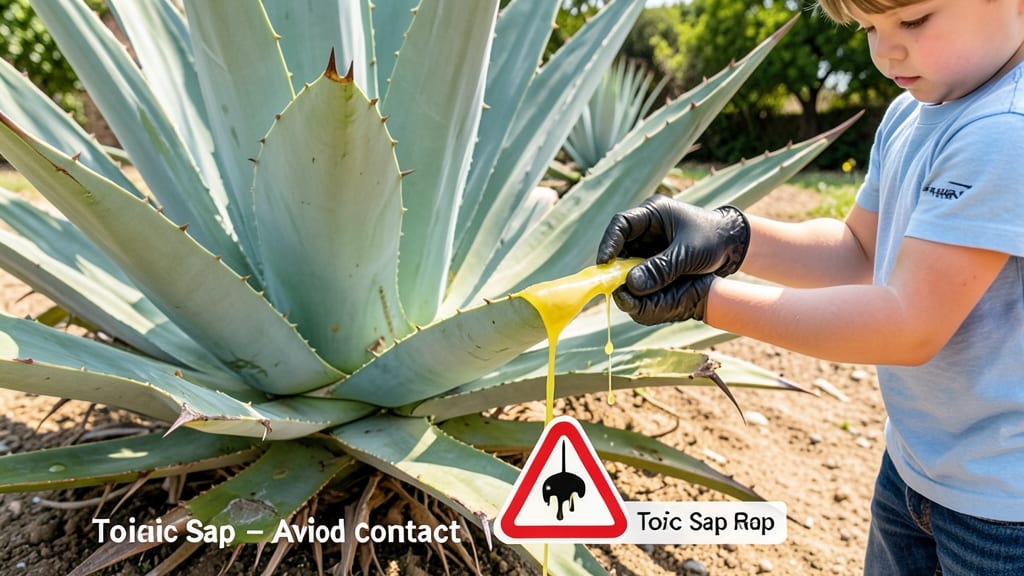
Agave plants are poisonous to pets and humans because their sharp spines and saponin-filled sap can trigger oral irritation, vomiting, and excessive drooling upon contact. Always wear protective gloves when handling and keep plants out of reach of curious animals.
Agave plants contain saponins, natural compounds that create foamy toxins when ingested, while their sharp leaves pose physical risks too. 🌵 Pets are especially vulnerable because their smaller size means even tiny amounts of sap can cause severe reactions.
The good news? Most cases resolve with basic first aid—rinsing the mouth and monitoring for symptoms—but prevention is key, especially if you have cats or dogs at home.
For pet owners, consider placing agaves in hanging planters or high shelves where pets can't reach. If ingestion occurs, contact your vet immediately—don't wait for symptoms to appear. And remember: the sap isn't just a mouth irritant; it can also cause skin irritation if it touches your hands without protection.
💡 In This Article
- Toxic Components in Agave Plants and Their Effects
- Safe Handling and Pet-Proofing Your Agave Plants
Toxic components in agave plants and their effects
The primary toxins in agave plants are saponins—bitter, soap-like compounds that create a foamy reaction when mixed with saliva. These chemicals disrupt cell membranes in the digestive tract, causing inflammation and irritation.
For example, a single bite of agave leaf can release enough saponins to trigger vomiting within 15-30 minutes in pets, while humans may experience mild stomach upset or mouth irritation.
Agave also contains oxalates, needle-like crystals that physically damage mouth tissues, leading to excessive drooling and pain.
The sharp spines on agave leaves add another hazard—they can puncture skin or mouths, creating entry points for toxins. 🌵 In severe cases, ingestion may cause neurological symptoms like lethargy or tremors, particularly in small animals where even small doses become concentrated in their systems.
Pets are more vulnerable because their smaller bodies can't metabolize these toxins efficiently. A 10-pound dog might react to just 1 teaspoon of sap, while a human would likely need to consume much larger amounts to experience similar effects.
The sap's sticky texture also makes it difficult to remove from fur or paws, prolonging exposure.
Skin contact with agave sap can cause dermatitis in sensitive individuals, with symptoms appearing within 6-24 hours of exposure. The sap's alkaline nature (pH ~8.5) breaks down skin proteins, leading to redness and itching.
This is why gardeners always recommend wearing nitrile gloves when handling agave—regular latex gloves won't provide sufficient protection.
Interestingly, the toxicity varies by species. Agave americana (century plant) contains higher saponin levels than Agave tequilana (tequila agave), which is why the former is more dangerous. However, all agave varieties should be treated with caution, as even non-lethal doses can cause discomfort.
For comparison, the saponin content in agave is similar to that found in soapwort plants, which have been used historically for their cleansing properties—but in concentrated form, they become toxic.
This dual nature explains why agave sap was once used in traditional medicine (in very controlled amounts) while also being hazardous when misused.