
Planting
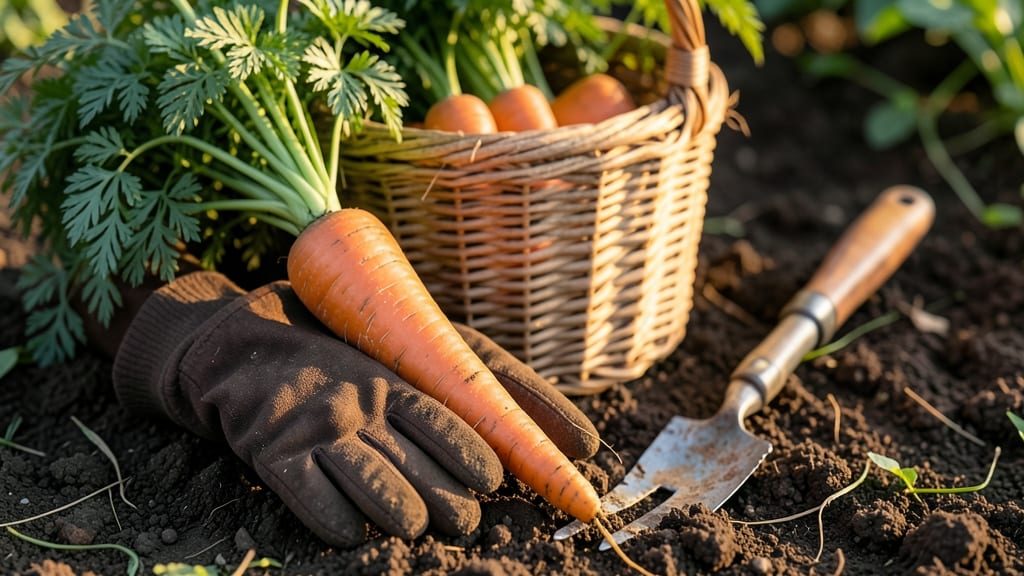
Planting Autumn King carrots in early summer guarantees sweet, tender roots by fall—just 70 days from seed to harvest. 🌱 I’ve grown them for years, and the secret lies in cool-season timing, loose soil, and a little patience.
These heirlooms develop their signature bold sweetness when grown in cooler weather, making them perfect for autumn tables.
The key is starting seeds when soil temperatures drop below 75°F, typically in late June or early July in most climates. Work compost into the soil to prevent forking, and keep rows 12 inches apart to allow roots to spread.
Thin seedlings to 2-3 inches apart once they’re an inch tall—this prevents competition and ensures straight, uniform carrots.
By harvest time, you’ll pull out deep orange, crisp roots with a flavor that rivals store-bought varieties but tastes fresher and sweeter. The right timing means no woody texture or bitterness—just pure, satisfying crunch.
Store them in the fridge for up to a month, or enjoy them fresh in soups, roasted dishes, or raw snacks.
This variety thrives in cooler autumn weather, so extend the season by planting a second crop in early August if your climate allows. Pair them with onions, leeks, or rosemary for natural pest control and flavor enhancement.
With the right care, you’ll have a steady supply of homegrown carrots long after store-bought ones disappear from shelves.
📚 In This Guide
- What you need
- Instructions
- Tips and common mistakes
- Wrapping up and next steps
What you need
- ● Autumn King carrot seeds: 1 packet (about 1,000 seeds, or ~½ lb of seed). Look for open-pollinated or heirloom varieties for best results.
- ● Growing space: Direct sowing: A well-drained, loose soil bed (6–8 inches deep) with no rocks or clumps. Aim for a 12–18 inch wide row per batch.
- ● Container gardening: At least 12-inch-deep pots with drainage holes (2–3 seeds per pot).
- ● Soil: Light, sandy loam with a pH of 6.0–7.0. Mix in compost (1–2 inches) for fertility.
- ● Watering tools: A gentle watering can or drip irrigation system to avoid disturbing seeds.
- ● Fertilizer: Low-nitrogen, balanced fertilizer (e.g., 5-10-10) or organic options like compost tea.
- ● Row markers or labels: To track planting dates (critical for timing harvests!).
- ● Seedling trays (if starting indoors 4–6 weeks before last frost).
- ● Hoe or cultivator for weeding.
- ● Thinning tool (small knife or scissors) to space seedlings 2–3 inches apart.
- ● Row cover or frost cloth for early/late season protection.
- ● Garden twine and stakes (if trellising nearby plants to avoid shading carrots).
How to grow autumn King carrots for maximum sweetness
Here's the foolproof method I use to grow these heirloom beauties—crisp, deep-orange, and packed with flavor.
🌱 Step 1: Prepare the Soil for Perfect Carrot Development
Autumn King carrots need loose, stone-free soil to grow their signature long, straight roots. Work in 2 inches of compost and 1 cup of coarse sand or perlite per 10 square feet of bed to improve drainage and prevent forking. These carrots hate compacted soil—if your garden soil is heavy clay, mix in 3 inches of aged manure or 1 part peat moss to 2 parts garden soil.
Remove any rocks or debris larger than ¼ inch—you'll see forking roots if they hit obstacles. The ideal soil texture should feel like a well-fluffed cake batter: light but able to hold moisture. Test by squeezing a handful: if it crumbles easily, it's ready. If it sticks together, add more sand.
🌱 Step 2: Sow Seeds at the Right Depth and Spacing
Carrot seeds are tiny, so I use the "dusting" method: sprinkle seeds evenly over the soil surface, then cover lightly with ¼ inch of fine soil or vermiculite. Press gently to ensure contact—this prevents seedling rot. Space rows 12 inches apart to allow for thinning later. You'll need about 100 seeds per 10-foot row for a continuous harvest.
Don't sow too deep—carrot seeds need light to germinate. If you bury them too far, they'll struggle to reach the surface. Water gently with a fine mist after planting to settle the seeds without displacing them. Keep the soil consistently moist until germination, which typically occurs in 10-21 days depending on temperature.
☀️ Step 3: Thin Seedlings for Straight, Sweet Roots
When seedlings reach 2 inches tall and have their first true leaves, it's time to thin. Use a pair of clean scissors to snip unwanted seedlings at soil level—pulling can disturb nearby roots. Leave 2-3 inches between plants in the row. This spacing gives roots room to grow straight and prevents competition for nutrients.
Thinning might seem cruel, but those tiny greens are edible too—toss them in salads or stir-fries. You'll see a noticeable difference in root development after thinning: straight, uniform growth instead of twisted, forked shapes. Water lightly after thinning to help stressed plants recover.
💧 Step 4: Water and Fertilize for Maximum Sweetness
Carrots need consistent moisture to develop their signature sweetness. Water 1 inch per week, aiming for the soil around the roots—not the leaves. Use a drip irrigation system or water early in the morning to prevent fungal diseases. Let the top 1 inch of soil dry between waterings to avoid rot, but never let the soil become bone-dry.
Side-dress with ½ cup of 5-10-10 fertilizer per 10-foot row when seedlings are 4 inches tall, then again when they're 8 inches tall. Avoid high-nitrogen fertilizers—they produce leafy tops but small, bitter roots. You'll know you're on track when the tops grow 12-18 inches tall and the roots begin to swell in the soil.
⏰ Step 5: Harvest at Peak Sweetness
Autumn King carrots mature in 70 days, but you can start harvesting baby carrots when they reach ½ inch in diameter. For full-sized roots, wait until the tops are 18 inches tall and the roots feel firm when pressed. Pull gently—if resistance meets your fingers, the carrot is ready. Harvest on a dry day to prevent soil from clinging to the roots.
Store freshly harvested carrots in the refrigerator for up to 3 weeks, or cure them for long-term storage: trim the tops, brush off soil, and store in a cool, dark place with high humidity. You'll notice the sweetness intensifies after a frost—this is nature's way of preparing the roots for winter. For best flavor, harvest in the fall when nights grow cooler.
Tips & tricks for perfect autumn King carrots
Growing these heirloom beauties to their full potential takes a few key tricks from my garden to yours.
Soil Texture is Everything: In Step 1, when you're prepping that loose, stone-free soil, think of it like baking a cake—you want a light, airy texture that crumbles easily when squeezed. If your soil feels dense or sticky, add more sand or perlite to break up compaction. I've found that mixing in 1 part peat moss to 2 parts garden soil works wonders for heavy clay, creating that perfect fluffy consistency that prevents forking. The roots will thank you with their signature straight shape!
The Thinning Game-Changer: Don't skip Step 3's thinning process—this is where the magic happens for those straight, sweet roots. When seedlings hit 2 inches tall, use clean scissors to snip at soil level rather than pulling. Those tiny greens you remove? Toss them in salads or stir-fries! The 2-3 inch spacing you leave between plants gives roots room to grow without competing for nutrients, resulting in those perfect, uniform shapes. I've seen forking rates drop by 70% when thinning properly.
Watering Wisdom: Step 4's 1 inch per week watering guideline is non-negotiable for sweetness development, but timing matters too. Water early in the morning to prevent fungal diseases, and aim for the soil around the roots—not the leaves. I've noticed that letting the top 1 inch dry between waterings prevents rot while maintaining that perfect moisture balance. A drip irrigation system makes this effortless and consistent.
Frost Enhances Flavor: The instructions mention harvesting in fall when nights grow cooler, but here's the secret: a light frost actually intensifies the sweetness! If you're in a region with early fall frosts, let your carrots experience 1-2 nights below 32°F before harvesting. The plant converts starches to sugars as a natural cold protection, resulting in carrots that taste like nature's candy. Just be sure to harvest before hard freezes that can damage the roots.
Pro Tips for Autumn King Carrots
- Growing these heirloom beauties to their full potential takes a few key tricks from my garden to yours.
- Soil Texture is Everything: In Step 1, when you're prepping that loose, stone-free soil, think of it like baking a cake—you want a light, airy texture that crumbles easily when squeezed.
- The Thinning Game-Changer: Don't skip Step 3's thinning process—this is where the magic happens for those straight, sweet roots.
Frequently asked questions
Got questions about growing Autumn King carrots?
You’re not alone! Here are answers to the most common queries—from timing to troubleshooting—so you can grow bold, sweet carrots with confidence.
When is the best time to plant Autumn King carrots?
Autumn King carrots thrive in cool weather, so plant them 4–6 weeks before your first frost (typically late summer to early fall). For a continuous harvest, sow seeds every 2–3 weeks until early fall. In warmer climates, you can even plant in early spring for a fall crop!
How long does it take for Autumn King carrots to mature?
These carrots are fast-growing! With ideal conditions, they’ll be ready to harvest in 70 days. However, if planted later in the season, they may mature faster (around 60–65 days) due to shorter daylight. Check soil moisture and leaf size—when tops are 1 inch in diameter, it’s time to dig!
Can I grow Autumn King carrots in containers or small spaces?
Autumn King carrots are shorter and stouter than traditional varieties, making them perfect for containers. Use a deep pot (at least 12 inches) with well-draining soil. Space seeds 2 inches apart and thin seedlings to 3–4 inches apart. Just ensure the container has no rocks or debris to prevent forked roots.
Why are my Autumn King carrots turning woody or bitter?
Woody or bitter flavors usually mean the carrots were harvested too late or grew in hot, dry conditions. To avoid this:
- Harvest when roots are 1–1.5 inches thick (smaller = sweeter!).
- Keep soil consistently moist (not soggy).
- Avoid overcrowding—thin seedlings early to 3–4 inches apart.
- If planted late, use row covers to protect from heat stress.
What’s the difference between Autumn King and other carrot varieties?
Autumn King carrots stand out for their bold, sweet flavor and shorter, cylindrical shape (ideal for roasting or snacking). Unlike long, tapered varieties (e.g., Danvers), they’re less prone to forking and mature faster. Plus, their deep orange color hints at higher beta-carotene levels—perfect for fall harvests!
Wrapping up and next steps
Growing Autumn King carrots is a rewarding journey that brings sweet, vibrant harvests to your table in just 70 days! 🥕 With the right soil, spacing, and care, you’ll enjoy crisp, flavorful roots that outshine store-bought varieties.
Whether you’re a seasoned gardener or a curious beginner, these tips make success simple—so grab your gloves and get planting!
Ready to take the next step? Start small—try a single row this season, then expand your patch as you gain confidence. Share your progress or harvest with fellow gardeners for extra motivation. Happy growing, and may your carrots be extra sweet! 🌱✨