
Flowers
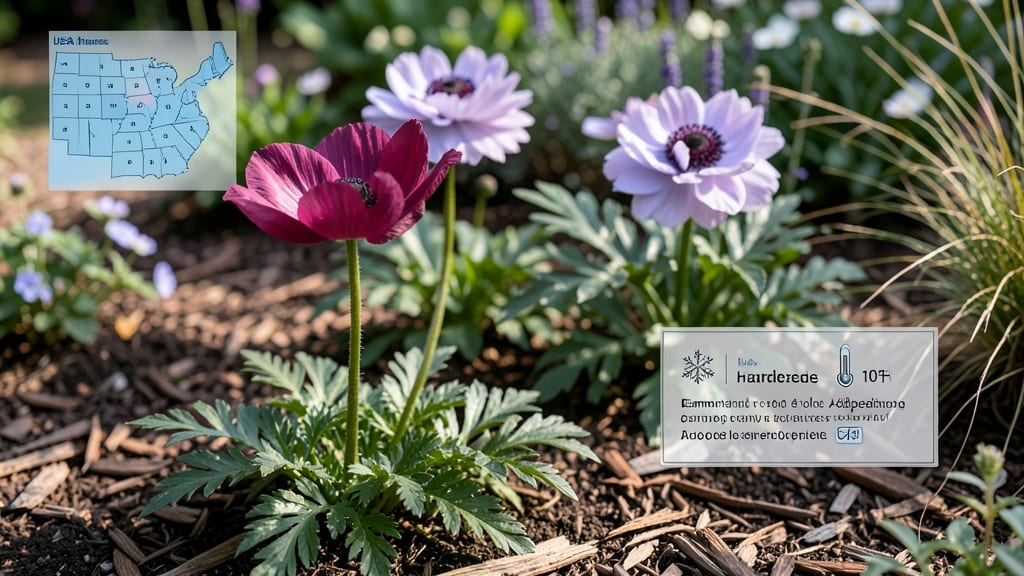
Understanding anemone hardiness zones is key: these flowers adapt well to zones 3 through 9, though their cold tolerance varies dramatically by type. Japanese anemones (zone 4-8) are more resilient in chillier climates, while windflower anemones (zone 3-9) excel in frost-prone areas. Strategic planting techniques like mulching and proper depth can push these limits even further.
Anemones aren't just one-size-fits-all when it comes to cold tolerance. 🌿 The Japanese anemone (like 'Honorine Jobert') can handle zone 4 winters with proper care, while the delicate windflower (Anemone nemorosa) thrives in zone 3's harshest conditions.
What's fascinating is how their growth habits differ: Japanese types grow from rhizomes that store energy underground, while windflowers develop tuberous roots that insulate naturally.
For gardeners in zone 2 or 10+, the solution often lies in microclimates—planting near south-facing walls or using thick mulch layers can create the perfect buffer.
Even within these zones, soil type plays a surprising role. Sandy soils drain quickly, which can stress roots during winter thaw cycles, while clay holds moisture that might lead to rot.
The key is balancing insulation with aeration—think of it like dressing your plants for winter: too much coverage suffocates them, but too little leaves them vulnerable to freeze-thaw damage.
I've found that adding 3-4 inches of shredded bark mulch in late fall makes all the difference for marginal zone plants.
💡 In This Article
- Cold Tolerance Breakdown by Anemone Variety
- Protecting Anemones in Marginal Hardiness Zones
Cold tolerance breakdown by Anemone variety
The cold hardiness of anemones depends entirely on their species and root structure. Japanese anemones (Anemone × hybrida) thrive in zones 4-8 because their thick, woody rhizomes store energy like a natural battery, allowing them to survive temperatures down to -30°F (-34°C).
These rhizomes act as insulation, protecting the plant's core during winter dormancy. In contrast, windflowers (Anemone nemorosa) excel in zones 3-9 thanks to their tuberous roots, which can endure -40°F (-40°C) when properly insulated by snow cover or mulch. 🌨️
Hybrid anemones often fall somewhere in between, with varieties like 'Queen Charlotte' (zone 5-9) developing a balance between rhizome storage and tuberous root systems.
What's fascinating is how their dormancy patterns differ: Japanese types enter dormancy later in fall but emerge earlier in spring, while windflowers go dormant sooner but need consistent soil moisture during their brief growing window.
This explains why windflowers often outperform Japanese types in zone 3 gardens—they've evolved to handle shorter growing seasons.
Soil temperature plays a crucial role in winter survival. The roots of most anemones need to stay above 28°F (-2°C) during winter to prevent cellular damage. In colder zones, this means planting on south-facing slopes where the ground warms faster in spring.
I've seen windflowers thrive in zone 2 gardens when planted against brick walls, where the masonry absorbs and radiates heat back to the roots—a technique called "microclimate engineering."
Seasonal adjustments matter too. Japanese anemones benefit from a 3-inch layer of straw mulch in late fall, while windflowers prefer 4-5 inches of shredded leaves—the extra depth helps regulate temperature fluctuations.
What most gardeners miss is that windflowers actually need this mulch removed in early spring to prevent rot from excess moisture, while Japanese types can handle mulch all season long.
This timing difference explains why some gardeners struggle with windflowers in zone 4—they're either over-mulching in winter or under-mulching in spring.
Consider these key factors when selecting varieties for your zone:
- Zone 3-4: Windflowers (Anemone nemorosa) and 'Robustissima' hybrids—choose varieties with dark foliage as they handle shade better in cold climates
- Zone 5-6: Japanese types like 'Honorine Jobert' or 'Pamina'—their larger blooms compensate for slightly less cold tolerance
- Zone 7-9: Tall hybrids like 'Queen Charlotte'—these thrive in heat but need consistent moisture during summer dormancy
For gardeners in transition zones (like zone 4 edges), the secret often lies in planting depth. Japanese anemones should be set with their rhizomes 2-3 inches below soil level, while windflowers need their tubers 4-5 inches deep—this extra soil acts as an insulating blanket.
The deeper planting also helps prevent heaving during freeze-thaw cycles, which can uproot shallowly planted specimens. 💡