
Vegetables
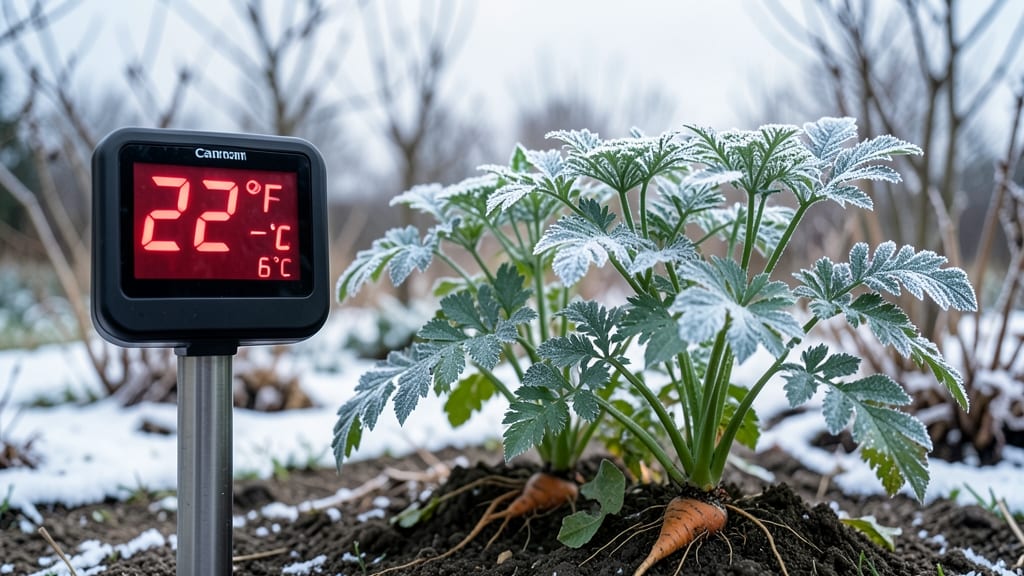
Carrots are indeed cold hardy, but they can't survive prolonged freezing—thriving best in USDA Zones 3-11 when soil stays above 40°F. For winter harvests, plant them in fall or shield roots with thick mulch to prevent cracking or rotting.
Cold tolerance in carrots comes down to their root structure—thick, fleshy roots can handle light frost but freeze solid when temperatures drop below 20°F for more than a few hours. 🥕 The key is maintaining soil warmth above 40°F, which is why fall planting (6-8 weeks before first frost) gives roots time to establish before winter.
I've seen gardeners in Zone 5 successfully grow carrots through winter by layering straw mulch 6 inches thick—this creates an insulating barrier that keeps soil temps stable.
What's interesting is how carrots respond differently based on variety. Short, round types like 'Paris Market' handle cold better than long, tapered varieties, which are more prone to splitting when soil freezes and thaws.
For extreme climates, consider container growing with extra insulation—just make sure the pot has drainage to prevent waterlogged roots.
💡 In This Article
- USDA Zones and Temperature Limits for Carrot Growth
- Winter Carrot Planting and Protection Strategies
USDA zones and temperature limits for carrot growth
Carrots exhibit remarkable cold tolerance due to their root structure, which stores water and nutrients efficiently. They can withstand light frost down to 25°F without damage, but their roots begin to suffer when soil temperatures drop below 20°F for extended periods.
This is because the water within the root cells starts to crystallize, rupturing delicate cell walls and causing irreversible damage. 🌱 The optimal soil temperature range for carrot growth is 40-75°F, where root development occurs most efficiently.
USDA Zone breakdowns reveal why carrots thrive from Zone 3 through Zone 11. In colder zones (3-5), gardeners often achieve winter harvests by planting in early fall, allowing roots to mature before ground freezes. The key threshold is 40°F soil temperature—below this, root growth slows dramatically.
For example, in Zone 4, where winter lows can hit -20°F, carrots planted in late summer will often survive until late fall harvests if protected properly. Meanwhile, in warmer zones (7-11), carrots can be grown year-round with consistent harvests.
What makes this even more interesting is how carrot varieties respond differently to cold. Short-rooted varieties like 'Paris Market' handle freezing better than long varieties like 'Danvers', which are more prone to splitting when soil freezes and thaws repeatedly.
This is because longer roots have more surface area exposed to temperature fluctuations. The science here involves cell membrane permeability—shorter roots have thicker cell walls that resist ice crystal formation better than their elongated counterparts.
Another critical factor is soil moisture content. Damp soil conducts cold more efficiently than dry soil, which is why well-drained beds are essential in cold climates. When soil freezes, ice crystals form in the pores, pushing against root surfaces and causing mechanical damage.
This is why gardeners in Zone 5 often use raised beds with sandy loam—this soil type drains better and maintains more stable temperatures during winter thaws.
Consider these temperature thresholds for carrot survival:
- Light frost (25-30°F): No damage to established roots, but growth slows significantly
- Moderate frost (20-25°F): Surface roots may show frost damage, but deeper roots often survive
- Severe freeze (below 20°F): Root cells begin to crystallize, causing irreversible damage within 24-48 hours
- Prolonged freeze (below 15°F for >3 days): Complete root failure, with roots becoming mushy or splitting
The most critical period is during temperature swings—when days warm above 40°F but nights drop below freezing. This causes repeated freezing and thawing cycles that create ice lenses in the soil, which physically split carrot roots. Understanding these thresholds helps gardeners time their plantings and protection strategies effectively. 💫