
Plants
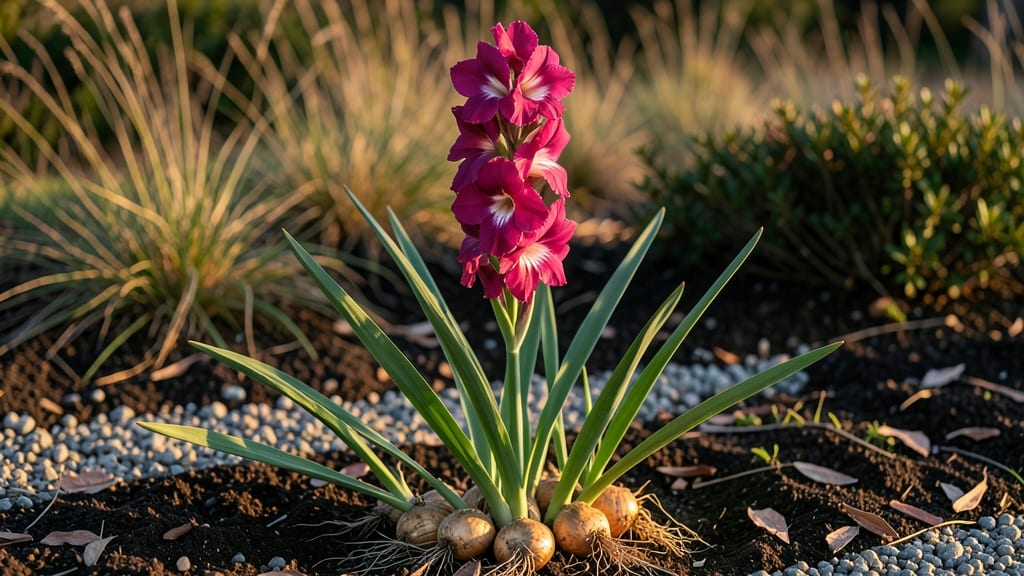
Gladiolus are not true perennials in Zone 6—their corms survive mild winters but often die back in harsh freezes, requiring annual replanting or winter protection like mulch or indoor storage. Cold-hardy varieties like 'Attraction' or 'Green Star' may persist longer with care.
Gladiolus act more like seasonal perennials in Zone 6—their underground corms can last through winter but face serious risks when temperatures drop below 20°F. 🌱 Unlike true perennials such as daylilies, which regrow year after year without intervention, gladiolus corms need extra care to survive freezing soil.
The key is protecting them from moisture loss and extreme cold, whether through thick mulch layers or indoor storage during the harshest months.
For gardeners in Zone 6, the difference between annual replanting and long-term survival often comes down to variety selection and winter prep. While standard gladiolus may need annual digging, cold-tolerant hybrids like 'Green Star' can sometimes overwinter with proper insulation.
The trade-off? They may produce fewer blooms the following season if stressed.
💡 In This Article
- Why Gladiolus Struggle as Perennials in Zone 6
- Zone 6 Gladiolus Winter Survival Strategies
Why gladiolus struggle as perennials in Zone 6
Gladiolus corms enter dormancy in fall, but their survival hinges on staying above 20°F—a threshold most Zone 6 winters violate. Unlike true perennials like daylilies, which store energy in deep roots insulated by soil, gladiolus corms have minimal protective tissue.
When frozen, their cells rupture from ice crystal formation, causing irreversible damage. Even a single freeze below 15°F can kill 50% of corms, explaining why they rarely return reliably year after year.
The real culprit is moisture loss combined with cold. Corms lose 20-30% moisture in dry winter soil, weakening their ability to regrow. Wet soil, however, creates anaerobic conditions that rot corms before spring.
This delicate balance means gladiolus act more like biennials—they might survive one winter but rarely thrive into a third season without intervention. True perennials, by contrast, have fibrous root systems that regenerate annually with minimal stress.
Soil type matters too. Sandy soils drain quickly but offer no insulation, while clay holds moisture but conducts cold. The ideal winter environment for gladiolus corms is dry, cool, and insulated—think of it like storing potatoes in a dark cellar.
Without this, corms shrivel or freeze solid, explaining why gardeners often dig them up annually in Zone 6.
Cold-hardy varieties like 'Attraction' or 'Green Star' push survival limits by developing slightly thicker corm coats, but even these struggle when winter temperatures dip below 10°F for extended periods. The trade-off? These hybrids may produce 10-20% fewer blooms—their energy goes into survival rather than flowering.
This is why gardeners in Zone 6 treat gladiolus more like short-lived perennials—**they’ll return for 2-3 years with care but rarely beyond.
What most gardeners don’t realize is that gladiolus corms actually prefer—not tolerate—winter dormancy. Their natural lifecycle in warmer climates involves a 6-8 week dormancy period—when planted in Zone 6, this dormancy gets interrupted by unpredictable freezes.
The result? Corms either rot from lingering moisture or dry out from premature awakening in spring.
To visualize the difference, compare gladiolus to a daylily—****its rhizomes spread horizontally, storing energy across a wide area, while gladiolus corms are concentrated points vulnerable to localized cold spots. This structural difference explains why daylilies thrive in Zone 6 with zero winter care, while gladiolus need active protection.