
Pests
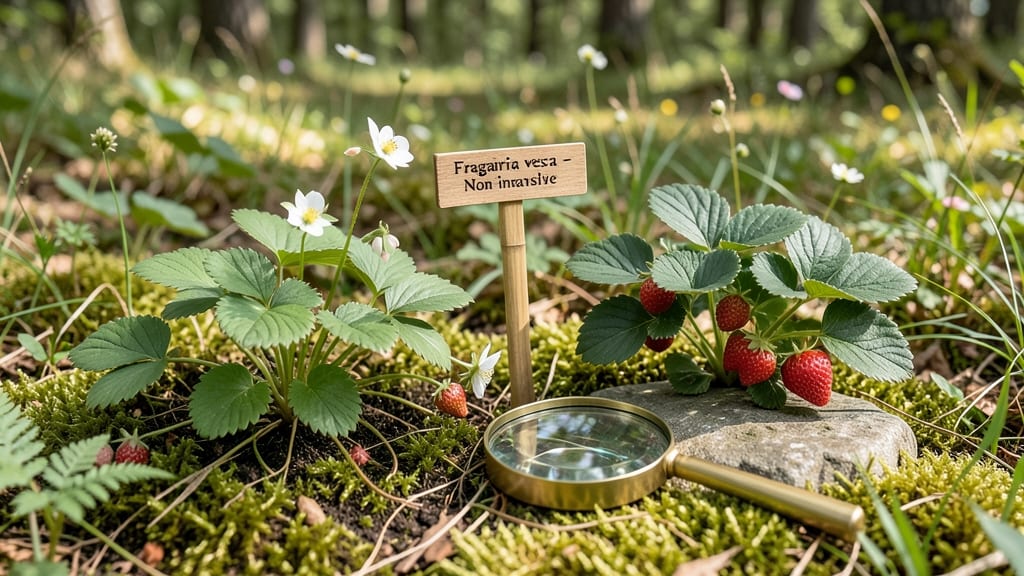
Wild strawberries aren't typically invasive like aggressive ground covers, but their spread varies by species and growing conditions. They self-seed readily and can create dense patches, though they rarely overwhelm ecosystems like true invasive plants.
Wild strawberries spread primarily through self-seeding and shallow root systems, allowing them to form thick mats in ideal conditions.
Unlike true invasive species, they don't aggressively outcompete native plants or disrupt entire ecosystems. 🌱 Their growth rate depends heavily on sunlight, moisture, and soil quality—dry or shaded areas slow their expansion significantly. Many gardeners appreciate their low-maintenance nature and use them as natural ground cover in controlled spaces.
What sets them apart from true invasive plants is their lack of aggressive spread mechanisms, like underground rhizomes or prolific seed dispersal through wind or water. While they can become nuisance plants in gardens, their ecological impact remains minimal compared to species like mint or kudzu.
The key difference lies in their growth habits—wild strawberries thrive in clusters rather than spreading uncontrollably.
💡 In This Article
- How Wild Strawberries Spread in Gardens and Landscapes
- Managing Wild Strawberry Patches Without Harming Ecosystems
How wild strawberries spread in gardens and landscapes
Wild strawberries primarily spread through a combination of self-seeding and shallow, fibrous root systems that create dense mats. Each plant produces 10-50 tiny seeds per berry, which scatter easily when the fruit ripens and bursts.
These seeds germinate rapidly in well-drained soil with 60-80% sunlight exposure, creating new plants within 2-4 weeks of germination. Unlike aggressive invaders, they lack true runners or rhizomes, so their spread remains localized unless conditions are ideal.
Their growth rate accelerates in moist, fertile soil with consistent moisture—similar to how cultivated strawberries thrive. In comparison, invasive plants like mint spread via underground runners at 3-6 inches per season, while kudzu grows 60+ feet annually under perfect conditions.
Wild strawberries, however, typically expand only 1-2 feet per year unless heavily fertilized or watered, making them far less disruptive. 🌱 Their shallow roots also make them vulnerable to drought or competition from deeper-rooted plants.
Environmental factors play a critical role in their spread. In wild, undisturbed areas, they often form stable colonies without spreading aggressively. However, in gardens or landscaped beds, human activity—like tilling or planting—can accelerate their growth by exposing buried seeds.
The key difference from true invaders is their lack of mechanisms to outcompete established plants; they simply fill available space rather than displacing it.
Another factor is their limited lifespan. Most wild strawberry plants live only 1-2 years, after which they die back, leaving room for other species. This contrasts with perennials like creeping Charlie, which persist for decades.
Their short-lived nature means patches often stabilize rather than expand indefinitely, making them more of a nuisance than an ecological threat.
Consider their spread mechanism compared to blackberries, which send up new shoots from roots, or dandelions, which produce thousands of wind-dispersed seeds.
Wild strawberries rely on animal consumption (birds and small mammals) for long-distance seed dispersal, but their seeds lack the hard coating that allows them to survive harsh conditions for years. This biological limitation keeps their spread contained unless actively cultivated.