
Planting
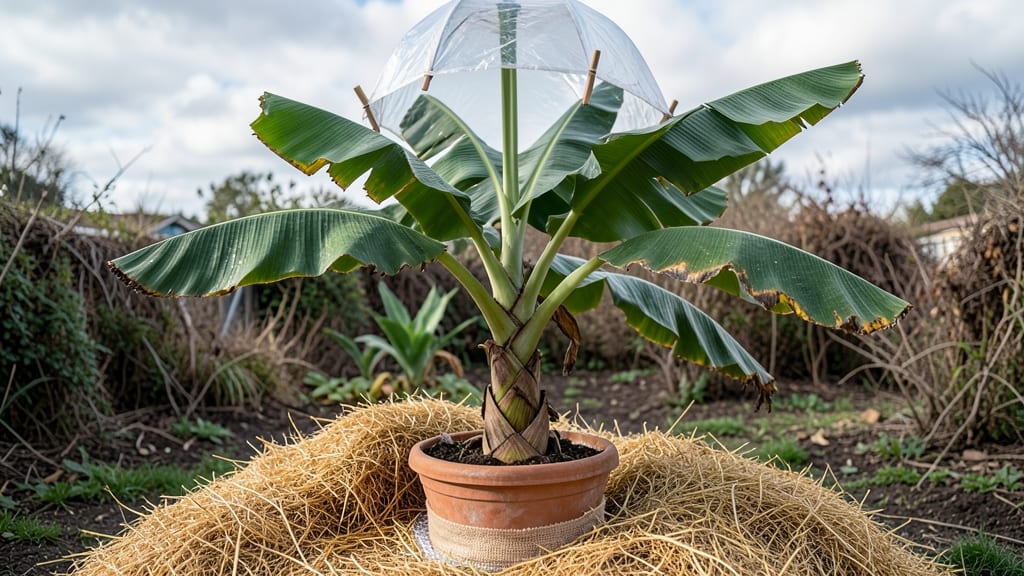
Your banana plant can survive banana plant winter protection—if you protect it right. 🌱 The key is cold-hardy mulching layered with smart covering techniques that shield roots and foliage from frost while letting air circulate.
I’ve kept my banana plants alive through Zone 7 winters using these exact methods, and they bounce back stronger every spring.
Start with the right variety—look for Musa acuminata ‘Dwarf Cavendish’ or Musa basjoo, which handle cooler temps better than tropical types. Then, mound 8–12 inches of straw or leaves around the base in late fall, followed by a breathable frost blanket once temps drop below 25°F.
The goal is to insulate without suffocating—too much mulch traps moisture and invites rot.
By spring, you’ll see fresh fronds unfurling, proof that your plant weathered the cold. The trick is consistency: check mulch levels monthly, adjust covers for rain, and avoid plastic that traps heat. Even in Zone 6, this method works—just add extra insulation for prolonged freezes.
For gardeners in colder zones, container-grown bananas let you move plants to a garage or sunroom when frost hits. The same mulching rules apply, but you gain flexibility. No matter your climate, these steps turn winter from a death sentence into a survival hack for your tropical favorite.
📚 In This Guide
- What you need
- Instructions
- Tips and common mistakes
- Wrapping up and next steps
What you need
- ● Organic mulch: Straw, pine needles, or shredded leaves (10–12 inches deep for insulation). Avoid fresh wood chips—they can steal nitrogen!
- ● Burlap or frost cloth: At least 3–4 feet wide and 6–8 feet long to wrap the plant base (or use a 50–70% shade cloth for partial coverage).
- ● Garden twine or zip ties: To secure frost cloth tightly around the plant.
- ● Pruners or sharp shears: For trimming dead or damaged leaves (sterilize with rubbing alcohol first!).
- ● Garden gloves: To protect your hands from thorns and rough mulch.
- ● Watering can or hose: For a deep watering before mulching (aim for 1–2 gallons per plant).
- ○ Thermometer (optional but helpful): A soil thermometer to monitor temps—bananas hate freezing roots (below 50°F/10°C is risky!).
- ● Insulated plant wrap: Bubble wrap or plant-specific frost blankets for extra warmth in harsh climates.
- ● Potting mix or compost: A 5–10 gallon bag to top-dress the base if your soil drains poorly.
- ● Stakes or small hoops: To create a mini greenhouse with frost cloth if your banana is potted.
- ● Anti-desiccant spray: Like Wilt-Pruf, to protect leaves from windburn.
Step-by-step guide to protecting banana plants in winter
Here’s how to keep your tropical banana plants thriving through cold months—no greenhouses required.
🌱 Step 1: Choose the Right Mulching Materials
Start with 6-8 inches of organic mulch like straw, pine needles, or shredded leaves. These materials insulate roots while allowing airflow to prevent rot. I avoid thick layers of grass clippings—they compact and trap moisture, which can suffocate roots in winter. Spread the mulch evenly over the soil surface, extending it 12 inches beyond the plant’s base to protect the root zone.
For extra insulation, mix in 2-3 inches of compost beneath the mulch. This adds warmth while feeding beneficial microbes that break down organic matter slowly. The compost also helps retain moisture during dry winter spells. Avoid fresh manure—it can burn roots and attract pests.
🪴 Step 2: Wrap the Trunk for Added Protection
Use burlap sacks, cardboard, or even thick bubble wrap to shield the banana plant’s pseudostem from freezing winds. Wrap the trunk loosely, leaving the top open to allow airflow. Secure it with twine or landscape staples, but don’t cinch it too tight—you want the material to breathe while blocking cold drafts.
For plants in USDA Zones 9-10, this layering is often enough. In colder zones (8 or below), add a second layer of mulch on top of the wrap, piling it 12-18 inches high around the base. The goal is to mimic the plant’s natural tropical environment, where thick leaf litter and humidity protect it from temperature swings.
✂️ Step 3: Prune and Clean Up Debris
Before mulching, remove any dead or yellowing leaves with clean, sharp pruners. Diseased foliage can harbor pathogens that overwinter and infect the plant in spring. Cut back only the damaged parts—never prune healthy leaves, as they photosynthesize even in winter and contribute to the plant’s energy reserves.
Rake away all fallen leaves and debris from around the base. This prevents fungal growth and keeps the mulch layer dry. A clean workspace also lets you monitor the plant’s health throughout winter—if you spot mold or rot, address it immediately by adjusting airflow or replacing contaminated mulch.
☀️ Step 4: Monitor Moisture and Adjust as Needed
Water the banana plant deeply before the first frost, then reduce irrigation to once every 2-3 weeks unless the soil feels bone-dry. Overwatering in winter is a common mistake—excess moisture in cold soil can drown roots. Stick your finger 2 inches into the soil; if it’s dry, water lightly at the base, avoiding the leaves to prevent fungal diseases.
Check the mulch layer monthly. If it compacts or shifts, fluff it up to restore insulation. In particularly cold snaps (below 30°F), add a third layer of mulch or drape a frost cloth over the plant for 24 hours. Remove it during the day if temperatures rise above 40°F to prevent overheating.
⏰ Step 5: Prepare for Spring Transition
As temperatures rise above 50°F, gradually remove the trunk wrap and top layer of mulch. Start with 2-3 inches at a time, spreading it around the base to avoid shocking the roots. This slow transition mimics natural warming and prevents stress. Leave 4-6 inches of mulch in place until the soil warms consistently above 60°F.
Watch for new growth—bright green shoots emerging from the base signal it’s safe to remove all winter protection. Once the plant shows signs of spring, fertilize lightly with a balanced 10-10-10 formula to encourage regrowth. Avoid heavy feeds until you see 3-4 new leaves, as the plant is still recovering from dormancy.
Tips & tricks for cold-hardy banana plant winter care
Between us, I’ve lost more banana plants to winter neglect than I’d like to admit—until I learned these game-changing strategies. The difference between a thriving tropical plant and a frozen casualty often comes down to these details.
Layering Strategy: When building your mulch layers, think of it like putting on a winter coat—each layer serves a purpose. Start with the 2-3 inches of compost at the soil level to provide warmth and nutrients, then add the 6-8 inches of organic mulch on top. This creates a thermal blanket effect that mimics the plant’s natural habitat. For extra protection in Zone 8 or colder, add that second layer of mulch (12-18 inches high) only after you’ve wrapped the trunk—this prevents moisture buildup that can lead to rot.
Trunk Wrapping Technique: The key with wrapping is balance—you want to block cold winds without creating a moisture trap. I’ve found that using burlap sacks works best because they allow some airflow while still providing insulation. If you’re using cardboard, cut it to size and overlap the edges slightly to prevent gaps. Pro tip: Leave a small opening at the top (about 2-3 inches) to allow any condensation to escape. This prevents the buildup of moisture that can lead to fungal issues.
Moisture Management: Here’s what nobody tells you—banana plants need less water in winter, but the timing matters. After that deep watering before the first frost, check soil moisture by sticking your finger 2 inches deep every 2-3 weeks. If the soil feels dry, water lightly at the base only—never wet the leaves. I’ve seen too many gardeners overwater in winter, thinking the plant needs more moisture, only to have their roots suffocate in cold, soggy soil. The goal is to keep the roots just slightly moist, not drenched.
Spring Transition Timing: When temperatures rise above 50°F, don’t rush to remove all that winter protection. I’ve made the mistake of stripping everything off too soon, only to watch new shoots wilt from temperature shock. Instead, remove the top layer of mulch in 2-3 inch increments over several days, spreading it around the base. This gradual exposure mimics natural spring warming and gives your plant time to adjust. Leave that 4-6 inches of mulch in place until the soil consistently stays above 60°F—this prevents root stress that can set back growth for weeks.
Pro Tips for Banana Plant Winter Protection
- Between us, I’ve lost more banana plants to winter neglect than I’d like to admit—until I learned these game-changing strategies.
- Layering Strategy: When building your mulch layers, think of it like putting on a winter coat—each layer serves a purpose.
- Trunk Wrapping Technique: The key with wrapping is balance—you want to block cold winds without creating a moisture trap.
Frequently asked questions
Got questions about keeping your banana plant happy through winter? You’re not alone! Here are some of the most common concerns—and how to tackle them like a pro.
How cold can banana plants actually tolerate?
Most banana varieties (like Musa acuminata) struggle below 30°F (-1°C). Younger plants or tropical types need protection at 40°F (4°C). If your zone dips lower, mulching, row covers, or even moving potted plants indoors can save the day. Hardy banana cultivars (like Musa basjoo) can handle 15–20°F (-9 to -7°C) with proper care!
When should I start winterizing my banana plant?
Start 4–6 weeks before the first frost—this gives roots time to adjust. If you’re in Zone 8–10, begin in late fall (October–November). For colder zones, early winter (December) is key. Wait too long, and cold damage can sneak in before you’re ready!
Can I use regular soil or mulch for winter protection?
Nope! Use organic, well-draining mulch like straw, leaves, or pine needles (6+ inches deep). Avoid heavy clay or wet mulch—it traps cold and rot. For extra warmth, layer burlap sacks or cardboard under the mulch, then top with straw. Pro tip: Add a thick layer of bark mulch in early winter for long-term insulation.
What if my banana plant’s leaves turn black or wilt in winter?
Blackened leaves? That’s cold damage—but don’t panic! Trim dead fronds with sterilized shears () to prevent disease. If the pseudostem (the thick trunk) stays firm, the plant’s still alive! Water sparingly (only if soil is bone-dry) and protect it until spring. New growth = success!
Can I grow banana plants in pots and move them indoors for winter?
Potted bananas are easier to winterize. Move them to a bright, cool spot (50–60°F / 10–15°C) with indirect light. Reduce watering (let soil dry slightly between waterings) and avoid drafts. In spring, harden off the plant by gradually reintroducing it to outdoor temps over 2–3 weeks.
Still stumped? Drop your question in the comments—we’ve got answers!
Wrapping up and next steps
Protecting your banana plant from winter’s chill doesn’t have to be stressful—with the right mulching techniques, you can keep your tropical friend thriving year-round! 🌱❄️ Whether you’re wrapping roots in cozy mulch or shielding leaves with frost cloth, these steps ensure your plant stays resilient. Remember: consistency and patience are key—your banana plant will thank you with lush growth come spring.
Now that you’re armed with knowledge, take action! Start by inspecting your plant’s current setup—is it ready for winter? Grab your materials and give your banana plant the cozy care it deserves. Happy gardening! 🌿