
Planting
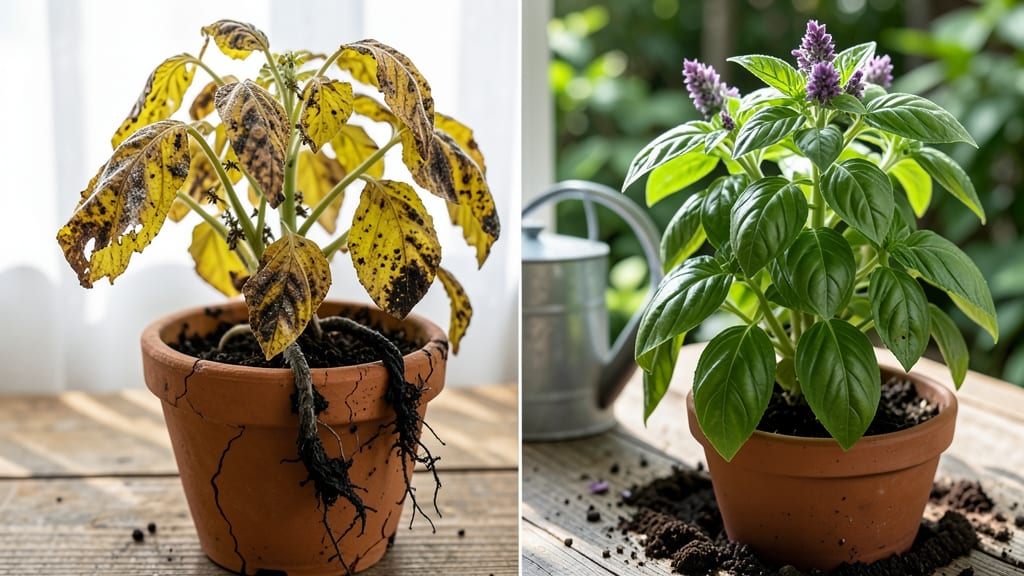
Your basil plant died—and it’s not the end of your herb garden. 🌱 I’ve nursed back more wilted basil than I’d like to admit, and the secret lies in three simple fixes that work every time, whether your plant’s struggling from overwatering, pests, or just plain stress.
Start by checking the soil: if it’s soggy, your plant’s drowning; if it’s bone-dry, it’s thirsty. Yellow leaves? That’s often overwatering or nutrient burn. Brown edges? Could be underwatering or salt buildup from tap water.
The good news? Basil bounces back fast when you adjust care—just give it fresh air, proper water, and a little pruning to encourage new growth.
Within a week, you’ll see fresh green leaves sprouting. I’ve revived plants that looked completely finished, and so can you.
The key is acting fast—once you spot the first signs, it’s time to trim the damaged parts, repot if needed, and give your basil the perfect spot: bright, indirect light and well-draining soil.
This works for potted basil, container gardens, or even window-sill herbs. No fancy tools or expensive fixes—just a closer look and a few simple tweaks. Let’s bring your basil back to life!
Root Causes Of Basil Decline
Understanding why your basil plant died—or worse, why it’s struggling—starts with identifying the hidden culprits lurking in your garden. Basil (Ocimum basilicum) is a resilient herb, but it’s also sensitive to specific environmental and care-related stressors.
Below, we break down the most common reasons your basil may have withered, yellowed, or collapsed—along with the science behind each issue.
Basil thrives in well-draining soil with moisture, but it hates soggy roots. When soil stays too wet for too long, root rot sets in—caused by fungi like Pythium or Phytophthora—which suffocate roots and block nutrient uptake.
Why it happens:
- Compacted or clay-heavy soil traps excess water, cutting off oxygen to roots.
- Overzealous watering (especially without checking soil moisture) leads to waterlogging.
- Lack of drainage holes in pots forces water to pool at the bottom.
Signs to watch for:
- Yellowing leaves (starting from the bottom)
- Mushy, black, or foul-smelling stems
- Wilting despite moist soil
Pro tip: 🌡️ Test your soil by sticking your finger 1 inch deep—if it’s damp, wait before watering. Use a mix of potting soil + perlite (or coconut coir) to improve aeration.
Basil loves sunlight—but too much direct heat (especially in scorching afternoons) can scorch leaves, while insufficient light weakens growth. Both extremes stress the plant, making it vulnerable to pests or disease.
Why it happens:
- Intense midday sun (10 AM–4 PM) in hot climates causes leaf burn (brown, crispy edges).
- Sudden temperature shifts (e.g., moving from shade to full sun) shock the plant.
- Plastic pots absorb heat, raising root temperatures dangerously.
Signs to watch for:
- White or brown patches on leaves
- Curling or drooping foliage
- Stunted growth despite regular watering
Fix it: Provide partial shade (3–4 hours of morning sun + afternoon shade) in extreme heat. Use terracotta pots (they breathe better) and mulch to regulate soil temp.
Basil is prone to fungal diseases like downy mildew (Peronospora belbahrii) and bacterial leaf spot (Xanthomonas campestris), which thrive in humid, stagnant conditions.
Why it happens:
- High humidity + poor airflow (e.g., crowded pots or dense foliage) creates a fungal paradise.
- Overhead watering splashes spores onto leaves.
- Weakened plants (from stress or nutrient deficiency) are easier targets.
Signs to watch for:
- Downy mildew: White, fuzzy patches on undersides of leaves (often in humid climates).
- Bacterial spot: Water-soaked brown spots with yellow halos.
- Powdery mildew: White, dusty coating on leaves (less common but possible).
Prevent it: 💡 Space plants 12+ inches apart, water at the base, and prune for airflow. For mild cases, spray with neem oil (1 tbsp per quart of water).
Basil is a tender annual—it cannot tolerate frost (below 50°F/10°C) and will suffer cold shock, leading to blackened leaves and stunted growth.
Why it happens:
- Late spring/early fall frosts kill basil overnight.
- Drafty locations (near AC units or open windows) expose plants to sudden cold.
- Overhead irrigation in chilly weather worsens damage.
Signs to watch for:
- Dark, mushy spots on leaves
- Slow growth or no new leaves
- Crispy, papery edges
Save it: 🌱 Move pots indoors (near a sunny window) if frost is forecast. Use row covers for outdoor plants. Basil won’t survive winter—treat it as an annual!
Basil needs balanced nutrients, but too much (or too little) of certain elements can cripple it.
Why it happens:
- Nitrogen deficiency → Pale, yellow leaves (plant starves for growth).
- Phosphorus deficiency → Stunted roots, weak stems.
- Over-fertilizing → Salt buildup in soil burns roots (common with synthetic fertilizers).
Signs to watch for:
- Yellowing between veins (nitrogen deficiency)
- Purple stems/leaves (phosphorus deficiency)
- Brown leaf tips (salt damage from fertilizer)
Fix it: Use a balanced, organic fertilizer (like fish emulsion) every 4–6 weeks. Flush soil with water monthly to prevent salt buildup.
Tiny pests like aphids, spider mites, or whiteflies drain basil’s sap, weakening it until it collapses.
Why it happens:
- Soft, new growth attracts aphids.
- Dry conditions invite spider mites (they thrive in low humidity).
- Weak plants (from stress) can’t fight off invaders.
Signs to watch for:
- Sticky residue (aphid honeydew) on leaves
- Fine webbing (spider mites)
- Yellowing, curled leaves
Eliminate them: 🔥 Spray with soapy water (1 tsp mild soap per quart) or introduce ladybugs (natural predators). For severe cases, use neem oil (repeat every 5–7 days).
Even gentle repotting can stress basil if roots are damaged or the plant struggles to adapt.
Why it happens:
- Root pruning during transplanting slows regrowth.
- Shock from sudden environmental changes (e.g., moving from ground to pot).
- Compacted soil after repotting restricts roots.
Signs to watch for:
- Wilting despite watering
- Slow recovery (no new growth for weeks)
- Yellowing leaves post-transplant
Recover it: 🌱 Water deeply after transplanting and avoid fertilizing for 2 weeks. Choose pots only 1–2 inches larger than the root ball to minimize stress.
Reviving your basil plant step-by-step
Reviving a struggling or dead basil plant starts with identifying the root cause—but once you’ve pinpointed the issue, action is simple! Below are practical, step-by-step solutions tailored to the most common reasons your basil might have wilted, yellowed, or died.
Follow the fixes, then lock in prevention tips to keep your herb garden thriving.
Fix:
- Stop Watering Immediately 🚰
- Basil hates soggy roots. If the soil feels damp or mushy, hold off on watering for 3–5 days to let excess moisture evaporate.
- Repot in Well-Draining Soil 🏺
- Remove the plant from its current pot and inspect the roots. If they’re black, mushy, or smelly, they’re rotting—trim the bad sections with sterilized scissors (🔪).
- Repot in a fresh mix: Combine 60% potting soil, 30% perlite or sand, and 10% compost for airflow.
- Adjust Your Watering Routine ⏰
- Water only when the top 1–2 inches of soil are dry (stick your finger in to check!).
- Use a pot with drainage holes and a saucer to catch excess water.
💡 Prevention Tip:
- Mulch lightly with straw or coconut coir to retain just enough moisture without suffocating roots.
Fix:
- Check the Soil & Roots 🌱
- If the soil is bone-dry and the roots are shriveled, soak the pot in room-temperature water for 10–15 minutes (💦).
- Gently loosen compacted soil with your fingers to help roots rehydrate.
- Move to the Right Light ☀️
- Basil needs 6–8 hours of sunlight daily, but direct midday sun in hot climates can scorch leaves.
- Place it in morning sun + afternoon shade or use a light sheer curtain to filter harsh rays.
- Trim Damaged Leaves ✂️
- Snip off brown, crispy, or yellowed leaves to redirect energy to healthy growth.
💡 Prevention Tip:
- Group basil with other herbs (like thyme or oregano) to create a microclimate with balanced humidity.
Fix:
- Isolate the Plant 🛑
- Move the basil away from other herbs to prevent spreading.
- Prune Infected Areas 🪒
- Cut off yellow or spotted leaves with clean scissors, leaving healthy green stems.
- Apply Fungicide or Natural Remedies 🌿
- Baking soda spray: Mix 1 tsp baking soda + 1 quart water + a drop of dish soap. Spray leaves every 7–10 days.
- Neem oil: Dilute 1 tbsp neem oil in 1 quart water + 1 tsp mild soap. Spray once a week for 2–3 weeks.
- Copper fungicide: Use as a last resort for severe cases (follow label instructions).
- Improve Airflow 🌬️
- Space plants 6–12 inches apart and avoid overcrowding.
💡 Prevention Tip:
- Water at the base (not overhead) to keep leaves dry. Early morning watering helps leaves dry quickly.
Fix:
- Inspect Leaves 🔍
- Look for sticky residue (honeydew), tiny webs, or tiny bugs on undersides of leaves.
- Blast Off Pests 💦
- Spray with soapy water: Mix 1 tsp mild soap in 1 quart water and spray directly on pests (repeat every 3–4 days).
- Use neem oil (same dilution as above) for stubborn infestations.
- Introduce Beneficial Insects 🐞
- Release ladybugs or lacewings (available at garden centers) to eat aphids naturally.
💡 Prevention Tip:
- Inspect new plants before bringing them home—quarantine for 2–3 days to catch pests early.
Fix:
- Repot in Fresh Soil 🏺
- If roots are circling the pot or poking out of drainage holes, it’s time to upgrade the pot by 2–3 inches.
- Use a light, airy potting mix (avoid garden soil—it compacts).
- Fertilize Lightly 🌱
- Add a balanced liquid fertilizer (10-10-10) diluted to half-strength every 4–6 weeks during growing season.
- Avoid over-fertilizing—basil prefers lean soil!
💡 Prevention Tip:
- Rotate pots every few weeks so all sides get even light.
Fix: 1. Move Indoors or to Shelter 🏠 - Basil thrives in 60–75°F (15–24°C). If temps drop below 50°F (10°C), bring pots inside near a sunny window. - For heatwaves, provide afternoon shade and extra water (but not soggy soil).
- Protect from Wind 🌬️ - Use a small windbreak (like a cardboard barrier) if outdoor winds exceed 10 mph.
💡 Prevention Tip:
- Start seeds indoors 6–8 weeks before the last frost for a head start on warm weather.
If your basil is beyond saving but still has healthy stems, you can grow new plants! 1. Cut 3–4 inch stems just below a leaf node (where leaves grow).
- Remove lower leaves, leaving 2–3 at the top.
- Place in water or moist soil—roots should appear in 1–2 weeks! 🌱
Final Thought: Most basil "deaths" are preventable with the right care! Once you’ve revived your plant, monitor it closely and adjust habits based on what went wrong. Happy gardening—and may your pesto always be fresh! 🍅🌿
Frequently asked questions
Why did my basil plant turn yellow and then die?
Yellowing leaves are usually a sign of overwatering or nutrient issues. If the soil stayed too wet, roots may have rotted from lack of oxygen. Check for mushy stems or foul smells—these confirm root rot. If it was underwatering, the leaves would have curled and dried out first.
Can I save my basil if only the leaves are brown and crispy?
Yes! Brown, crispy leaves mean your basil got too much direct sun or heat stress. Trim off the damaged leaves and move your plant to a spot with morning sun + afternoon shade. Within a week, new growth should appear from healthy stems.
What should I do if my basil has white fuzzy spots?
Those fuzzy spots are likely downy mildew, a fungal disease. Isolate your plant immediately and prune infected leaves. Spray with a mix of 1 tsp baking soda + 1 quart water + a drop of dish soap every 7–10 days until the fungus clears.
Is it too late to revive my basil if it's completely wilted?
Not necessarily! If the stems are still firm and green, soak the roots in room-temperature water for 15 minutes and repot in fresh, well-draining soil. Avoid fertilizing for 2 weeks to reduce stress. If the stems are mushy, the plant is likely beyond saving—but you can propagate new plants from healthy cuttings!
How often should I water my basil to prevent it from dying?
Water only when the top 1–2 inches of soil are dry—usually 2–3 times per week in warm weather, less in cooler months. Use pots with drainage holes and avoid letting water pool in saucers. Overwatering is the #1 killer of basil!