
Planting
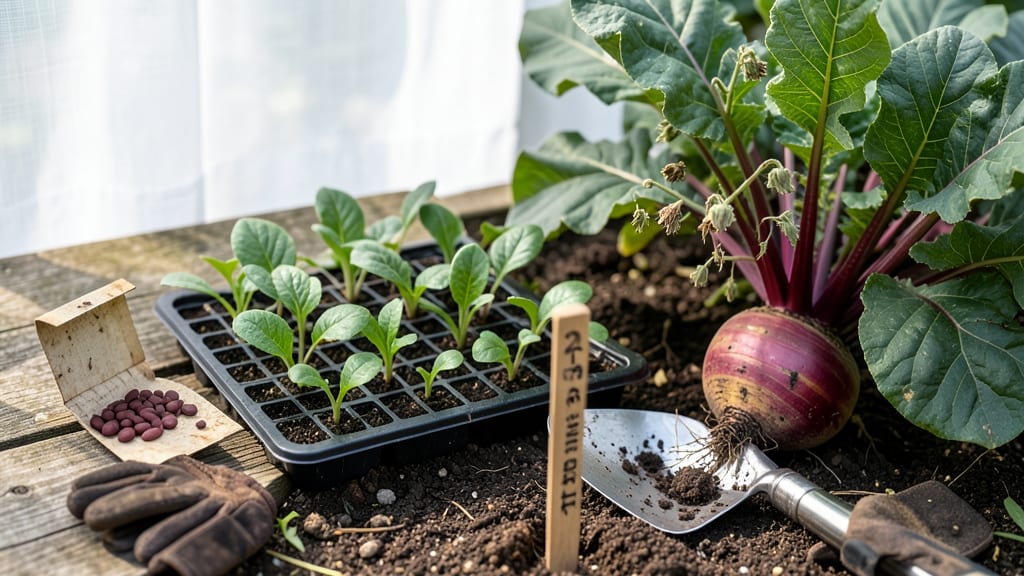
Your beet seed spacing needs to be 1-2 inches apart to grow into plump, bushy harvests—not the crowded rows that produce tiny, scraggly roots. 🌱 I learned this the hard way after pulling up a batch of golf-ball-sized beets because I planted them too close together.
The secret isn’t just spacing; it’s patience in thinning and soil prep that makes all the difference.
Start by sowing seeds ½ inch deep in rows spaced 12-18 inches apart. This gives roots room to expand without competing for nutrients. Use a ruler or spacing tool to mark rows—my first attempt with eyeballing ended in chaos.
Once seedlings pop up, thin them to 3-4 inches apart when they’re 2-3 inches tall, keeping the strongest plants.
What you’ll end up with is a garden full of bold, earthy-red beets that store well and taste sweeter than store-bought. The key is consistent moisture (never let soil dry out) and loose, well-draining soil.
Overcrowding leads to stunted growth, while proper spacing gives you beets big enough to roast or pickle with pride.
This method works for both detroit-style and golden beets, and it’s foolproof for beginners. Skip the guesswork—measure twice, plant once, and enjoy a harvest that’ll make your neighbors ask for tips. Ready to dig in?
📚 In This Guide
- What you need
- Instructions
- Tips and common mistakes
- Wrapping up and next steps
What you need
- ● Beet seeds – Choose heirloom or hybrid varieties (e.g., Detroit Dark Red, Golden Beets). Quantity: ~1–2 seeds per planting spot (they often germinate in pairs).
- ● Garden soil – Well-draining, loose soil with a pH of 6.0–7.0. Amend with compost if needed.
- ● Planting container or garden bed – Minimum depth: 6–12 inches. For rows, allocate 12–18 inches between them.
- ● Watering can or hose with a gentle spray nozzle – Beets need consistent moisture but hate soggy soil.
- ● Row marker or string – Helps maintain 1–3 inch spacing between seeds (or 2–4 inches for larger varieties).
- ● Gloves & knee pads – Because gardening is way more fun when you’re comfy! 😉
- ● Seedling trays – For starting seeds indoors 4–6 weeks before the last frost.
- ● Mulch (straw or shredded leaves) – Retains moisture and suppresses weeds.
- ● Fertilizer (balanced 10-10-10 or compost tea) – Lightly mix into soil before planting for a nutrient boost.
- ● Plant labels – If growing multiple varieties, mark them to avoid mix-ups!
- ● Shade cloth (30–50%) – Protects young seedlings from intense afternoon sun in hot climates.
Precision planting guide for beet seed spacing
Here's how to space beet seeds perfectly for strong, even growth and maximum harvests.
🌱 Step 1: Prepare the Soil for Optimal Germination
Beets thrive in loose, well-draining soil with a pH between 6.0 and 7.0. Work in 2-3 inches of compost to improve texture and fertility, breaking up any clumps with a garden fork. The goal is soil that crumbles easily when squeezed—this prevents root distortion and encourages straight, tender beets.
Rake the surface smooth and press lightly to create a firm seedbed. You'll see the difference in germination speed: compacted soil slows sprouting, while loose soil lets roots establish quickly. For raised beds, mix in 1 cup of perlite per square foot to prevent waterlogging, which causes rot.
🌱 Step 2: Sow Seeds at the Correct Depth and Spacing
Plant beet seeds ½ inch deep and 1-2 inches apart in rows spaced 12-18 inches apart. Use a seed spacing tool or your finger to create small holes—pressing seeds too deep delays germination, while shallow planting exposes them to drying. I like to tap the seed packet gently to release one seed at a time; planting too many in one hole leads to weak, crowded beets.
Cover seeds lightly with soil, then water gently with a fine mist nozzle until the surface feels damp but not soggy. Beets germinate best in soil temperatures between 60-75°F—if your spring soil is cooler, wait until the ground warms or use a seedling heat mat for 5-7 days to speed up sprouting.
🌿 Step 3: Thin Seedlings to Prevent Competition
When seedlings reach 1-2 inches tall (about 3-4 weeks after sowing), thin to 3-4 inches apart in rows. Use sharp scissors to snip unwanted plants at soil level—pulling risks disturbing roots of neighboring beets. This spacing gives roots room to expand without competing for nutrients, resulting in thicker, sweeter beets.
Watch for first true leaves (the second set after the initial cotyledons) to determine thinning time. If you wait too long, you'll damage the root system when removing crowded plants. Thin on a cloudy day to reduce transplant shock—beets handle disturbance better in cooler conditions.
☀️ Step 4: Maintain Proper Spacing Through Growth Stages
As beets mature, monitor their spacing—6-8 inches apart is ideal for full-sized harvests. If you notice leaves touching between plants, gently loosen the soil around the base and spread the plants to prevent disease spread. Beets left too close develop forked or misshapen roots due to crowding.
For baby beets, harvest when they reach 1-2 inches in diameter—this lets you grow a second crop in the same space. Mark rows with stakes or flags to track thinning dates and avoid confusion, especially in large plantings. Mulch with straw or grass clippings to retain moisture and suppress weeds that compete for space.
Tips & tricks for perfect beet seed spacing
A few subtle adjustments can transform your beet harvest from scraggly to spectacular. Here's what I've learned after years of trial and error in the garden.
Soil Texture is Everything: The instructions mention loose, well-draining soil, but I can't stress enough how critical this is. After testing different soil amendments, I've found that adding 1 part sand to 3 parts compost creates the ideal crumbly texture for beet roots. This prevents the classic "forked beet" problem while allowing roots to grow straight and tender. For heavy clay soils, mix in 1 cup of coarse sand per square foot before planting—this dramatically improves drainage and root development.
Precision Planting Tool Game-Changer: While you can use your finger to create planting holes, I've found that a seed spacing tool with ½-inch depth markers makes all the difference. These inexpensive tools ensure consistent depth and spacing, which is crucial since beets planted too deep take longer to germinate while shallow planting risks drying. For large plantings, consider a seed tape with pre-spaced seeds—it saves time and ensures perfect spacing every time.
Thinning Timing Secrets: The instructions mention thinning when seedlings reach 1-2 inches tall, but here's what nobody tells you: the first true leaves (those second set of leaves) are your best indicator. I've learned to thin on overcast days when temperatures stay below 75°F—this reduces transplant shock and gives roots time to recover. Pro tip: Use clean, sharp scissors to snip plants at soil level rather than pulling, which prevents disturbing neighboring roots.
Heat Mat Hack for Slow Starts: If your soil temperatures sit below 60°F, don't rush planting—beets won't germinate well in cold soil. But if you're eager to get started, a seedling heat mat
Pro Tips for Beet Seed Spacing
- A few subtle adjustments can transform your beet harvest from scraggly to spectacular.
- Soil Texture is Everything: The instructions mention loose, well-draining soil, but I can't stress enough how critical this is.
- Precision Planting Tool Game-Changer: While you can use your finger to create planting holes, I've found that a seed spacing tool with ½-inch depth markers makes all the difference.
Frequently asked questions
What’s the ideal beet seed spacing for home gardens?
For bush beets, space seeds 1–2 inches apart in rows 12–18 inches apart. For long, cylindrical varieties, thin seedlings to 3–4 inches apart after germination. Tighter spacing (like 1 inch) works for sugar beets, but always check seed packet guidelines—some hybrids need more room!
When is the best time to thin beet seedlings?
Thin seedlings when they’re 2–3 inches tall (about 3–4 weeks after planting). Use sharp scissors or your fingers to snip at soil level—avoid pulling to prevent disturbing roots. Early thinning reduces competition and ensures stronger, sweeter beets. Pro tip: Harvest thinned seedlings for microgreens!
Can I plant beet seeds too close together?
Yes, but overcrowding leads to small, misshapen beets and higher disease risk. If you accidentally plant too close, thin aggressively or interplant with fast growers like radishes (which you’ll harvest first). For containers, limit to 1–2 seeds per 6-inch pot—beets hate root competition!
What if my beet seeds don’t germinate evenly?
Uneven germination is common! Keep soil consistently moist (not soggy) and warm (70–85°F). If seeds take 2+ weeks to sprout, they may need light (cover lightly with soil, max ½ inch). For stubborn seeds, try soaking in water for 4–6 hours before planting. Patience pays off—beets are slow starters!
Are there alternatives to traditional seed spacing?
Try succession planting: Sow seeds in 2-week intervals for a staggered harvest. For square-foot gardening, place 16 seeds per square foot (thin to 9 plants). Hill planting (mounding soil around seedlings) also works—just leave 4–6 inches between hills. Experiment to match your space!
Wrapping up and next steps
Mastering beet seed spacing is your ticket to a thriving garden filled with plump, vibrant beets! 🌱 By following the right techniques—whether thinning seedlings or planting seeds directly—you’ll ensure strong roots and bountiful harvests.
Don’t let small details hold you back; with patience and precision, your garden will reward you with delicious, homegrown goodness.
Ready to dig in? Start small—try a few rows this season, experiment with spacing, and refine your approach. Happy planting, and may your harvest be as sweet as it is abundant! 🌟