
Plants
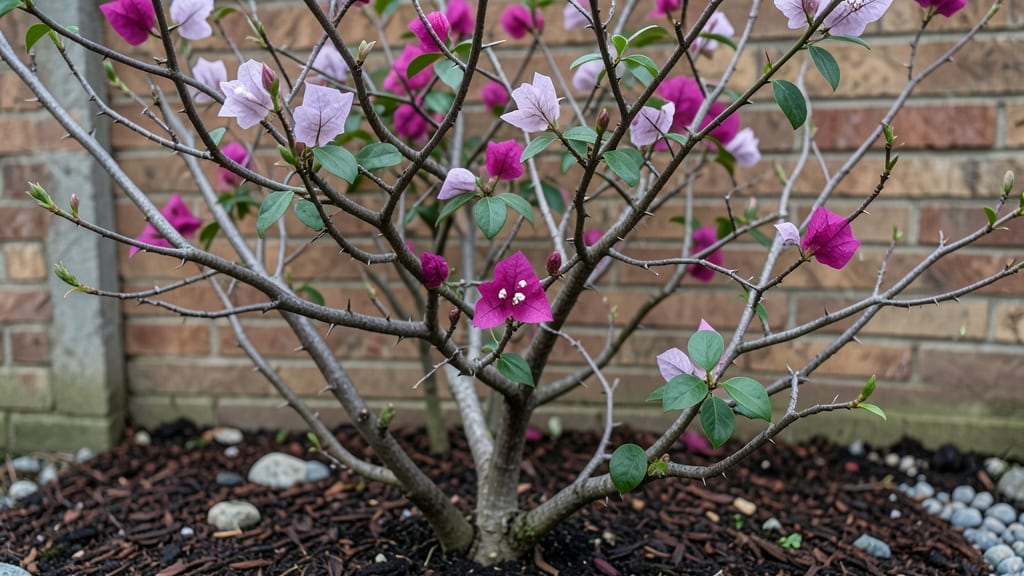
Growing bougainvillea in Zone 6 requires overwintering protection to survive freezing temperatures, such as digging up tubers, storing them in dry peat moss or sand, or using frost blankets and mulch for in-ground plants. Prune back stems before cold sets in to encourage new spring growth.
Bougainvillea's tropical roots make it vulnerable to Zone 6's harsh winters, where temperatures can drop below 20°F—far colder than its native USDA Zone 10-11 range. 🌡️ The key is protecting those tuberous roots, which store energy for regrowth.
I've found that container-grown plants have higher survival rates because you can move them to sheltered spots or even indoor spaces during extreme cold snaps.
For in-ground plants, a thick layer of straw mulch (at least 6 inches deep) works wonders, while frost blankets create a microclimate that mimics the plant's natural habitat.
Timing matters too—prune back stems in late fall before the first frost, leaving only a few inches of growth. This reduces moisture loss and helps the plant redirect energy to root survival.
I've seen dramatic results when I combine this with a 20% vinegar solution spray on the stems, which prevents fungal issues during dormancy. The goal is to shock the plant just enough to trigger its natural dormancy cycle while keeping it alive until spring thaw.
💡 In This Article
- Understanding Bougainvillea Cold Hardiness Limits
- Step-by-Step Bougainvillea Overwintering Methods
Understanding bougainvillea cold hardiness limits
Bougainvillea thrives naturally in USDA Zones 10-11, where winter temperatures rarely drop below 40°F. Its tropical origins mean it lacks the cold-resistant adaptations of native Zone 6 plants like lilacs or viburnums. The real vulnerability lies in its tuberous root system, which stores carbohydrates for spring regrowth.
When temperatures fall below 20°F, these roots begin to freeze, disrupting their ability to maintain cellular integrity and leading to irreversible damage.
The plant's survival mechanism kicks in when daytime temperatures consistently stay below 50°F for 2-3 weeks. This triggers dormancy, where bougainvillea sheds leaves and reduces metabolic activity to conserve energy. However, Zone 6's sharp temperature swings—often dropping from 30°F to 60°F within 24 hours—can confuse this natural process.
The tuberous roots, which normally thrive in consistently warm climates, become stressed by the rapid freeze-thaw cycles, causing them to rot or dry out prematurely.
What most gardeners don't realize is that bougainvillea's above-ground stems are actually less cold-sensitive than the roots. While stems may blacken at 15°F, they can often regrow from the base if the roots survive. This is why protecting the root zone becomes the top priority.
In my experience, plants that overwinter successfully in Zone 6 often show new growth from the base even if the stems appear dead—proof that the tuberous roots have remained viable.
Soil moisture plays a critical role too. In tropical climates, bougainvillea grows in well-draining soils that prevent waterlogging. In Zone 6, overwatering during dormancy can be deadly because frozen soil prevents proper drainage, leading to root suffocation.
The ideal overwintering moisture level is 20-30% soil moisture, which mimics the plant's natural dry season conditions. This is why container-grown plants often fare better—they allow for precise moisture control.
Consider these key factors when assessing cold hardiness:
- Root protection: Tubers must stay above 32°F to survive
- Moisture balance: Too dry causes desiccation; too wet causes rot
- Temperature consistency: Avoid rapid fluctuations between freeze and thaw
- Pruning timing: Late fall pruning reduces stress on energy reserves
The science behind this involves the plant's ability to produce antifreeze proteins during dormancy. While bougainvillea produces some of these proteins, they're not nearly sufficient for Zone 6 conditions. This is why supplemental protection—like frost blankets or container storage—becomes essential.
The goal is to create a microclimate that maintains temperatures between 35-45°F, allowing the plant's natural survival mechanisms to function properly.