
Planting
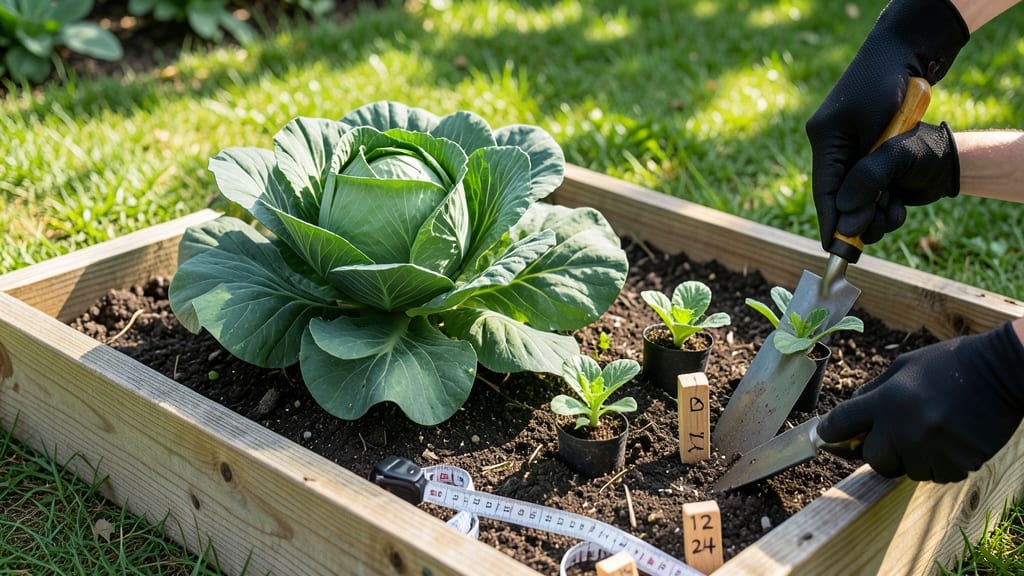
Perfect cabbage spacing in raised beds means the difference between a dense jungle of leaves and heads that reach their full potential. 🌱 After years of trial-and-error planting, I finally nailed the 12–18-inch spacing that keeps cabbage thriving without crowding—whether you're growing compact varieties like 'Golden Acre' or giant heads like 'Hubbard.'
The secret isn't just the numbers, though; it's how you adjust for your specific bed size and variety.
Start with well-draining soil mixed with compost (I swear by a 60/40 blend) and plant seeds ¼-inch deep, spacing them 12 inches apart in rows that run 18 inches apart. For transplants, give them a little more room—18 inches apart—since they’ll grow faster.
The extra space prevents diseases like clubroot and lets you fit 4–6 plants per 4x8-foot raised bed, maximizing your harvest without sacrificing head size.
What you’ll end up with is cabbage that develops firm, crack-free heads and resists bolting (the dreaded premature flowering). The plants shade the soil just enough to keep weeds down, and you’ll harvest smooth, market-ready heads in 60–90 days, depending on the variety.
Pro tip: Thin seedlings ruthlessly—overcrowding is the fastest way to disappointment.
This method works for spring and fall plantings in most climates, though cooler zones can squeeze in a second crop. If your bed is wider than 4 feet, add a path down the middle for easier access—trust me, your back will thank you later. Ready to plant with confidence?
📚 In This Guide
- What you need
- Instructions
- Tips and common mistakes
- Wrapping up and next steps
What you need
- ● Cabbage seedlings or seeds: Choose disease-resistant varieties (e.g., Golden Acre or Red Express). Start with 12–24 plants per 4’x8’ raised bed, depending on spacing goals.
- ● Raised bed (pre-built or DIY): Minimum dimensions: 4’ wide x 8’ long x 12” deep (easier to reach the center).
- ● Soil mix: 60% topsoil, 30% compost, 10% perlite/vermiculite (well-draining and nutrient-rich).
- ● Measuring tools: Tape measure (25’+ for accuracy).
- ○ Ruler or spacing grid (optional but helpful for precision).
- ● Planting tools: Hand trowel or dibble (for transplanting seedlings).
- ● Garden gloves (to protect your hands from soil and thorns).
- ○ Support materials (optional but recommended): Stakes or tomato cages (for heavy-headed varieties like Savoy cabbage).
- ● Row covers or shade cloth (30–50% shade to deter pests like cabbage moths).
- ● Sunlight: Full sun (6–8 hours daily). Test your bed’s sunlight exposure for 2–3 days before planting.
- ● Soil pH: Aim for 6.0–7.0 (test with a soil kit or send a sample to a local extension office).
- ● Water source: Drip irrigation or a watering can with a 0.5–1 gallon capacity for consistent moisture.
- ● Fertilizer: Balanced organic fertilizer (e.g., 10-10-10 or compost tea) mixed into soil 2–3 weeks before planting.
Precision cabbage spacing in raised beds: the key to healthy plants
Perfect spacing isn’t just about fitting more plants—it’s about giving cabbages room to breathe, develop strong roots, and resist disease. Here’s how to plant with surgical precision for maximum yields.
🪴 Step 1: Plan Your Raised Bed Layout for Optimal Airflow
Start by sketching your raised bed layout on paper. Cabbage needs 18-24 inches between plants to prevent overcrowding, which leads to poor air circulation and fungal diseases like clubroot. In a 4-foot-wide raised bed, you can fit two rows of cabbage with 3-foot spacing between rows—this creates a natural walkway for maintenance and reduces soil compaction.
Use a measuring tape to mark planting zones every 2 feet along the bed length. I like to use wooden stakes at each mark to visualize spacing before planting. This prevents guesswork later when seedlings are already in the ground. For miniature varieties like 'Miniature Drumhead,' reduce spacing to 12-16 inches—but never less, or you’ll sacrifice head size.
🌱 Step 2: Prepare Planting Holes with Precision Depth
Dig holes slightly larger than the root ball of your cabbage transplants—about 1.5 times the width of the container they came in. The depth should match the original soil line on the transplant’s stem; planting too deep can cause rot, while too shallow leads to weak anchorage. I use a trowel to loosen the soil around the hole edges, which helps roots spread faster.
Add a handful of compost to each hole before placing the transplant. This ensures the roots have immediate access to nutrients without competing with surrounding soil. Gently firm the soil around the base after planting—just enough to eliminate air pockets, but don’t compact it. A light watering afterward helps settle everything into place.
☀️ Step 3: Space Seedlings for Maximum Head Development
If starting from seed, thin seedlings to your target spacing as soon as they develop their first true leaves—not later. Use scissors to snip unwanted seedlings at soil level to avoid disturbing the roots of remaining plants. For full-sized cabbage varieties, maintain 24-inch spacing between plants; for savoy or late-season types, you can reduce to 18 inches since they mature slower.
Watch for leaf overlap between plants—this is your visual cue that spacing is too tight. Properly spaced cabbage will have fully exposed leaves on all sides, allowing sunlight to reach the center of the head. In tight beds, I often interplant with shallow-rooted crops like lettuce or radishes in the early stages, then remove them as cabbage fills in.
💧 Step 4: Adjust Spacing for Successive Plantings
For fall or winter harvests, reduce spacing to 18 inches to take advantage of shorter growing seasons. Cabbage planted in late summer benefits from closer spacing because it matures faster before cold sets in. Conversely, spring plantings should stick to 24-inch spacing—this gives heads plenty of time to reach full size before summer heat stresses the plants.
Rotate crops annually to prevent soil-borne diseases. If your raised bed previously grew brassicas (like broccoli or kale), add a 2-inch layer of compost and mix in 1 cup of lime per 10 square feet to balance pH. Cabbage thrives in slightly acidic soil (pH 6.0-6.8), so test your bed before planting—this simple step prevents nutrient deficiencies that stunt growth.
✂️ Step 5: Maintain Spacing Through Thinning and Harvesting
As cabbage heads form, thin out the smallest plants to prevent competition. Even well-spaced plants can outgrow their allotment if left unchecked. Harvest outer leaves first to avoid disturbing the developing head—this extends the plant’s productivity and keeps the bed looking tidy. For cut-and-come-again varieties, leave 6-8 inches between plants to allow regrowth.
After harvest, rotate the bed by planting a non-brassica crop (like beans or tomatoes) in the same space the following year. This breaks disease cycles and replenishes nitrogen in the soil. I also top-dress with 1 inch of compost after harvest to prepare the bed for next season’s planting.
Tips & tricks for perfect cabbage raised bed planting
These precision-focused tips will help you maximize your cabbage harvest while avoiding common spacing mistakes that lead to stunted growth and disease.
Visual Spacing Cues: When planting cabbage in your raised bed, look for the "three-finger rule" as a quick visual guide. Hold your hand vertically between plants—your middle finger should just barely touch the next plant's outer leaves. This naturally approximates the 18-24 inch spacing needed for full-sized varieties. For miniature types, use your thumb and index finger (about 12-16 inches) to maintain proper proportions without crowding.
Soil Preparation Strategy: Before planting, work a 1-inch layer of compost into the top 6 inches of your raised bed soil. This creates a nutrient-rich zone exactly where cabbage roots will establish. I also recommend adding a 1/4 cup of bone meal per planting hole for phosphorus—this promotes strong root development during the critical early weeks when spacing adjustments are still possible. The compost also improves soil structure, preventing compaction that can restrict root growth.
Seasonal Spacing Adjustments: Spring plantings absolutely require the full 24-inch spacing between plants to allow heads to reach their maximum size before summer heat arrives. In contrast, fall plantings can safely use 18-inch spacing since cooler temperatures slow growth and reduce competition. I've found that cabbage planted in late summer with 18-inch spacing often produces heads that are 20-30% larger than spring-planted varieties with standard spacing.
Disease Prevention Layout: Arrange your cabbage plants in a staggered pattern rather than straight rows. This creates a natural airflow pattern that prevents fungal spores from settling between plants. In a 4-foot-wide bed, plant one row at the front edge, then offset the second row by 12 inches toward the back. This diagonal pattern maximizes sunlight exposure on all sides of each plant—critical for preventing clubroot and other fungal diseases that thrive in damp, shaded conditions.
Pro Tips for Cabbage Spacing Raised Bed
- These precision-focused tips will help you maximize your cabbage harvest while avoiding common spacing mistakes that lead to stunted growth and disease.
- Visual Spacing Cues: When planting cabbage in your raised bed, look for the "three-finger rule" as a quick visual guide.
- Soil Preparation Strategy: Before planting, work a 1-inch layer of compost into the top 6 inches of your raised bed soil.
Frequently asked questions
Got questions about spacing cabbage in raised beds? You’re not alone! Here are some of the most common concerns—plus straightforward answers to help you plant like a pro.
What’s the ideal spacing for cabbage in a raised bed?
For head cabbage, space plants 12–18 inches apart in rows, with 24–36 inches between rows. If growing miniature varieties (like bok choy or baby cabbage), reduce spacing to 8–12 inches. Taller varieties (e.g., Savoy) need the full 18–24 inches to thrive without crowding.
When is the best time to plant cabbage in raised beds?
Cabbage is a cool-season crop, so aim for early spring (2–4 weeks before last frost) or late summer (8–10 weeks before first frost) for a fall harvest. Avoid planting when soil temps exceed 80°F (27°C), as heat stress stunts growth. Use shade cloth if summer temps creep up!
Can I grow cabbage in raised beds without rows?
Try a square-foot gardening method: Plant 4–9 cabbage seedlings per square foot (depending on variety). This works well for smaller varieties or if you’re tight on space. Just ensure good airflow to prevent disease—space plants closer together but still allow room for leaves to spread.
How do I fix overcrowded cabbage in a raised bed?
If your cabbage is already too close, thin seedlings early (when they’re 4–6 inches tall) to the recommended spacing. For mature plants, prune outer leaves to improve airflow, but avoid removing too much—this can stress the plant. If space is truly limited, consider succession planting smaller batches every 2–3 weeks instead of one big group.
Does cabbage spacing change for different climates?
Yes! In hot, humid climates, increase spacing to 24+ inches to reduce disease risk (like clubroot or downy mildew). In cooler, northern regions, you can plant slightly closer (12–16 inches) since growth is slower. Always check your USDA hardiness zone and adjust for local microclimates (e.g., windy areas need extra support).
Pro Tip:
Use a stakes or trellis for larger cabbage varieties (like Jersey Wakefield) to save space—it keeps heads upright and reduces sprawl. Just plant stakes at the time of transplanting to avoid root damage!
Wrapping up and next steps
Perfecting your cabbage raised bed spacing is the first step toward a thriving, productive garden—and you’ve got all the tools to make it happen! 🌱 By following these guidelines, you’ll maximize airflow, sunlight, and growth potential for your cabbages, ensuring a harvest that’s both abundant and healthy.
Now that you’re armed with the know-how, it’s time to roll up your sleeves, grab those seeds, and start planting with confidence!
🌟 Next Steps:
- Mark your raised bed rows with stakes or string for precision.
- Plant your cabbages at the ideal spacing (12-18" apart) and watch them flourish!
- Keep track of growth and adjust care as needed—happy gardening! 🌿