
Planting
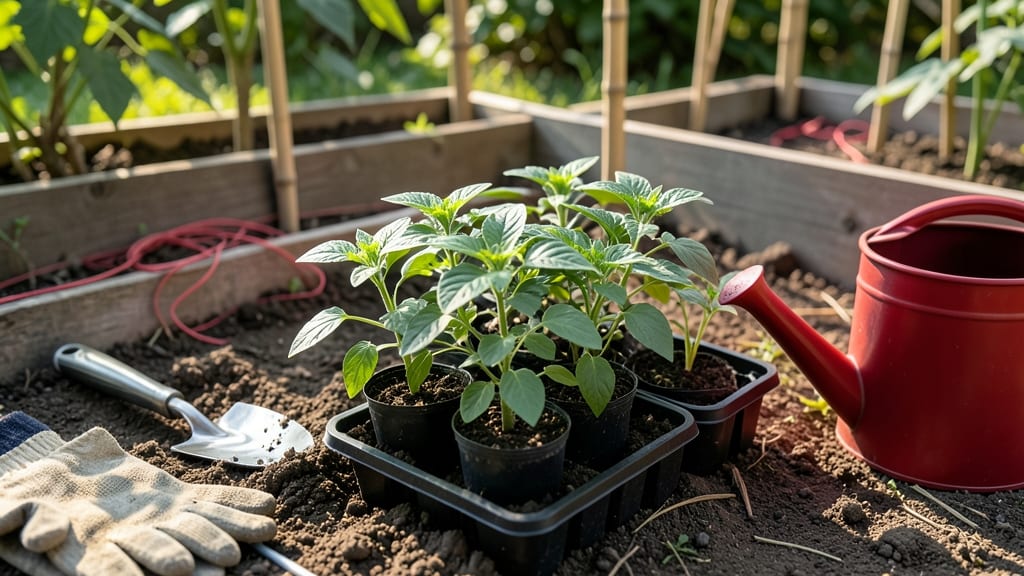
Pepper seedlings should be 3 to 5 inches tall with 4 to 6 true leaves before transplanting to give them the best shot at thriving in your garden.
Transplanting too early or too late can stunt growth or shock your plants—getting the timing right ensures robust, productive peppers all season.
If you’ve ever watched your 🌶️ pepper seedlings wilt after moving them outside, you know how critical this step is. The right size isn’t just about height; it’s about leaf strength, root development, and even the weather.
Below, I’ll break down exactly what to look for, how to harden off seedlings, and when to plant them in Zone 6a for maximum success—so you can enjoy a bountiful harvest from July to October.
Optimal pepper seedling size for transplanting: height and leaf count guidelines
Transplanting pepper seedlings at the right size is crucial for their survival and productivity. When you move them too early, they may struggle to establish roots, while waiting too long can lead to leggy, weak plants.
The ideal pepper seedling size balances growth and resilience, ensuring a smooth transition from indoor starts to outdoor gardens.
For most pepper varieties, your seedlings should be between 3 to 5 inches tall with a sturdy stem and 4 to 6 true leaves. These guidelines apply universally, but bell peppers and hot peppers may have slight variations based on their growth rates.
Let’s break down what to look for and why these metrics matter.
| Seedling Feature | Ideal Specification | Notes |
|---|---|---|
| Height | 3–5 inches | Taller than 5 inches may indicate legginess; shorter than 3 inches may lack strength. |
| True Leaves | 4–6 leaves | Excludes seed leaves; count only mature, fully formed leaves. |
| Stem Thickness | Pencil-sized or thicker | Thin stems risk breakage; thick stems indicate strong root systems. |
| Root Development | Root-bound or dense roots | Circling roots need pruning before transplanting to encourage outward growth. |
| Variety-Specific | Bell peppers: 4–5 inches; Hot peppers: 3–4 inches | Hot peppers mature faster; adjust timing accordingly. |
The height guideline of 3–5 inches ensures your seedlings have developed enough foliage to support photosynthesis while avoiding the leggy growth that occurs when they’re stretched too thin.
Leggy seedlings often result from insufficient light indoors, so if yours are taller than 5 inches, consider supplementing with grow lights before transplanting.
Counting true leaves (not the first two seed leaves) is another key indicator. These leaves are larger, darker, and more complex in shape. Seedlings with 4 to 6 true leaves have had enough time to build energy reserves, making them better equipped to handle transplant shock.
If your seedlings have fewer than 4 true leaves, give them another 1–2 weeks indoors.
Stem thickness is often overlooked but critical for transplant success. A seedling with a stem as thick as a pencil or thicker is ideal—it signals a robust root system capable of supporting the plant’s needs outdoors. To test stem strength, gently pinch the stem; it should bend slightly but not snap. If stems are too thin, delay transplanting until they’ve had more time to harden off.
Not all pepper varieties follow the same timeline. For example, bell peppers, which take longer to mature, often benefit from being transplanted at the upper end of the height range (4–5 inches).
In contrast, hot peppers, like jalapeños or habaneros, can be transplanted slightly smaller (3–4 inches) because they grow more quickly. Always check the specific variety’s days to maturity on the seed packet for tailored advice.
Environmental conditions also play a role in determining transplant readiness. Even if your seedlings meet the size guidelines, avoid transplanting if nighttime temperatures are still below 50°F. Peppers are sensitive to cold, and transplanting too early can lead to stunted growth or even death.
Use a frost cloth or wait until after the last frost date in your area for the safest results.
One common mistake is transplanting seedlings that are root-bound. If roots are circling the bottom of the pot or growing out of drainage holes, gently tease them apart before planting.
This encourages outward root growth, helping the plant establish itself more quickly in the garden. For extra resilience, water seedlings thoroughly the day before transplanting to reduce stress.
Finally, don’t forget to harden off your seedlings over 7–10 days before transplanting. Gradually expose them to outdoor conditions—starting with a few hours of sunlight and increasing daily—to help them adapt. This process strengthens their cell walls and improves their ability to handle fluctuations in temperature and humidity once planted.
By focusing on these height and leaf count guidelines, you’ll give your pepper seedlings the best chance to thrive in their new home. With the right preparation, you’ll enjoy a bountiful harvest of healthy, productive peppers all season long. 🌱🌿🌶️
Signs your pepper seedlings are ready (or not) for transplanting
Determining when your pepper seedlings are ready for transplanting goes beyond just measuring their height. While 4-6 inches tall with 4-6 true leaves is ideal, other factors like stem strength and root development play crucial roles.
Ignoring these signs can lead to transplant shock or stunted growth, so let's break down what to look for.
One of the first things to check is whether your seedlings are root-bound. Gently remove a seedling from its container and examine the roots. If you see a dense, tangled mass circling the bottom, it's time to transplant.
Healthy roots should spread outward rather than circle inward, indicating they've filled the container and need more space to grow.
Next, assess the stem strength and thickness. A ready seedling will have a thick, sturdy stem—about the diameter of a pencil—that can support itself without toppling over. If stems are thin and leggy, they may not survive transplanting, especially in windy conditions.
🌱
✅ READY SIGNS
- 4-6 true leaves (not seed leaves)
- 3-5 inches tall with thick stems
- Root-bound (roots circling container)
- Dark green leaves, no yellowing
- Sturdy stems that don’t snap easily
❌ NOT READY SIGNS
- Fewer than 4 true leaves
- Leggy, thin stems (easily breakable)
- Pale or yellowing leaves
- No root-bound signs (roots not filling container)
- Transplanting before last frost (below 50°F)
Environmental cues are equally important. Ensure outdoor temperatures consistently stay above 50°F at night, as peppers are frost-sensitive. If you're in a cooler climate, consider using row covers or waiting until after the last frost date. Additionally, seedlings need 6-8 hours of sunlight daily, so choose a transplant window when daylight hours are long enough to support their growth.
Common mistakes include transplanting too early when seedlings are still small or too late when they become overcrowded in containers. Overcrowding leads to competition for nutrients and increases the risk of disease. Always prioritize healthy roots, strong stems, and mature leaves over rushing the process.
Finally, avoid transplanting on hot, windy days, as this can stress seedlings. Early morning or late afternoon are ideal times. With these signs in mind, you'll be ready to transplant confidently and set your peppers up for a thriving season.