
Planting
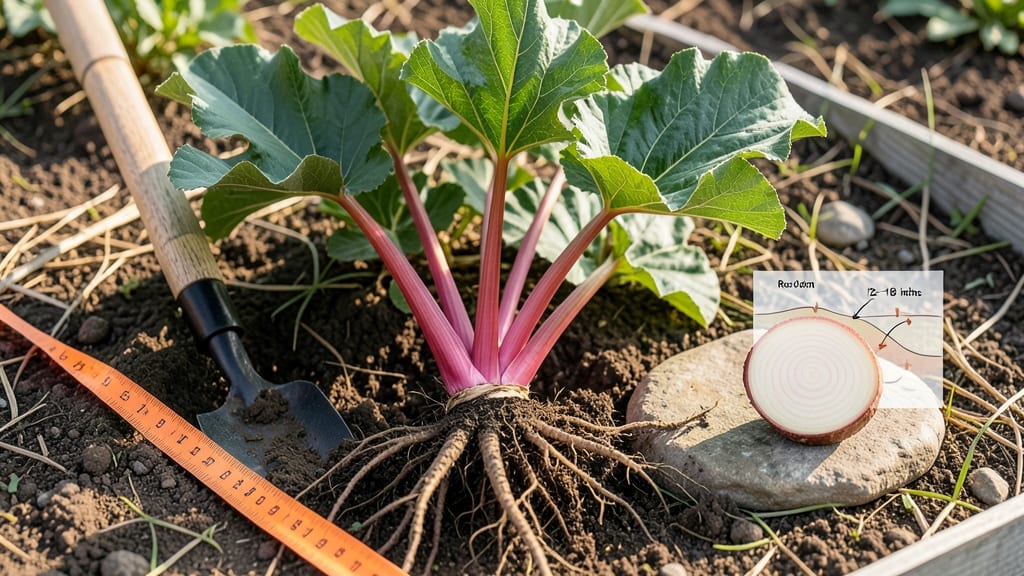
How deep rhubarb roots grow often surprises gardeners—they can extend 12 to 18 inches below the soil surface, which explains why these plants are so hardy and productive.
Wondering why your rhubarb plants keep struggling or how to harvest without damaging them? The answer lies beneath the soil—rhubarb roots grow deeper than most gardeners realize, and understanding their growth habits is key to a thriving harvest.
Those deep roots help rhubarb survive droughts, access nutrients, and even withstand winter freezes in Zone 6a. But they also mean you need to be extra careful when digging or dividing plants, or you could accidentally sever the roots that keep your harvests coming.
In this guide, you’ll learn exactly how deep rhubarb roots go, when to handle them safely, and how to encourage even deeper growth for healthier plants year after year.


Rhubarb root depth explained: how deep do they grow?
If you've ever wondered why your rhubarb plants seem stubborn or fussy, the answer might be hiding beneath your feet. Rhubarb roots grow much deeper than most gardeners realize, typically reaching 12 to 18 inches into the soil.
This extensive root system isn't just about stability—it's crucial for accessing nutrients, storing energy, and surviving harsh winters. Understanding this depth helps you plant, harvest, and care for rhubarb the right way.
Young rhubarb plants start with a shallow root system, but as they mature—especially after 3 to 5 years—their roots can extend even deeper, sometimes reaching 2 feet or more. The deeper roots act like a reservoir, storing carbohydrates for early spring growth when the soil is still cold.
This is why mature rhubarb crowns bounce back quickly after winter, even in colder climates.
Not all rhubarb varieties grow to the same depth. For example, Victoria rhubarb tends to develop deeper roots than Cherry Red, which stays slightly more compact.
If you're growing rhubarb in containers, the root depth becomes even more critical because the limited soil space restricts how far roots can spread. In this case, use large pots (at least 18 inches deep) and amend the soil with compost to encourage downward growth.
Deeper roots also mean better drought tolerance. Rhubarb can tap into moisture layers that shallow-rooted plants can't reach, making it surprisingly resilient during dry spells. However, this doesn't mean you should neglect watering—consistent moisture in the top 6 inches of soil is still essential for healthy stalk production.
Think of the deep roots as a backup system, not a replacement for good care.
When dividing rhubarb plants, understanding root depth helps you avoid damaging the crown. Always dig at least 12 inches deep around the base to ensure you capture the entire root system. Cutting roots too shallowly can stunt the new division's growth, as it loses access to stored nutrients.
If you're replanting, bury the crown 2-3 inches deep—any deeper, and it may rot; any shallower, and it struggles to establish.
Winter survival is another area where root depth shines. The deeper roots insulate the crown, protecting it from freezing temperatures. In colder climates (USDA zones 3-5), rhubarb thrives because its roots can access unfrozen soil layers.
If you're in a warmer zone, mulching with 4-6 inches of straw or leaves mimics this insulation effect, encouraging roots to grow deeper naturally.
One common mistake is assuming rhubarb roots are like carrots—easy to dig up and transplant. In reality, disturbing deep roots can shock the plant, leading to poor recovery.
If you must move rhubarb, do it in early spring or fall, when the plant is dormant, and handle the roots with care. Water the area thoroughly before digging to reduce soil compaction around the roots.
To encourage deeper root growth, focus on soil health. Rhubarb prefers well-draining, slightly acidic soil (pH 6.0-7.0) rich in organic matter. Amend heavy clay soils with compost or sand to improve drainage, and avoid compacting the soil around the base.
A loose, airy root zone allows roots to penetrate deeper naturally, giving your rhubarb the best chance for a bountiful harvest.
Next time you're harvesting rhubarb stalks, take a moment to appreciate the hidden work happening below ground. Those deep roots are the reason your plants keep producing year after year, even in less-than-ideal conditions.
With the right care, your rhubarb’s root system will reward you with decades of harvests—just don’t forget to give it the depth it deserves! 🌱
Best digging practices: when and how to harvest rhubarb roots safely
Harvesting rhubarb roots requires precision to avoid damaging the plant's delicate root system. Since rhubarb roots grow 12-18 inches deep, improper digging can stunt growth or even kill your plant. Timing and technique are everything—whether you're dividing mature plants or harvesting for propagation.
Most gardeners make the mistake of digging too early in the season or using the wrong tools. Fall is the ideal time to harvest rhubarb roots because the plant has finished its growing cycle, making it easier to handle and replant.
Spring harvests are riskier since new growth is fragile and roots are still establishing.
Before you start, gather your tools: a sharp garden fork or spade, pruning shears, and a bucket of water. The fork is best because it minimizes root damage by lifting rather than cutting. Never use a shovel—it can sever roots and reduce future harvests.
⚠️ Warning: How Deep Do Rhubarb Roots Grow?
Rhubarb roots extend 12-18 inches deep, but many gardeners only dig 6-8 inches, missing critical root zones. Over-digging can expose the crown (the thick, woody base), which is essential for regrowth. Use a garden fork to loosen soil gradually—never force the tool deeper than 12 inches.
Signs of over-digging: Exposed crown, wilted leaves, or no new stalks in spring. If this happens, cover the crown with soil immediately and water deeply to encourage recovery.
Start by cutting back the foliage to 4-6 inches above ground using pruning shears. This reduces weight and makes the roots easier to handle.
Next, use your garden fork to loosen soil in a wide circle around the plant, working the fork gently in and out to avoid tearing roots.
Once the soil is loose, lift the entire root ball carefully—don’t pull or tug. If the roots resist, use the fork to pry underneath and lift slowly.
Place the root ball in a bucket of water to revive disturbed roots and remove excess soil. This step is critical for reducing transplant shock when replanting.
After harvesting, divide large root clumps by separating crowns with clean pruners. Each division should have at least 3-4 buds to ensure regrowth. Replant divisions immediately in well-draining soil with plenty of compost, and water thoroughly to settle the roots.
If you’re not replanting right away, store the roots in a cool, dark place with slightly moist soil or peat moss. Avoid letting them dry out—hydrated roots revive faster when replanted. With proper care, your harvested rhubarb roots can produce abundant stalks next season.