
Planting
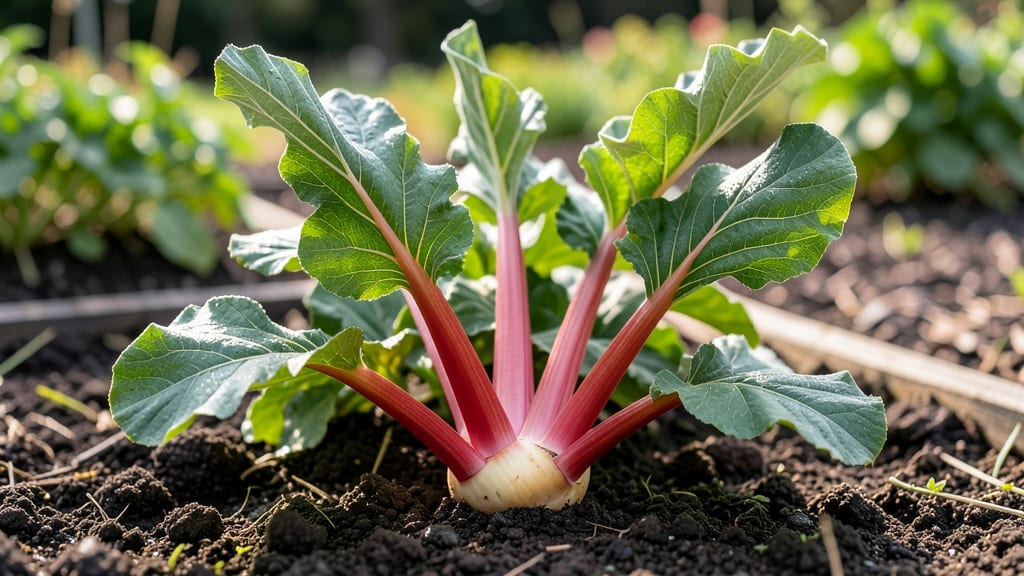
Growing a small rhubarb plant like 'Little Gem' proves you don't need a big yard for big harvests. 🌱 The secret lies in choosing the right variety and giving it the perfect spot—shady enough to keep leaves happy but sunny enough to sweeten those stalks.
My first compact rhubarb patch now produces more than my old sprawling one, and it fits neatly in a corner of my backyard.
You’ll need well-draining soil rich in organic matter (think compost or aged manure), a spot with 4-6 hours of morning sun, and patience—rhubarb takes 2-3 years to reach full production.
For containers, pick a 15-gallon pot with drainage holes, and plant in early spring when the soil warms to 50°F. Space plants 2 feet apart to prevent crowding, which stunts growth. By midsummer, you’ll be harvesting bright pink stalks that stay tender and crisp.
The key is consistent moisture—1 inch per week—and avoiding fertilizer after mid-summer, which encourages leafy growth over harvestable stalks. Prune damaged leaves regularly to keep the plant healthy and productive. This method works for balconies, small patios, or even large containers.
Even in tight spaces, you’ll get a steady supply of rhubarb for pies, compotes, or fresh eating—without the sprawl of traditional varieties.
📚 In This Guide
- What you need
- Instructions
- Tips and common mistakes
- Wrapping up and next steps
What you need
- ● Rhubarb Crown: 1 healthy, disease-free Rheum rhabarbarum crown (choose compact varieties like 'Victoria' or 'MacDonald' for small spaces).
- ● Well-Draining Soil: 3–5 gallons of loamy, slightly acidic soil (pH 6.0–6.8). Mix in compost or aged manure (1–2 cups) for nutrients.
- ● Container or Garden Bed: Pot Option: 1 12–18-inch deep container (minimum 18" diameter) with drainage holes.
- ● Garden Bed Option: A sunny spot with 6+ hours of light and at least 2–3 feet of soil depth.
- ● Organic Mulch: 2–3 inches of straw, wood chips, or shredded leaves to retain moisture.
- ● Watering Can or Hose: For gentle, deep watering (avoid overhead sprinklers).
- ○ Balanced Fertilizer: 1 cup of 10-10-10 or organic fertilizer (optional but helpful for first planting).
- ● Pruning shears (for shaping and harvesting).
- ● Soil pH test kit (to check acidity levels).
- ● Slow-release fertilizer tablets (for container gardening).
- ● Plant support (small stakes or cages if stems need extra help).
How to grow compact rhubarb plants for year-round harvests
Here's my tested method for cultivating small but productive rhubarb—perfect for tight spaces and patient gardeners.
🌱 Step 1: Select the Right Variety and Site
Choose a cold-hardy, compact variety like 'Little Gem' or 'Victoria'—these stay under 3 feet tall while producing abundant stalks. Rhubarb thrives in full sun to partial shade (at least 6 hours of light daily), but in hot climates, afternoon shade prevents bolted growth. Test your soil pH—rhubarb prefers 6.0-7.0—and amend with compost if needed.
I always plant in a spot with well-draining soil and consistent moisture—rhubarb hates soggy roots but won't tolerate drought either. Mark the location with stakes since rhubarb crowns spread slowly but steadily. The first year focuses on root establishment, so don't expect harvests until year two—patience pays off with decades of productivity.
🪴 Step 2: Plant Crowns Correctly for Compact Growth
Set the crown 2 inches deep in the soil, with the bud cluster facing upward. Space plants 3 feet apart in rows 4 feet apart—this gives roots room to expand without crowding, which keeps stalks thick and tender. I use a 2-inch layer of compost mixed into the planting hole to encourage early root growth.
Water deeply right after planting to settle the soil around the crown. The first 2 weeks are critical—keep the soil evenly moist (not soggy) until new leaves appear. Mulch with 3 inches of straw to retain moisture and suppress weeds. This is where many gardeners fail: overwatering causes rot, while underwatering stunts growth.
☀️ Step 3: Maintain Consistent Care for Compact Harvests
Feed rhubarb in early spring with 10-10-10 fertilizer (follow package rates) to promote vigorous stalk production. I avoid high-nitrogen fertilizers after mid-summer—they encourage leafy growth at the expense of stalks. Water 1-2 inches per week, more during harvest season, and always at the base of the plant to prevent leaf diseases.
Remove flower stalks as they appear—they drain energy from the plant and reduce stalk quality. I also cut back any yellowing or damaged leaves to redirect nutrients to the crown. By late fall, reduce watering to prepare for dormancy, but don't let the soil dry completely. The goal is a healthy, compact plant that stores energy for next year's harvest.
✂️ Step 4: Harvest Strategically for Long-Term Productivity
Wait until year two before harvesting, and then only take stalks when the plant has at least 10 mature leaves. Cut stalks at the base with a clean knife, leaving the leaf attached—it continues photosynthesizing for the crown. Never harvest more than one-third of the stalks in a season, and never harvest in the first year—this ensures a strong root system for future growth.
I harvest in early spring when stalks are tender and crisp, then again in late spring before the plant bolts. After harvest, apply a 2-inch layer of compost around the base to replenish nutrients. By late summer, reduce harvesting to allow the plant to store energy for winter. A well-maintained rhubarb plant can produce for 20+ years—making it one of the most rewarding compact perennials.
Tips & tricks for perfect compact rhubarb growth
These tried-and-tested strategies will help you coax the most from your small-space rhubarb plants—without the common pitfalls that frustrate even experienced gardeners.
Variety Matters: While 'Little Gem' and 'Victoria' are excellent choices for compact growth, consider 'Champagne' if you want sweeter stalks with less acidity. All three varieties stay under 3 feet tall, but 'Champagne' produces slightly larger stalks for its size—ideal if you're working with limited space but want maximum yield. I've found that planting these varieties in containers (with at least 12-inch depth) works surprisingly well for balconies or patios.
Soil Preparation Secret: Before planting, mix a 1-inch layer of sand into the bottom of your planting hole to improve drainage—this is especially critical if your soil tends to stay damp. Rhubarb roots are surprisingly sensitive to soggy conditions, and this simple step prevents the crown rot that can kill plants within weeks. In Step 1, when you're testing your soil pH, also check the drainage by doing a simple water test: Dig a 6-inch hole, fill it with water, and time how long it takes to drain. If it's still wet after 2 hours, you need to improve drainage.
Watering Wisdom: The 2-week critical period after planting deserves extra attention. I've learned this the hard way—skipping consistent moisture during this time results in stunted growth that never fully recovers. Use a soil moisture meter to check depth (aim for consistently moist but not soggy at 2-3 inches down). For container-grown rhubarb, water every 2-3 days in summer, as pots dry out much faster than in-ground plantings. The 3 inches of straw mulch you apply will help, but don't rely on it completely.
Harvest Timing Tip: When you're ready to harvest in early spring, look for stalks that are at least 10 inches long and have a diameter of 1/2 inch or more. Thinner stalks tend to be more fibrous and less tender. I harvest on cool, overcast days when stalks are naturally more crisp. After your first harvest, mark the stalks you've taken with small flags or twine—this helps you visualize the one-third rule and prevents over-harvesting, which can weaken the plant for future seasons.
Pro Tips for Small Rhubarb Plant
- These tried-and-tested strategies will help you coax the most from your small-space rhubarb plants—without the common pitfalls that frustrate even experienced gardeners.
- Variety Matters: While 'Little Gem' and 'Victoria' are excellent choices for compact growth, consider 'Champagne' if you want sweeter stalks with less acidity.
- Soil Preparation Secret: Before planting, mix a 1-inch layer of sand into the bottom of your planting hole to improve drainage—this is especially critical if your soil tends to stay damp.
Frequently asked questions
Got questions about growing small rhubarb plants? You’re not alone! Here are answers to the most common queries—from timing to troubleshooting—to help you cultivate a thriving, space-friendly rhubarb patch.
How long does it take for a small rhubarb plant to produce stalks?
A newly planted small rhubarb plant typically takes 1–2 years to mature enough for harvesting. Be patient! The first year focuses on root and leaf growth, while the second year rewards you with tender stalks. Pro tip: Avoid harvesting in Year 1—it weakens the plant.
Can small rhubarb plants survive winter?
Yes! Rhubarb is hardy and thrives in cold climates (USDA Zones 3–8). Mulch heavily with straw or leaves in late fall to protect roots. In mild winters, no extra care is needed—just wait for spring’s first signs of growth.
Are small rhubarb plants safe to eat raw?
Nope! Rhubarb leaves contain oxalic acid, which is toxic. Only the stalks are edible—cook them first to soften and enhance flavor. Raw stalks can cause stomach upset. Stick to pies, compotes, or stews for safe enjoyment.
What’s the best alternative if I don’t have space for a small rhubarb plant?
Try miniature varieties like ‘Little Sweetheart’ (12–18" tall) or container-friendly options. Or swap rhubarb for sorrel—it’s tangy, easy to grow, and thrives in small pots!
Why are my small rhubarb stalks turning yellow or slimy?
Yellowing? Likely overwatering or poor drainage. Slimy stalks? Fungal disease (like rhubarb curculio) or rot. Pull affected stalks, improve airflow, and avoid wetting leaves. For pests, handpick bugs or use neem oil.
When is the best time to harvest stalks from a small rhubarb plant?
Harvest in early spring (April–May) when stalks are 8–10" tall. Cut at the base with a knife, leaving the leaf attached. Avoid harvesting after June—it stresses the plant. Rule of thumb: Never take more than ⅓ of the stalks at once!
Wrapping up and next steps
Growing a small rhubarb plant is a rewarding journey that combines patience with delicious results! Whether you’re working with limited space or just starting your gardening adventure, these compact growth secrets will help you cultivate a thriving patch.
With the right care—sunlight, soil, and a little TLC—you’ll soon enjoy fresh, tangy stalks straight from your garden. 🌱
Ready to take the next step? Start by planting your crowns this fall or early spring, then monitor their progress. Before you know it, you’ll be harvesting your own homegrown rhubarb—perfect for pies, jams, or savory dishes. Happy gardening! 🍓✨