
Planting
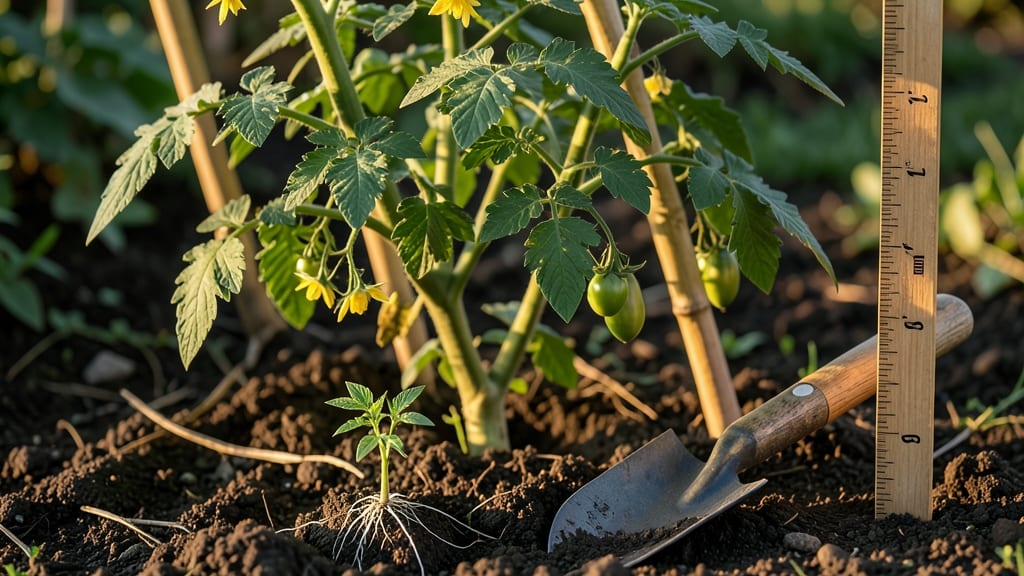
Tomato plants need to be planted 1/4 to 1/2 inch deep—a depth that might seem small but is the key to strong roots and a bountiful harvest 🍅.
If your tomato seedlings wilt under the sun or produce sparse fruit, the problem could be buried in the soil. Too shallow, and roots struggle to anchor; too deep, and they suffocate. Getting this right means the difference between a thriving vine and a struggling one.
In this guide, I’ll break down the science behind root depth, how soil type affects what’s ideal, and why your container-grown tomatoes might need a different approach than in-ground plants.
You’ll also learn how to spot signs of poor planting depth early and fix common mistakes—so your tomatoes grow deep, strong, and full of flavor.

Optimal soil depth for tomato roots: what research recommends
Tomato plants thrive when their roots have ample space to explore. Research shows mature tomato roots can extend 3-4 feet deep and spread 2-3 feet wide in ideal conditions.
This extensive root system allows them to access water and nutrients efficiently, especially during fruiting. When planting, focus on creating a soil environment that encourages this natural growth pattern.
In-ground planting offers the most room for roots to develop naturally. A minimum 12-inch deep soil profile is ideal for most tomato varieties, but deeper is always better. For heavy clay soils, consider amending the top 18 inches to improve drainage and aeration.
This depth allows roots to penetrate compacted layers and access moisture during drought periods.
| Factor | In-Ground Planting | Container Planting | Research Notes |
|---|---|---|---|
| Root Depth | 36-48 inches | 18-24 inches | Deeper roots = better drought resistance |
| Soil Volume | Unlimited | 5+ gallons minimum | Containers restrict root growth |
| Nutrient Zone | Top 12-18 inches | Entire pot volume | Fertilize top 6 inches regularly |
| Water Access | Deep moisture | Frequent watering | Containers dry faster |
| Stability | Excellent | Requires staking | Wind resistance improves with depth |
Container-grown tomatoes face unique challenges because their roots are confined. To compensate, choose containers with at least 18 inches of depth and a diameter of 12-18 inches. Five-gallon buckets work well for dwarf varieties, while larger containers accommodate indeterminate types.
Remember, roots will only grow as deep as the container allows, so prioritize depth over width.
Soil composition significantly impacts root development. Sandy soils drain too quickly, while clay soils become compacted. Aim for a loamy texture with 25-30% porosity to balance drainage and moisture retention.
Add 2-3 inches of compost to the planting hole to create an ideal root zone. This organic matter stimulates microbial activity, which enhances nutrient availability for growing roots.
Research from the University of California indicates that tomato roots grow most rapidly during the first 4-6 weeks after transplanting. During this critical period, maintain consistent moisture to encourage downward growth.
Avoid overwatering, which can suffocate roots and promote fungal diseases. Instead, water deeply 2-3 times per week to encourage roots to seek deeper moisture sources.
For in-ground planting, create a 12-inch deep planting hole and mix the excavated soil with compost. This creates a nutrient-rich zone that attracts roots. Place the transplant slightly deeper than its original container level—1/3 of the stem buried encourages stronger root development.
This technique, called "hill planting," also improves stability for tall indeterminate varieties.
Mulching plays a vital role in maintaining optimal soil depth conditions. Apply 2-3 inches of organic mulch (straw or shredded leaves) around tomato plants to: 1.
Regulate soil temperature 2. Reduce evaporation 3. Prevent soil compaction This creates ideal conditions for roots to explore deeper soil layers throughout the growing season.
When selecting tomato varieties, consider their root characteristics. Determinate varieties (like 'Roma' or 'Celebrity') develop shallower root systems, making them better suited for containers. Indeterminate varieties (such as 'Sungold' or 'Brandywine') need deeper soil to support their vigorous growth and heavy fruit loads. Always check variety descriptions for specific recommendations.
Regular soil testing reveals hidden factors affecting root depth. Aim for a pH between 6.0-6.8—tomato roots struggle in acidic or alkaline conditions. If your soil tests show compaction, consider double-digging the planting area to break up hardpan layers.
This simple technique can double the effective rooting depth for your tomato plants.
Remember that root development continues throughout the growing season. As your tomatoes mature, their roots will naturally extend deeper in search of water and nutrients. By providing the right soil depth from the start, you're setting your plants up for a healthier, more productive growing season.
Whether you're gardening in-ground or containers, these research-backed guidelines will help your tomato plants reach their full potential.
Signs your tomato plants aren’t getting enough depth (and how to fix it)
If your tomato plants look healthy above ground but still produce small fruit or wilt during heatwaves, the issue might be root depth. Shallow roots struggle to access water and nutrients, leading to stress even when conditions seem ideal.
I’ve seen this firsthand with my cherry tomatoes in containers—what looked like drought tolerance was actually root suffocation.
Tomatoes need 12-18 inches of soil depth to develop strong roots, but many gardeners unknowingly plant them too shallow. This often happens in raised beds or containers where soil depth is limited. Even in-ground plants can suffer if the soil is compacted or rocky beneath the surface.
⚠️ callout warning
Minimum depth: 12 inches (for determinate varieties).
Ideal depth: 18+ inches (for indeterminate varieties like Sungold).
Container rule: At least 12 inches deep per plant—smaller pots = stunted roots.
Fix now: Amend soil with compost or vermiculite to encourage deeper growth.
One of the first warning signs is yellowing leaves at the bottom, even when you’re watering regularly. This happens because shallow roots can’t reach moisture deep enough, forcing the plant to transpire faster than it can absorb.
Another red flag? Blossom end rot—a classic calcium deficiency symptom that often stems from inconsistent moisture due to poor root depth.
For container gardeners, the fix is simple: upgrade your pots. A 5-gallon container is the minimum for one tomato plant, but deeper is always better.
I repurposed an old whiskey barrel (2 feet deep) for my heirloom tomatoes, and the difference in fruit size was night and day. Fill the bottom third with gravel or perlite to improve drainage and give roots room to grow downward.
In-ground solutions focus on soil amendments. Work in 2-3 inches of compost or aged manure before planting to loosen compacted soil.
For heavy clay soils, mix in coarse sand or pearlite to create channels for roots to explore deeper. Mulching with straw or shredded leaves also helps by keeping soil cool and moist at the surface while encouraging roots to grow downward in search of water.
Don’t overlook the power of deep watering. Instead of light daily watering, give your tomatoes a slow, deep soak 2-3 times per week. This trains roots to grow deeper in search of moisture.
I use a soaker hose buried 6 inches down to target the root zone directly. Pair this with a balanced fertilizer (like 10-10-10) applied every 4-6 weeks to fuel root expansion.
With these adjustments, you’ll see stronger stems, larger fruit, and plants that handle heat and drought like champions. The key is patience—deep roots take time to develop, but the payoff in tomato productivity is worth every extra inch of soil. 🌱