
Planting
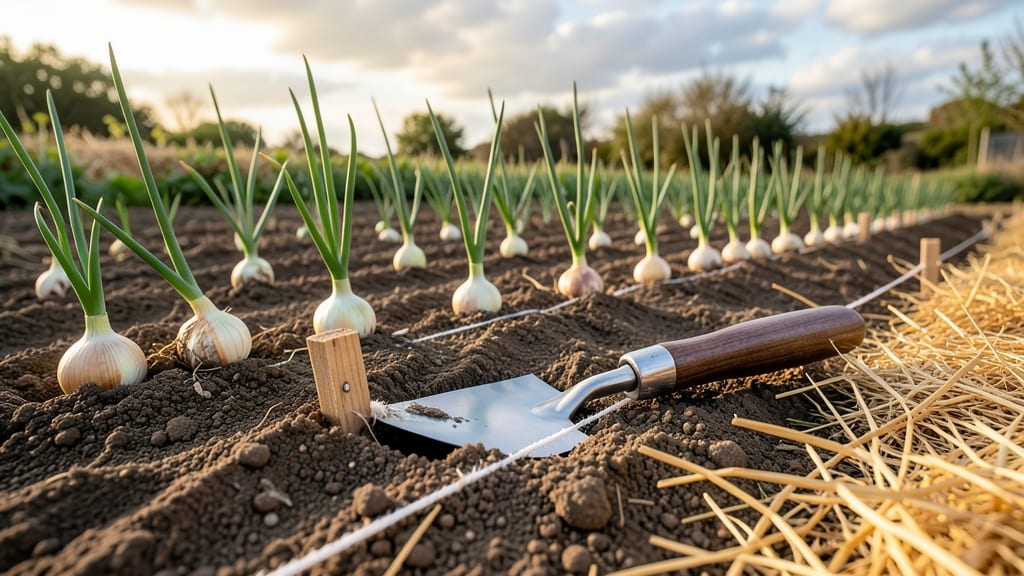
To plant onion sets at the right depth means burying them just 1 inch deep with the tip barely peeking above soil—this small detail makes all the difference in your harvest.
Struggling to grow healthy, robust onion bulbs? The secret often lies in getting the planting depth right—too shallow or too deep, and your harvest could suffer. Mastering this simple yet critical step ensures stronger plants, fewer pests, and bigger yields.
Onions thrive in USDA Zone 6a when planted in early spring or late summer, but the real magic happens in the soil. Loose, well-draining earth lets roots spread easily, while compacted or heavy clay can stunt growth. Even the right variety matters—hardnecks and bulb onions need slightly different care.
In this guide, I’ll walk you through the exact planting depth for your onions, how to prep soil for success, and the pro tips that turn good harvests into great ones—no guesswork, just stronger 🧅 bulbs from start to finish.

Optimal planting depth for onion sets by variety type
Getting the planting depth right for onion sets is one of the simplest yet most impactful steps to ensure a bountiful harvest. Unlike seeds, onion sets are small bulbs that need precise placement to develop strong roots and large, flavorful bulbs.
The depth you choose depends on whether you're growing hardneck or bulb onions, as well as your soil type. Too shallow, and your onions may bolt or produce small bulbs; too deep, and they'll struggle to emerge or rot.
Most gardeners follow the general rule of planting onion sets with the tip just above soil level and the rest covered by about 1 inch of soil. However, this can vary slightly based on your onion variety and soil conditions.
For example, hardneck onions often need slightly deeper planting than bulb onions because they develop larger bulbs and require more root space. Meanwhile, sandy soil drains faster, so you might need to plant slightly deeper to retain moisture, while clay soil holds moisture longer, allowing for shallower planting.
Here’s a quick guide to help you determine the best planting depth for your specific onion variety and soil type:
For hardneck onions, which include varieties like 'Candy' and 'Red Wethersfield', planting slightly deeper—around 1 to 1.25 inches—helps accommodate their larger bulb development.
These onions also produce scape shoots, which require extra energy, so deeper planting ensures they have the root strength to support both the bulb and the scapes.
If you're growing in sandy soil, aim for the deeper end of this range to prevent the soil from drying out too quickly.
On the other hand, bulb onions, such as 'Sweet Spanish' or 'Yellow Granex', typically thrive with a planting depth of 1 inch. These varieties are often grown for their mild flavor and are less forgiving when it comes to depth.
If planted too deep, they may struggle to emerge, while shallow planting can lead to bolting—where the onion sends up a flower stalk prematurely, reducing bulb size. In clay soil, reduce the depth slightly to 0.75 inches to avoid waterlogging, which can cause rot.
When planting shallot sets, which are smaller and more delicate, keep the depth even shallower—around 0.5 to 1 inch. Shallots have a more compact growth habit, so they don’t need as much depth to establish strong roots.
However, avoid planting them too shallowly, as this can expose them to temperature fluctuations and pests like onion flies or thrips. A light covering of mulch after planting can help protect them while still allowing the tips to peek through.
Another critical factor to consider is the soil temperature. Onion sets need soil temperatures between 40°F and 50°F to germinate properly.
If you're planting in early spring and the soil is still cold, you might need to use a row cover or wait a few weeks to ensure the sets have the best chance of establishing roots before the weather warms up.
Planting too early in cold soil can delay growth and make the sets more susceptible to disease.
Once you’ve planted your onion sets at the correct depth, focus on keeping the soil consistently moist but not waterlogged. The first few weeks are crucial for root establishment, so aim to water deeply once a week unless your region experiences heavy rain.
Mulching with straw or grass clippings can help retain moisture and suppress weeds, which is especially helpful in sandy soil that drains quickly. Avoid overwatering, as soggy soil can lead to rot, particularly in clay soil.
Finally, pay attention to the spacing between plants, which should be about 4 to 6 inches apart in rows that are 12 to 18 inches apart. Proper spacing ensures each onion has
Common mistakes that ruin onion growth (and how to fix them)
Even experienced gardeners sometimes struggle with onion sets that refuse to grow properly. The most common culprits? Incorrect planting depth and soil compaction. These mistakes can lead to stunted growth, bolting (premature flowering), or even complete crop failure.
Understanding how to adjust your approach based on climate and soil type can make all the difference in your harvest.
In cold climates like USDA Zone 4, onions need to be planted deeper—around 1.5 inches—to protect them from frost heave. Meanwhile, in warm regions like Zone 10, shallower planting (1 inch) helps prevent overheating.
Getting this balance wrong often results in weak roots or exposed bulbs that rot or attract pests.
🚨 callout warning 🚨
The root plate of an onion set should never be buried deeper than 1.5 inches. Planting too deep (2+ inches) smothers the bulb, while planting too shallow (less than 1 inch) leaves it vulnerable to drying out or frost damage. For sandy soils, aim for 1 inch—sandy soil drains quickly and can't hold moisture like clay soils, which may require 1.25 inches.
Pro Tip: Use your finger to create a small hole—just deep enough to cover the set's root ball without burying the tip. If the soil is compacted, loosen it first with a fork to encourage root growth.
Another frequent mistake is overcrowding or uneven spacing. Onions need 4-6 inches between plants to develop properly. When roots compete for nutrients, bulbs stay small and weak.
In clay-heavy soils, this issue worsens because water pools around roots, leading to rot. To fix this, amend your soil with compost or sand before planting.
Climate also plays a huge role in bolting prevention. Onions planted too early in warm regions may bolt due to heat stress, while those in cool climates might struggle if soil temperatures rise too quickly.
To adjust, plant in early spring (Zone 3-7) or late summer (Zone 8+) for optimal bulb development. A mulch layer of straw helps regulate soil temperature and retain moisture.
If your onions are already struggling, don’t panic. Loosen compacted soil around the base with a hand fork and water deeply to encourage root expansion. For exposed bulbs, gently cover them with soil or mulch.
In hot climates, provide afternoon shade to prevent bolting. With these fixes, you’ll see stronger growth and larger bulbs by harvest time.
Remember, onions are forgiving once established, but getting the planting depth and soil conditions right from the start sets the foundation for success. A little extra care now means fewer headaches—and more onions—later in the season! 🧅