
Planting
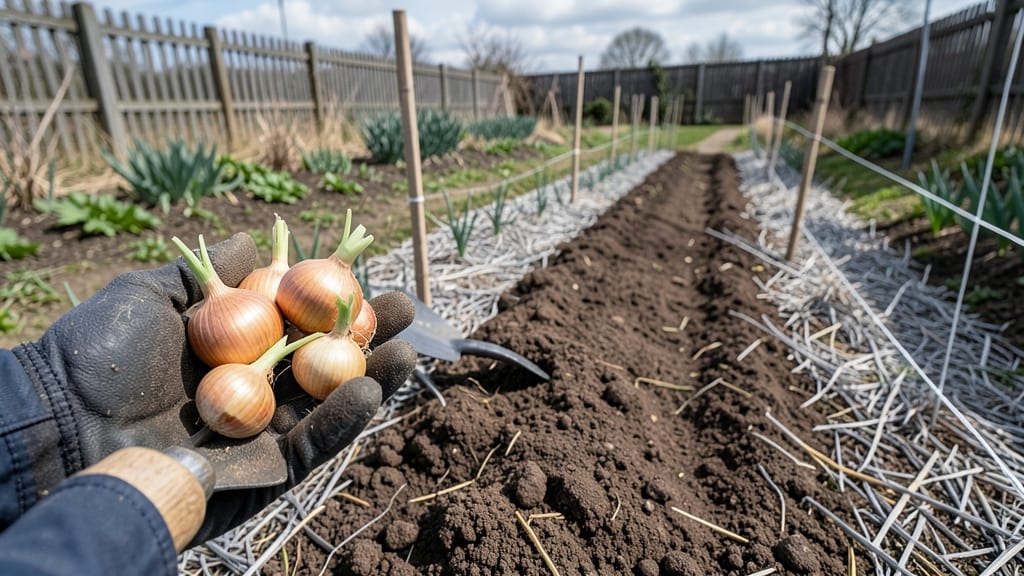
How to plant onion sets in the garden delivers sweet, homegrown bulbs in just 90 days—no waiting for seed germination or transplant shock. 🌱 I learned the hard way that skipping soil prep or crowding plants leads to puny harvests, but once you nail timing and spacing, you’ll pull golden onions that outshine store-bought every time. Start with loose, well-draining soil amended with compost—onion sets hate soggy roots. Plant in early spring (2-4 weeks before last frost) or late summer for a fall crop, spacing sets 4-6 inches apart in rows 12-18 inches apart. The key is depth: sets should sit 1 inch deep, with the pointed tip facing up. Water lightly after planting, then keep soil evenly moist but not soggy—onions need about 1 inch of water per week. Mulch with straw to retain moisture and suppress weeds, and side-dress with balanced fertilizer (10-10-10) when shoots reach 6 inches tall. Yellowing leaves? You’re overwatering; crispy edges? Time to up the moisture. By midsummer, your onions will be ready to harvest when tops fall over. Pull them gently, cure in a dry spot for a week, and store in a cool, dark place. The first harvest feels like magic—no green onions, just plump bulbs—and you’ll be hooked on sets for life.
📚 In This Guide
- What you need
- Instructions
- Tips and common mistakes
- Wrapping up and next steps
What you need
- ● Onion sets: 10–20 sets per square foot (or follow package instructions for spacing). Choose certified disease-free sets for best results.
- ● Garden soil: Well-draining, loose soil with a pH of 6.0–7.0 (test your soil if unsure). Amend with compost for fertility.
- ● Fertilizer: Balanced 10-10-10 fertilizer (1–2 tbsp per plant at planting).
- ○ Optional: High-nitrogen fertilizer (like 21-0-0) for greens growth (if harvesting scallions).
- ● Watering can or hose: With a gentle spray nozzle to avoid displacing sets.
- ○ Gloves (optional but recommended): To protect hands from soil and sharp onion edges.
- ● Row marker sticks or labels: To track planting dates and varieties (especially useful if growing multiple types).
- ● Mulch (straw or grass clippings): 1–2 inches thick to retain moisture and suppress weeds.
- ● Planting grid or string: For precise spacing (helpful for large plots).
- ● Soil pH tester: To ensure your soil is in the ideal range before planting.
- ● Weed barrier fabric: If your garden has persistent weeds.
Step-by-step guide to planting onion sets for a fast, reliable harvest
Onion sets grow faster than seeds and deliver bulbs in just 90 days—here's how to maximize your yield.
🌱 Step 1: Choose the Right Onion Sets and Prepare the Soil
Select certified disease-free onion sets from a reputable supplier. These are small bulbs, not seeds, and come in varieties like 'Yellowstone', 'Sweet Sandwich', or 'Red Baron'. The soil needs to be loose and well-draining—onions hate soggy roots. Work in 2-3 inches of compost or well-rotted manure to improve texture and fertility.
Test your soil pH—onions prefer a slightly acidic to neutral range of 6.0-7.0. If your soil runs alkaline, add sulfur or peat moss a few weeks before planting to adjust the pH. Break up any clumps and remove rocks or debris larger than ½ inch—onion roots need to spread freely without obstruction.
🪴 Step 2: Time Your Planting for Optimal Growth
Onion sets thrive when planted in early spring, about 2-4 weeks before your last frost date. In warm climates, you can also plant in late fall for a winter harvest. The key is to give them enough time to mature before summer heat stresses the bulbs. If planting in spring, avoid setting them out too early—soil temperatures below 40°F slow growth significantly.
Use a hardening-off trick if starting indoors: place sets in a cool, shaded spot for 3-5 days before transplanting. This helps them adjust to outdoor conditions. You'll know they're ready when the tops show green growth and the sets feel firm—not soft or shriveled.
☀️ Step 3: Plant Sets at the Correct Depth and Spacing
Dig holes or make furrows 1 inch deep—this ensures the sets sit just below the soil surface without being buried too deeply. Space rows 12-18 inches apart to allow for airflow and bulb expansion. Within the row, plant sets 4-6 inches apart—crowding leads to small, misshapen bulbs. I like to use a dibble or small stick to make planting holes evenly spaced.
Cover the sets with soil and water gently but deeply to settle the soil around them. Avoid wetting the tops—this can cause rot. If your soil is dry, water again in 3-4 days to encourage root establishment. You'll see green shoots emerge in 7-10 days—this is your signal that the sets have rooted successfully.
💧 Step 4: Maintain Consistent Moisture and Fertility
Onions need 1 inch of water per week, but avoid overhead watering once the tops reach 6 inches tall—this reduces disease risk. Instead, use a drip irrigation system or water at the base. Mulch with 2-3 inches of straw or grass clippings to retain moisture and suppress weeds. Keep the mulch 2 inches away from the plant stems to prevent rot.
Side-dress with a low-nitrogen fertilizer (like 5-10-10) when the tops reach 6-8 inches tall. This encourages bulb development rather than leafy growth. Stop fertilizing 4-6 weeks before harvest—too much nitrogen late in the season leads to hollow centers. You'll know fertility is balanced when the tops grow sturdy and upright, not floppy or yellowing.
✂️ Step 5: Harvest at the Right Time for Maximum Flavor and Storage
Onion sets are ready to harvest when the tops yellow and flop over, usually 90-120 days after planting. Gently pull the bulbs from the soil—don’t dig with a shovel, as this can damage the roots. Let them cure in a dry, shaded, well-ventilated area for 2-3 weeks. This hardens the skins and improves storage life.
Trim the tops to 1 inch above the bulb and remove excess soil. Store in a cool (32-40°F), dry place with good airflow. Properly cured onions keep for 3-6 months. If you notice any bulbs softening or sprouting during storage, separate them immediately—they won’t keep and should be used first.
Tips & tricks for perfect onion set planting
Here's what nobody tells you—these tricks will help you avoid common pitfalls and grow onions that rival store-bought quality.
Soil Prep Secret: Before amending your soil with 2-3 inches of compost, mix in a handful of wood ash if your soil tests acidic (below 6.0). Onions prefer that slightly acidic to neutral range, and wood ash adds trace minerals while balancing pH. Just avoid overdoing it—too much ash can make the soil too alkaline. I've found this small adjustment makes a noticeable difference in bulb size and flavor.
Frost Timing Matters: When planting 2-4 weeks before your last frost date, check your local frost forecast for the actual last frost date—not the average. Many gardeners use the 2-4 week window as a starting point, but I've seen spring frost dates vary by 10 days from year to year. Use a frost calendar for your specific ZIP code to pinpoint the exact window. Planting too early when soil temps are below 40°F can stunt root development.
Planting Depth Visual: For that 1-inch deep planting, think of a standard pencil—when you plant, the onion set should sit at about the same depth as a pencil's eraser end. This ensures the set isn't buried too deep (which can cause rot) or too shallow (which can lead to weak roots). I like to use a dibble tool because it makes perfectly spaced holes at the right depth every time.
Watering Strategy: After planting, water deeply but gently to avoid disturbing the sets. Then, wait 3-4 days before watering again—this gives the roots time to establish without encouraging surface moisture that can lead to rot. Once the shoots emerge (after 7-10 days), maintain that 1 inch of water per week by checking soil moisture with your finger about an inch below the surface. Dry soil means it's time to water.
Pro Tips for Plant Onion Sets In The Garden
- Here's what nobody tells you—these tricks will help you avoid common pitfalls and grow onions that rival store-bought quality.
- Soil Prep Secret: Before amending your soil with 2-3 inches of compost, mix in a handful of wood ash if your soil tests acidic (below 6.0).
- Frost Timing Matters: When planting 2-4 weeks before your last frost date, check your local frost forecast for the actual last frost date—not the average.
Frequently asked questions
Got questions about planting onion sets? You’re not alone—gardeners often wonder about timing, spacing, and even how to handle mistakes. Here are answers to the most common queries to help you grow confidently!
When is the best time to plant onion sets?
Plant onion sets 6-8 weeks before your last spring frost for a summer harvest. In warmer climates, you can also plant in fall for a winter crop. Avoid planting too early—they’ll bolt (flower) if exposed to cold too soon. Check your local frost dates for precision!
How far apart should I space onion sets?
Space onion sets 4-6 inches apart in rows 12-18 inches apart. This gives them room to swell into bulbs without competing. If you’re growing in containers, use 6-inch pots with 2-3 sets per pot. Crowding leads to small, weak bulbs.
What do I do if my onion sets sprout before planting?
No stress! Onion sets that sprout before planting are still fine—just plant them shallowly (1 inch deep) and keep the soil moist. The sprouts won’t harm the bulb; they’ll just grow a little slower. Trim any wilted or mushy sprouts to prevent rot.
Can I plant onion sets in the same spot every year?
Avoid planting onions (or other alliums like garlic or leeks) in the same spot for 3+ years to prevent soil-borne diseases. Rotate crops with non-allium plants like tomatoes, beans, or peas. Healthy soil = happier onions!
How do I protect onion sets from pests?
Onion sets face threats like onion flies, thrips, and slugs. Use row covers early in the season, apply diatomaceous earth for crawling pests, or plant marigolds nearby as a natural repellent. Avoid overwatering—wet soil attracts slugs!
Wrapping up and next steps
Planting onion sets is a simple, rewarding way to grow fresh, flavorful onions in just 90 days—no fuss, no waiting! By choosing the right variety, prepping your soil, and spacing them properly, you’ll soon enjoy a bountiful harvest for soups, salads, and more.
Whether you’re a beginner or a seasoned gardener, these steps make it easy to transform your garden into an onion powerhouse.
Now that you’re ready to plant, grab those sets and get growing! Next, mark your calendar for thinning (if needed) and watch your onions thrive. Happy gardening—your kitchen will thank you! 🌱✨