
Planting
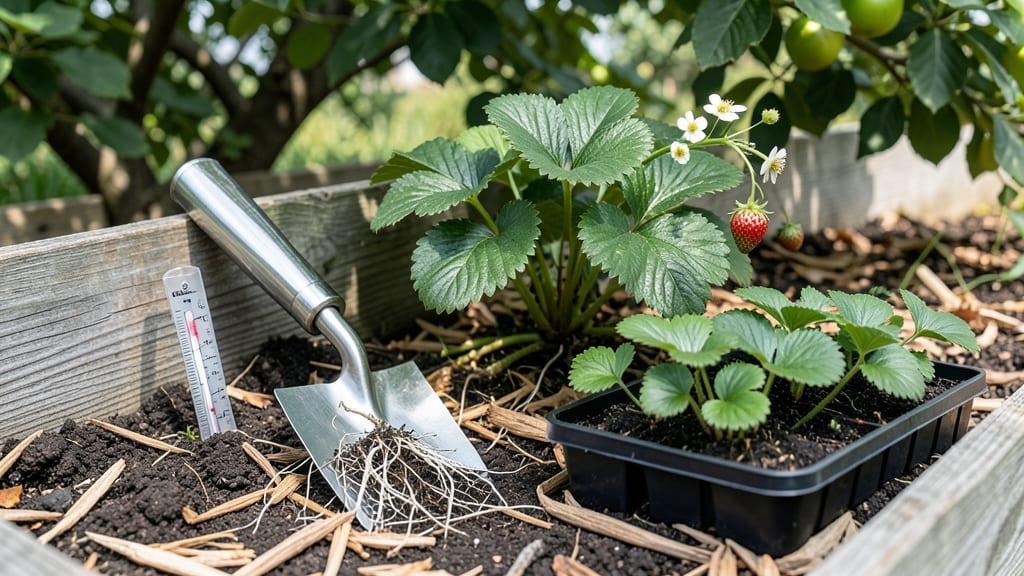
Strawberries need how deep of soil do strawberries need at least 6 inches to grow strong roots and produce sweet fruit 🍓 — anything less risks stunted plants and poor yields.
Picture this: you’ve just planted your spring strawberries, eager for that first harvest, only to find the berries small and sparse. The culprit? Too-shallow soil. Strawberries are shallow-rooted, but they still need room to spread and access nutrients.
In this guide, I’ll break down why 6 inches is the minimum for in-ground planting, how to adjust for containers, and the simple soil tests to check depth before you plant.
You’ll also discover how mulching can save you from digging deeper and the one mistake that chokes strawberry roots faster than drought.
The ideal soil depth for strawberries: 6 inches and why it matters
Strawberries thrive when planted in soil that’s at least 6 inches deep. This depth isn’t arbitrary—it’s rooted in their unique root system, which spreads horizontally but needs vertical space to access nutrients and water.
Shallow planting restricts roots, leading to stunted growth and poor yields, while planting too deep can suffocate the plant’s crown (the junction where leaves meet roots).
The 6-inch minimum ensures strawberries develop strong, fibrous roots that anchor the plant and absorb moisture efficiently. Deeper soil also improves disease resistance by reducing soil-borne pathogens near the surface.
For example, June-bearing varieties rely on deep roots to support their heavy fruit production, while everbearing types benefit from consistent moisture access during multiple harvest cycles.
Here’s why the 6-inch rule matters for your strawberry patch:
| Factor | Why It Matters | Solution |
|---|---|---|
| Root System | Strawberries have shallow but wide roots; 6" depth supports growth. | Loosen soil to 6" before planting. |
| Crown Health | Crowns rot if buried too deep; stay at soil level. | Plant crowns flush with soil surface. |
| Nutrient Access | Deeper soil holds more organic matter for root feeding. | Add compost to bottom 3" of planting hole. |
| Disease Resistance | Shallow roots expose plants to fungal pathogens. | Mulch with straw to keep soil moist and cool. |
| Yield Potential | Deep roots support larger fruit production. | Use raised beds with 8" depth for best results. |
For container-grown strawberries, the 6-inch rule translates to pots with at least 8-inch depths to accommodate root spread and drainage. In-ground plantings benefit from loose, well-draining soil mixed with compost to a depth of 8–12 inches, especially in clay-heavy soils.
This extra depth prevents waterlogging, which can lead to root rot—a common issue in heavy soils.
When planting, focus on the crown placement: it should sit at the soil surface, never buried. The roots will spread outward into the top 6 inches, while the crown stays exposed to sunlight.
This balance is key for preventing crown rot, a fungal disease that thrives in buried or waterlogged crowns. For example, everbearing varieties like 'Albion' produce fruit in multiple cycles, so proper depth ensures consistent yields.
Deeper soil also improves water retention during dry spells. Strawberries need consistent moisture, but their roots can’t access water if the soil is compacted or too shallow.
Amending the soil with organic matter like compost or aged manure to a depth of 6–8 inches creates a sponge-like environment that holds moisture while allowing excess water to drain. This is especially critical in hot climates, where shallow roots dry out quickly.
Another benefit of deeper soil is temperature regulation. Cooler soil temperatures in summer protect roots from heat stress, while warmer soils in spring encourage faster growth. For instance, in USDA Zone 7, strawberries planted in 8-inch-deep soil stay cooler during summer heatwaves, reducing stress on the plant.
You can test your soil depth by digging a hole and measuring—if it’s less than 6 inches, amend it with a mix of topsoil and compost.
For raised beds, aim for a minimum depth of 8 inches to accommodate root growth and mulching. Fill the bottom 3–4 inches with a mix of compost and sand (for drainage), then top with garden soil.
This setup mimics the ideal depth while preventing soil compaction. In urban gardens with limited space, use deep containers with drainage holes and fill them with a well-aerated potting mix.
Common mistakes include planting strawberries in rocky or compacted soil, which restricts root growth. Always loosen the soil to the required depth before planting. Over-mulching can also suffocate roots if the mulch layer exceeds 2–3 inches.
Balance is key: mulch lightly to retain moisture without smothering the plant. For example, June-bearing varieties like 'Chandler' produce larger berries when roots have ample space to explore.
In summary, the 6-inch soil depth is a science-backed standard for strawberry success. It supports root health, improves yields, and reduces disease risks. Whether you’re planting in-ground, in containers, or raised beds, prioritize soil depth to give your strawberries the best possible start.
With the right depth, your plants will reward you with juicy, abundant fruit all season long! 🍓
How to test and prepare your soil depth for strawberry planting
Before planting your strawberries, knowing your soil depth is crucial. Strawberries thrive when their roots have 6 inches of loose, fertile soil to spread into.
Shallow soil restricts root growth, while overly deep planting risks root rot from poor drainage. Let’s test your current soil and prepare it for success.
Start by assessing your garden’s soil depth with a simple DIY test. Use a trowel or metal rod to dig a hole—if the soil is less than 6 inches deep before hitting hardpan or rocks, you’ll need to amend it.
For containers, ensure the pot has at least 8 inches of depth to accommodate root systems. Let’s break this down step by step.
Step-by-Step Soil Depth Preparation
-
Step 1: Test Current Depth
Dig a 6-inch hole in your garden bed. If you hit hard soil or rocks, note the depth—this is your starting point for amendments.
-
Step 2: Loosen Compacted Soil
Use a garden fork to break up hardpan layers. Work the fork vertically to create channels for roots to penetrate.
-
Step 3: Add Organic Matter
Mix in 2-3 inches of compost or aged manure to improve soil structure. For sandy soil, add peat moss to retain moisture.
-
Step 4: Improve Drainage
If drainage is poor, incorporate perlite or coarse sand to aerate the soil. Aim for a well-draining mix that holds moisture without sogginess.
-
Step 5: Mulch for Retention
Top with 2-3 inches of mulch (straw or wood chips) to retain moisture and suppress weeds. Keep mulch 2 inches away from stems to prevent rot.
For container planting, choose pots with drainage holes and fill them with a soil mix designed for strawberries. A blend of 50% potting soil, 30% compost, and 20% perlite works well. Avoid heavy garden soil, which compacts easily in pots.
Common mistakes include planting the crown too deep (burying where leaves meet roots) or using soil with high clay content. Always plant with the crown just above soil level—this prevents rot while allowing roots to access the amended depth below.
After amending, water deeply to settle the soil and encourage root penetration. Monitor moisture levels—strawberries need consistent moisture but hate soggy roots. With the right soil depth and care, you’ll set your strawberries up for a bountiful harvest all season long. 🍓