
Planting
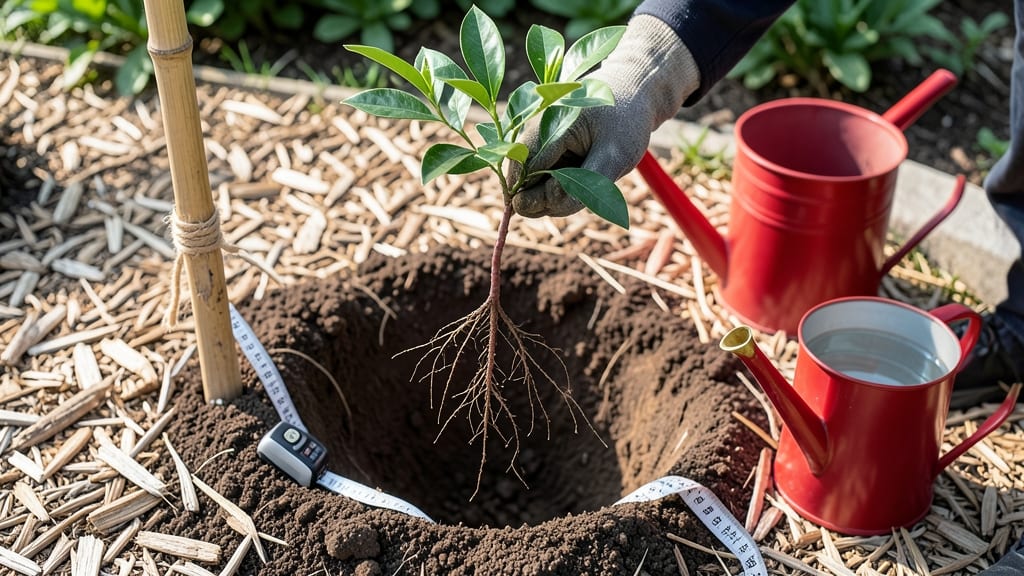
Planting fruit trees too deep or too shallow can turn your 🌳 fruit tree into a slow-grower—or worse, a dead one. The root flare, where the roots meet the trunk, needs to sit just above the soil line for healthy development.
Picture this: You’ve spent months waiting for your new tree to arrive, only to dig a hole, plant it, and then watch it struggle for years. The problem? Most gardeners don’t realize that depth matters more than soil type when it comes to long-term growth.
In this guide, I’ll break down the science behind the right planting depth for different fruit tree types, how to fix mistakes if you’ve already planted too deep, and soil-specific adjustments to keep your tree thriving.
You’ll learn how to prepare the soil, position the roots correctly, and avoid common pitfalls that can kill your tree before it even bears fruit.

Optimal planting depth for fruit trees by root type and species
Getting the planting depth right for your fruit tree is one of the most critical steps—yet it's often overlooked. The root flare (where roots meet the trunk) must sit just above the soil line, but many gardeners bury it too deep, suffocating the tree's growth.
Shallow-rooted varieties like apples and pears need precise placement, while deep-rooted peaches and cherries require extra soil for stability. Let's dive into the science behind proper depth to ensure your tree thrives from day one.
Before you plant, always check the root flare exposure. If you bury it more than 2-3 inches below soil level, you risk girdling roots that strangle the tree's ability to transport nutrients. For bare-root trees, the flare should sit 1-2 inches above ground after settling.
Container-grown trees often need deeper planting—up to 3 inches deeper than their current soil line—to account for root circling from the pot.
| Tree Type | Root System | Ideal Planting Depth | Root Flare Position | Soil Prep Needed |
|---|---|---|---|---|
| Apple (Malus domestica) | Shallow | 1-2" above flare | Visible above soil | Loose, well-draining |
| Pear (Pyrus communis) | Shallow | 1-2" above flare | Visible above soil | Amend with compost |
| Peach (Prunus persica) | Deep | 2-3" below flare | Slightly buried | Add sand for drainage |
| Cherry (Prunus avium) | Deep | 2-3" below flare | Slightly buried | Test for acidity (pH 6-7) |
| Citrus (Citrus spp.) | Moderate | Flare at soil line | Level with ground | Well-draining mix |
For shallow-rooted trees like apples and pears, focus on creating a wide planting hole (twice as wide as the root ball) to encourage lateral root spread.
The hole should be no deeper than 12-18 inches, and you'll want to backfill with a mix of native soil and compost (50/50 ratio). This ensures the roots have immediate access to nutrients while preventing compaction.
Always water thoroughly after planting to settle the soil and eliminate air pockets around the roots.
Deep-rooted varieties such as peaches and cherries need a different approach. These trees benefit from a deeper planting hole (up to 24 inches deep) to accommodate their extensive root systems. The root flare can be buried slightly—about 2-3 inches below the original soil line—to provide stability.
However, avoid burying it deeper, as this can lead to anaerobic conditions that rot roots. For these species, amend the bottom 6 inches of soil with coarse sand or perlite to improve drainage.
One common mistake is ignoring the graft union on nursery trees. This is where the scion (desired fruit variety) is attached to the rootstock. Always plant so the graft union sits 2-4 inches above the soil line.
If buried, the rootstock may dominate, producing unwanted suckers or poor-quality fruit. For example, a dwarf apple tree with a graft union buried too deep might grow taller than expected, losing its compact form.
Regional soil conditions play a huge role in depth adjustments. In clay-heavy soils, mounding soil around the base (creating a berm) can prevent waterlogging while keeping the flare exposed. Conversely, in sandy soils, you may need to add organic matter to the hole to retain moisture.
Always test your soil's drainage by digging a test hole—if water pools after 30 minutes, amend with sand or gypsum before planting.
After planting, create a mulch ring (3-4 inches thick) using wood chips or straw, but keep it 6 inches away from the trunk to prevent rot. This mulch helps regulate soil temperature and retain moisture, especially during the tree's first critical growing season. Water deeply every 5-7 days for the
Common mistakes that kill fruit trees when planting too deep
When planting fruit trees, most gardeners focus on soil quality and sunlight—but planting depth is just as critical. Burying the root flare or trunk too deep suffocates roots, causing girdling and disease. I’ve seen even experienced growers make this costly mistake, leading to stunted growth or worse.
One of the biggest red flags is a swollen base at the soil line, a sign of anoxic roots (roots deprived of oxygen). This suffocation weakens the tree’s ability to absorb water and nutrients, making it vulnerable to pests and fungal infections like Phytophthora.
Even worse, deep planting can bury the graft union, forcing the tree to grow a new trunk from the roots.
⚠️ callout warning ⚠️
Planting fruit trees too deep (more than 2-3 inches below the root flare) triggers these fatal issues:
- Girdling roots: Roots grow in circles, strangling the trunk over time.
- Root suffocation: Compacted soil blocks oxygen, causing rot.
- Disease entry: Moisture traps pathogens like Armillaria (root rot).
🔹 Fix it now: Dig a trench around the base and gently loosen soil to expose the root flare. Add organic mulch (not touching the trunk) to stabilize the soil line.
If you’ve already planted your tree too deep, don’t panic. Start by digging a trench around the base to expose the buried roots.
Use a shovel to carefully loosen the soil without damaging the roots, then mound the removed soil around the root flare (the bulge where roots meet the trunk). This creates a natural slope for water runoff and aerates the soil.
For heavy clay soils, mix in compost or sand to improve drainage. In sandy soils, add peat moss or coconut coir to retain moisture. After adjusting the depth, water deeply to help the roots re-establish in the corrected zone.
Monitor the tree for new growth—this is your sign the roots are recovering.
Pro tip: Mark the correct soil line with a paint marker or mulch line to avoid future mistakes. I use a bright orange paint on young trees to spot-check depth during watering. This simple step saves hours of corrective work later.
Remember, the root flare should be visible above soil level after planting. If it’s buried, the tree will struggle to thrive—no matter how good your soil or sunlight. A little attention to depth now means decades of healthy fruit production down the road. 🌳