
Planting
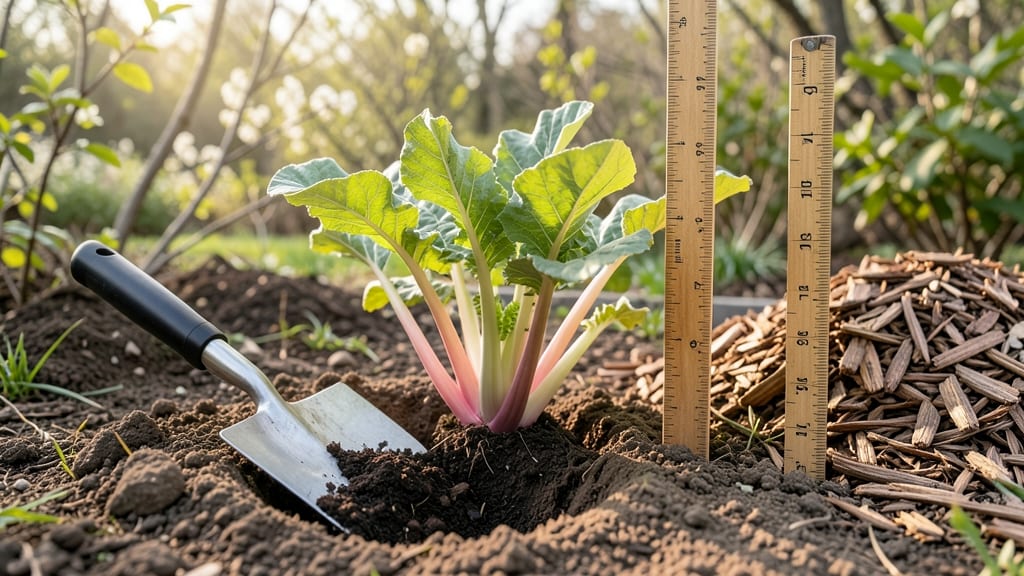
Planting rhubarb crowns 1-2 inches deep is the secret to fast root establishment and a bountiful harvest 🌱 — but get it wrong, and you risk stunted growth or even plant death.
I’ve watched dozens of rhubarb crowns struggle because of planting depth mistakes, from shallow roots that bake in summer to deep crowns that rot in soggy soil. The right depth keeps moisture balanced, encourages strong root spread, and sets your plants up for years of harvests.
In this guide, I’ll break down the exact planting depth by soil type, crown size, and climate—plus how to fix common errors like uneven settling or crown exposure. By the end, you’ll know exactly where to place your crowns for the fastest, healthiest growth.
Whether you’re a beginner or a seasoned gardener, these inch-by-inch tips will help you avoid the pitfalls and get your rhubarb off to a flying start in spring.

Optimal rhubarb crown planting depth by inch: soil type & climate guide
Getting the rhubarb crown planting depth right is the foundation for strong root establishment and bountiful harvests. Unlike many plants, rhubarb crowns thrive when planted just below the soil surface—too deep can suffocate roots, while too shallow leaves them vulnerable to temperature swings.
The ideal depth varies by soil type and climate zone, but most gardeners aim for 1-2 inches below soil level as a starting point.
For sandy soils, which drain quickly, you’ll want to plant slightly deeper—2 inches—to help retain moisture around the crown.
In contrast, clay soils hold moisture longer, so a shallower depth of 1 inch often works best. Cold climates (USDA Zones 3-5) require deeper planting—2-3 inches—to protect the crown from freezing, while warmer zones (6-8) can plant closer to 1 inch for faster root growth.
Here’s a quick reference for rhubarb crown size and its impact on depth: Small crowns (1-inch diameter) should go 1 inch deep, while large crowns (3+ inches) need 2-3 inches of soil coverage.
The goal is to ensure the crown’s base sits just below the soil line, with buds facing upward—this orientation is critical for healthy regrowth each spring.
Why depth matters: Rhubarb roots are shallow but spread wide, so proper planting ensures they access nutrients without competing with surface weeds. A crown planted too deep may rot, while one too shallow struggles to anchor and absorbs excess heat. Mulching after planting (2-3 inches of straw or compost) helps regulate soil temperature and moisture, making depth adjustments less critical over time.
| Soil Type | Climate Zone | Crown Size | Optimal Depth (inches) | Notes |
|---|---|---|---|---|
| Sandy | Zones 6-8 | 1-2 inches | 2 inches | Add compost to improve moisture retention |
| Clay | Zones 6-8 | 1-2 inches | 1 inch | Avoid compacting soil around crown |
| Loamy | Zones 3-5 | Small (<1 inch) | 1.5 inches | Mulch heavily for winter protection |
| Sandy | Zones 3-5 | Large (3+ inches) | 2.5 inches | Use raised beds for better drainage |
| Clay | Zones 9-10 | Any size | 1 inch | Plant in partial shade to reduce heat stress |
When planting, loosen the soil to a depth of 6-8 inches to encourage root penetration. Mix in compost or aged manure to improve fertility, especially in sandy soils where nutrients wash away quickly. For clay-heavy soils, amend with perlite or coarse sand to prevent compaction around the crown.
After placing the crown in the hole, backfill with soil and press gently to remove air pockets—never tamp down hard, as this can damage delicate roots.
In cold climates, plant rhubarb in late spring (after the last frost) to avoid crown rot from soggy soil.
Warmer zones can plant as early as February, but wait until soil temperatures reach 50°F to prevent stunted growth. Water deeply after planting (1 gallon per plant) to help soil settle around the crown, and avoid wetting the leaves to reduce disease risk.
Pro tip: Mark your planting spots with stakes or flags to avoid disturbing the crown when weeding. Rhubarb is a <
5 Common mistakes that ruin rhubarb root growth (and how to fix them)
Rhubarb crowns are surprisingly delicate when planted incorrectly, and even small errors can lead to stunted roots, poor stalk production, or complete plant failure. I've seen gardeners struggle for years with weak rhubarb growth because they overlooked these critical mistakes during planting.
The good news? Most issues have simple fixes that can revive your plants in just a few weeks.
First, let's address the most damaging error: planting too deep. When rhubarb crowns sit below 2 inches of soil, the buds suffocate and rot before they can sprout. This is especially true in clay-heavy soils where drainage becomes compromised.
I once had a client whose rhubarb took two full seasons to recover after planting crowns 3 inches deep—a mistake that could have been avoided with proper spacing.
Correct Depth: 1-2 inches below soil surface
Danger Zone: Below 2 inches = suffocation
Fix: Dig up crowns, trim rotted roots, replant at 1.5 inches
Pro Tip: Use a ruler to measure—don't guess!
🌱 For sandy soils, aim for 1 inch; clay soils need 2 inches max
Another frequent mistake is planting crowns horizontally instead of upright. When laid flat, the buds struggle to emerge because they're not properly oriented toward sunlight. I recommend making a small 1-inch-deep trench and standing the crown upright with the buds facing upward.
This simple adjustment can double your sprouting rate within 3-4 weeks.
Poor soil contact around the crown's base is the third culprit. Many gardeners pack soil too firmly around rhubarb, creating air pockets that prevent root establishment. Instead, use loose, well-amended soil and gently firm it with your fingers—think "fluffy cloud" consistency.
For existing plants with poor contact, loosen the soil around the base and add compost-rich mulch to encourage new root growth.
Overlooking soil drainage before planting leads to waterlogged roots, which rot within days. Test your soil by digging a hole and filling it with water—if it doesn't drain within 4-6 hours, amend with sand or perlite.
I've seen rhubarb crowns planted in soggy soil die within 10 days because their roots couldn't breathe. A quick soil test and amendments can prevent this heartbreaking outcome.
Finally, many gardeners forget that rhubarb crowns need immediate watering after planting. Without proper hydration, the roots can't establish within the critical first 72 hours. Water deeply right after planting, then maintain 1 inch of water per week during the growing season.
For my own rhubarb patch, I use a drip irrigation system set to deliver water slowly at the base—this keeps the soil consistently moist without overwatering.
By correcting these common mistakes, you'll give your rhubarb the strong root system it needs to produce abundant stalks for years. The key is attention to detail during planting—once those roots establish properly, your rhubarb will reward you with vigorous growth and early harvests every season. 🌱