
Planting
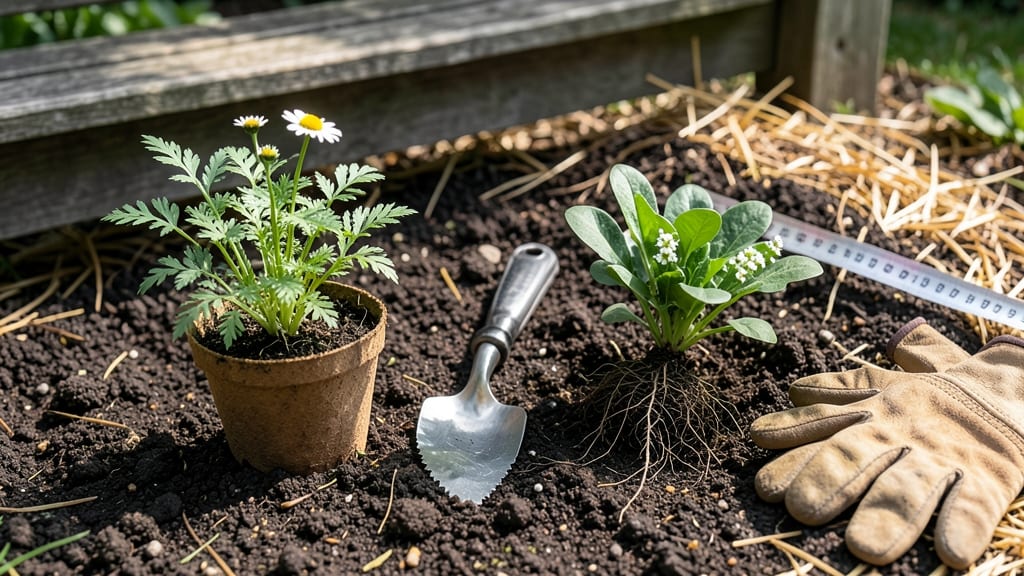
Planting chamomile 12–18 inches apart is the sweet spot for those lush, fragrant blooms you’ve been dreaming of 🌼.
Struggling to get your chamomile plants to thrive? Proper spacing isn’t just about aesthetics—it’s the secret to lush, fragrant blooms and fewer pests. Get it wrong, and you’ll end up with weak stems or a garden overrun by weeds.
German chamomile, the kind you’ll find in most gardens, thrives with a little more room—18 inches apart—while Roman chamomile, with its slower spread, can handle 12 inches. But here’s the catch: soil type and sunlight play just as big a role as the ruler.
Below, I’ll break down the exact spacing for your variety, how to adjust for clay-heavy soil or full-sun spots, and the easy fixes if your chamomile starts looking crowded. Ready to transform those scraggly stems into a fragrant, pest-free sea of blooms?

Ideal chamomile spacing by variety: German vs. Roman chamomile planting guidelines
Choosing the right spacing for your chamomile plants makes all the difference between a fragrant, thriving herb garden and one plagued by weak stems and powdery mildew. The two most popular varieties—German chamomile (Matricaria chamomilla) and Roman chamomile (Chamaemelum nobile)—have distinct growth habits that demand different spacing strategies.
Get this wrong, and you’ll struggle with airflow, sunlight competition, and even pest control.
German chamomile, also called wild chamomile, grows aggressively upright with feathery foliage and delicate white-and-yellow blooms. It thrives in loose, well-draining soil and spreads easily, making proper spacing critical to prevent overcrowding. Meanwhile, Roman chamomile is a low-growing perennial with a woody base, forming dense mats of dark green leaves.
Its spacing needs are far more forgiving but still require attention to avoid stunted growth.
Here’s the key difference: German chamomile needs more space to breathe—its airy stems and prolific flowering demand 12–18 inches apart in rows. Roman chamomile, however, can handle closer spacing (6–12 inches apart) because its compact growth habit naturally limits competition.
Both varieties benefit from well-defined rows, but Roman chamomile can also thrive in ground covers or edging where its spreading nature is an asset.
When planting German chamomile, aim for 12–18 inches between plants to ensure adequate airflow and sunlight penetration. This spacing prevents powdery mildew, a common issue in dense chamomile beds, and allows stems to develop stronger, more upright growth.
For Roman chamomile, you can plant as close as 6 inches apart if you’re using it as a ground cover, but 12 inches is ideal for traditional herb beds where you’ll harvest individual stems.
Adjust your row spacing based on your garden layout. For German chamomile, 18–24 inches between rows gives you easy access for harvesting and weeding. Roman chamomile rows can be 12–18 inches apart, especially if you’re interplanting with other herbs like thyme or oregano.
This closer row spacing works because Roman chamomile’s low, matted growth doesn’t compete as aggressively for light.
If you’re growing chamomile in containers or raised beds, reduce spacing slightly. German chamomile can handle 10–12 inches apart in pots, while Roman chamomile thrives at 4–6 inches apart in shallow planters.
Just ensure containers have drainage holes to prevent root rot, which is a bigger risk in confined spaces.
Pro tip: Thin seedlings early to avoid overcrowding. German chamomile seedlings should be thinned to 12 inches apart when they reach 3–4 inches tall. For Roman chamomile, thin to 8–10 inches apart to encourage bushier growth.
This step is crucial—skipping it often leads to stunted plants with fewer flowers and more susceptibility to pests.
For maximum yield, consider interplanting chamomile with complementary herbs. German chamomile pairs well with dill, fennel, or borage, while Roman chamomile thrives near lavender, rosemary, or sage. These pairings improve airflow and reduce pest pressure, making your spacing strategy even more effective.
Remember, chamomile’s spacing isn’t just about the numbers—it’s about creating an environment where each plant can thrive without competing. Whether you’re growing for tea, cut flowers, or medicinal uses, proper spacing ensures you’ll harvest plump, fragrant blooms all season long. 🌼
How to adjust chamomile spacing for soil conditions and climate
Your chamomile plants’ spacing needs change dramatically based on where you live and what your soil looks like. In heavy clay soils, roots struggle to breathe, so you’ll need to give them more room to avoid root rot.
Meanwhile, sandy loam drains too quickly, requiring closer spacing to retain moisture. Even your local rainfall patterns and temperature zones play a role—drier climates demand wider gaps, while humid areas need tighter clusters to prevent fungal issues.
Climate also shifts how aggressively chamomile spreads. In cool, maritime regions, plants grow slower and can handle closer spacing (8–12 inches apart). But in hot, arid zones, they bolt faster, so you’ll want 18–24 inches to keep them from competing for water.
Let’s break down the exact adjustments you should make for your garden’s unique conditions.
- Clay Soil: Space 18–24 inches apart to prevent root suffocation. Amend soil with compost or sand to improve drainage before planting.
- Sandy Loam: Reduce spacing to 8–12 inches and mulch heavily to retain moisture. Water deeply every 5–7 days during dry spells.
- Poor Drainage: Elevate beds with raised planters or plant on mounds. Space 12–16 inches apart and avoid overhead watering.
- Dry Climates: Increase spacing to 24 inches and pair with drought-tolerant companions like thyme or lavender to share water.
- Humid Regions: Keep spacing tight at 6–10 inches but ensure good airflow by pruning regularly to prevent mildew.
- Cold Zones (USDA 3–5): Plant 12–16 inches apart and mulch with straw to protect roots during winter.
If you’re in a transition zone (like USDA 6–7), aim for 12–18 inches and monitor growth closely.
Chamomile in these areas often benefits from partial shade in peak summer—so if your plants look stressed, consider spacing them 18 inches apart under a light dappled canopy like a sheer cloth or nearby trees.
Pro tip: Thin seedlings when they’re 2–3 inches tall to avoid overcrowding later. Use a hand trowel to gently lift and transplant extras to a nearby spot. This early adjustment saves you from struggling with leggy, weak stems as they mature.
For container gardening, reduce spacing to 6–8 inches but use larger pots (12+ inches wide) to accommodate roots. Ensure pots have drainage holes and a well-draining potting mix to mimic ideal soil conditions.
Remember, chamomile’s flavor and medicinal potency peak when plants aren’t competing for resources. Adjust spacing now, and you’ll reward yourself with bushier plants, more blooms, and fewer pests all season long. 🌼