
Planting
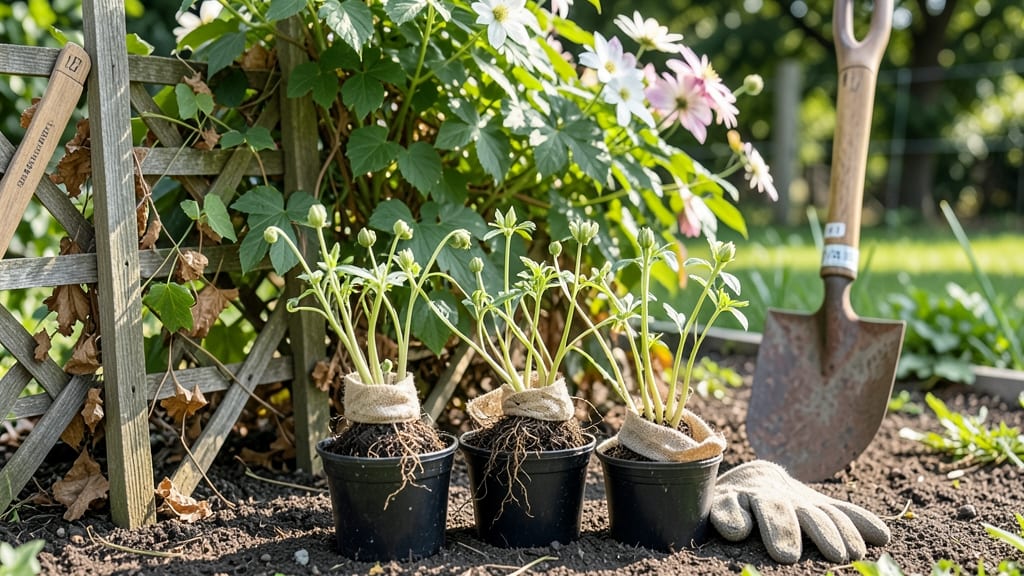
Planting clematis vines the right distance apart ensures they thrive with big blooms and strong growth.
Struggling to get your clematis vines to thrive? Proper spacing isn’t just about aesthetics—it directly impacts bloom size, vine health, and even disease resistance. Get the spacing right, and you’ll transform a scraggly vine into a lush, flower-covered masterpiece.
Clematis 🌸 varieties need different spacing depending on their growth habits—herbaceous types sprawl wider, while woody vines climb taller. Crowding them too close leads to weak stems, fewer flowers, and even fungal issues from poor airflow.
In this guide, I’ll break down the exact spacing you need for your garden layout, whether you’re planting near a fence, trellis, or in containers. You’ll also learn how to spot—and fix—common spacing mistakes before they stunt your vines.

Clematis spacing guidelines by vine type and growth habit
When planting clematis vines, spacing isn’t one-size-fits-all. Different varieties—like large-flowering, small-flowering, or alpine clematis—have unique needs based on their growth habits. Woody vines (perennial) spread aggressively, while herbaceous types (die back annually) need different room to thrive.
Get this wrong, and you’ll end up with crowded vines, fewer blooms, and even disease issues like powdery mildew. Let’s break down the exact spacing rules for each type to ensure your clematis becomes a flowering powerhouse.
Clematis thrive when they have enough space for air circulation and sunlight exposure. Poor spacing leads to weak stems, reduced flowering, and even root competition with nearby plants.
For example, large-flowering clematis (e.g., 'Jackmanii') can reach 10–20 feet tall and need 5–6 feet of space to avoid overcrowding. Meanwhile, alpine clematis (like 'Montana') stay compact at 3–6 feet but still require 2–3 feet of clearance. Understanding these differences is key to creating a healthy, blooming vine.
Growth habit is the biggest factor in spacing. Woody clematis (perennial) grow year after year, so they need more space to avoid root-bound stress. Herbaceous clematis (annual die-back) can handle slightly tighter spacing because they reset each year. For instance, 'Nelly Moser' (large-flowering) needs 6 feet of space, while 'Durandii' (small-flowering) thrives with 3 feet. Even within the same type, dwarf varieties (like 'Fascination') can be planted 2–3 feet apart in containers or small gardens. Let’s dive into the exact spacing guidelines for each category.
For large-flowering clematis, aim for 6 feet of spacing to ensure optimal air circulation. These vines can grow 10+ feet tall and need room to climb trellises or sprawl along fences without competing for sunlight. If you’re planting near a wall or arbor, space them 5–6 feet
How to adjust clematis spacing for different garden layouts
Clematis vines are incredibly versatile, but their spacing needs change dramatically depending on your garden layout. Whether you're working with a small urban space, a container garden, or a large trellis system, getting the spacing right ensures your vines thrive without competing for resources.
The key is balancing air circulation and sunlight exposure while maximizing vertical growth potential.
For most gardeners, the default 3-6 feet spacing works well for standard clematis varieties, but creative layouts often require adjustments. In tight spaces, you might reduce spacing to 18-24 inches while pairing with dwarf companions.
Meanwhile, large trellises can accommodate 8-10 feet spacing between plants for dramatic vertical displays. Let’s explore how to adapt spacing for your specific setup.
- 🌿 Small Gardens: Space 18-24 inches apart to prevent overcrowding. Pair with dwarf perennials like lavender or coreopsis to fill gaps.
- 🪴 Containers: Use one vine per 12-15 gallon pot with trellis support. Ensure drainage holes and mulch to retain moisture.
- 🌳 Trellises: Space 4-6 feet apart for large varieties like 'Jackmanii'. Use horizontal wires every 12 inches to guide vines upward.
- 🧱 Fences/Walls: Plant 3-5 feet from structures to allow airflow. Use woody clematis like 'Montana' for long-term coverage.
- 🌸 Mixed Borders: Space 2-3 feet apart and interplant with low-growing shrubs like heuchera to create layered interest.
When working with limited horizontal space, focus on vertical solutions. Clematis thrives when climbing, so invest in sturdy trellises or arbors. For example, a 6-foot trellis can support a single vine planted just 18 inches from the structure, freeing up ground space for other plants.
Just ensure the trellis is wide enough (at least 2 feet) to accommodate the vine’s mature width.
For container gardening, choose compact varieties like 'Fascination' or 'Niobe', which max out at 6-8 feet tall. Place containers near south-facing walls to maximize sunlight, and rotate pots every few weeks to ensure even growth.
Remember, containerized clematis dry out faster, so monitor soil moisture closely during hot spells.
If you’re planting alongside fences or walls, position the crown 3-5 feet away from the structure to prevent moisture buildup and fungal issues. Use gravel or mulch around the base to improve drainage.
For a dramatic vertical effect, train vines to climb in a spiral pattern, alternating sides each year to create a balanced, lush curtain of blooms.
Pro tip: Always account for the mature size of your clematis variety. A large-flowering clematis like 'The President' needs more space than a small-flowering type like 'Perle d'Azur'. Check the plant tag or variety description for guidance—this small step saves you from future pruning headaches!