
Planting
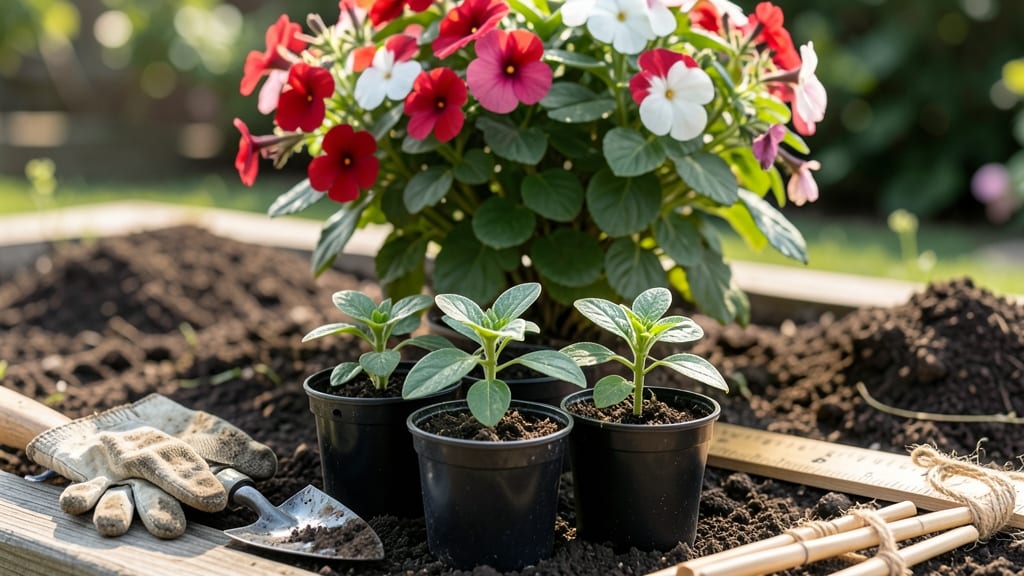
To plant sunpatiens with bushier blooms and fewer gaps, spacing them 12 to 18 inches apart is the golden rule for most varieties 🌸 — but get it wrong, and you’ll end up with leggy stems or wasted space.
Struggling to get your sunpatiens to thrive? The secret to lush, vibrant blooms often lies in one simple factor: proper spacing. Plant them too close, and you’ll end up with leggy stems and sparse flowers—plant them too far apart, and you’ll waste precious garden space.
Whether you’re tucking them into containers, hanging baskets, or ground beds, the right distance keeps airflow flowing and roots from competing. Below, I’ll break down the exact spacing for your setup, plus how to fix common mistakes before they derail your garden.
You’ll also discover how variety matters—dwarf types need less room, while trailing varieties beg for a little extra elbow space—and why thinning early can mean the difference between a full, bushy plant and one that’s struggling to shine.

Optimal sunpatiens spacing for full, bushy growth
If you’ve ever stared at your sunpatiens wondering why they’re not blooming like they should, the answer might be simpler than you think. Proper spacing is the foundation of healthy sunpatiens—it ensures strong stems, abundant flowers, and easy access for maintenance.
The general rule is 12-18 inches apart, but this can vary based on your variety, garden setup, and even your soil type. Let’s break down the science behind spacing to get those vibrant blooms you’re dreaming of.
Sunpatiens thrive when they have enough room to circulate air and compete for nutrients. Overcrowding leads to fungal diseases like powdery mildew, while spacing them too far apart wastes space and reduces visual impact.
The key is finding that sweet spot where your plants can spread out naturally without stealing resources from each other. For most standard sunpatiens varieties, 14-16 inches apart is ideal for ground beds, but we’ll dive deeper into adjustments for containers and trailing types.
Before grabbing your trowel, consider your sunlight exposure. Sunpatiens in full sun (6+ hours) need slightly more space—up to 18 inches apart—because they grow faster and bushier.
In partial shade (4-6 hours), you can space them closer (12-14 inches) since their growth will be more restrained. Soil fertility also plays a role: rich, well-draining soil allows roots to spread efficiently, so you can plant slightly closer without competition.
Here’s where it gets practical. The spacing you choose directly impacts your maintenance workload and bloom density. Too close, and you’ll spend all summer pruning leggy stems and battling pests. Too far, and your garden will look sparse with gaps begging for fillers.
The goal is to mimic their natural growth habit—bushy and compact—while leaving room for their trailing stems to cascade beautifully in containers or along garden edges.
| Garden Setup | Variety Type | Optimal Spacing | Notes |
|---|---|---|---|
| Ground Beds | Standard (e.g., 'Durango Red') | 14-16 inches | Best for full sun; pinch back for bushiness |
| Ground Beds | Trailing (e.g., 'Tropical Twist') | 12-14 inches | Allow 6+ inches extra for trailing stems |
| Containers (12" pots) | Dwarf (e.g., 'Peach Parfait') | 6-8 inches apart | 2-3 plants per 12" pot; prune regularly |
| Hanging Baskets | Trailing (e.g., 'Lavender Lace') | 8-10 inches apart | 3-4 plants per 14" basket; let trail over edges |
| Partial Shade Beds | Standard | 12-14 inches | Growth slower; space closer to fill gaps |
Let’s talk about soil preparation, because even the best spacing can’t save underfed plants. Before planting, amend your soil with compost or organic matter to improve drainage and nutrient retention. Sunpatiens prefer well-draining soil with a pH of 5.5-6.5.
If your soil is heavy clay, consider planting in raised beds or containers to prevent root rot. A quick soil test will tell you if you need to adjust pH or add amendments like perlite or vermiculite for better aeration.
One of my favorite tricks for maximizing space is interplanting. Mix sunpatiens with companion plants like sweet potatoes or calibrachoa to fill gaps until your sunpatiens fill out.
For example, plant sweet potato slips (12 inches apart) between sunpatiens rows—once the sunpatiens bush out, the sweet potatoes will have spread enough to cover the gaps. This not only saves space but also deters pests like aphids that might target sunpatiens.
Don’t forget about container gardening if space is limited. In a 12-inch pot, you can fit 2-3 dwarf sunpatiens spaced 6-8 inches apart. For trailing varieties, use
How to adjust spacing for different sunpatiens varieties
Not all sunpatiens are created equal, and neither is their spacing needs! Dwarf varieties like 'Mini Jama' need only 6-8 inches between plants, while trailing types like 'Trailing Lime' require 12-18 inches to sprawl properly. Understanding these differences prevents overcrowding and maximizes your garden's beauty.
For container gardening, reduce spacing by 30-50% since roots compete for limited nutrients. A 5-gallon pot can comfortably hold 3-4 dwarf sunpatiens planted 4 inches apart, while trailing varieties need 1-2 plants per 10-inch pot spaced 6 inches apart.
In hanging baskets, prioritize trailing varieties by spacing them 8-10 inches apart along the basket's edge. This creates a stunning cascading effect while allowing airflow to prevent fungal diseases. Upright varieties like 'Superbells' should be planted 6-8 inches apart in deeper containers.
When mixing sunpatiens with other plants, increase spacing by 20% to accommodate their neighbors. For example, pair trailing sunpatiens with petunias at 14 inches apart—this prevents competition while creating a vibrant display. Always plant upright varieties behind trailing ones to avoid blocking sunlight.
In mixed garden beds, use 10-14 inches spacing to allow airflow and reduce disease risk. If planting near vegetables like lettuce, increase spacing to 16 inches—sunpatiens are heavy feeders and can outcompete lighter plants for nutrients.
Adjust spacing based on your garden's sunlight conditions. In partial shade, reduce spacing by 20% since growth is slower, while in full sun, increase spacing by 15% to prevent overcrowding. Always mulch around plants to retain moisture and reduce competition.
Proper spacing transforms sunpatiens from sparse stems to bushy, blooming powerhouses. Experiment with varieties and containers to find what works best for your space—your garden (and pollinators!) will thank you. 🌸