
Planting
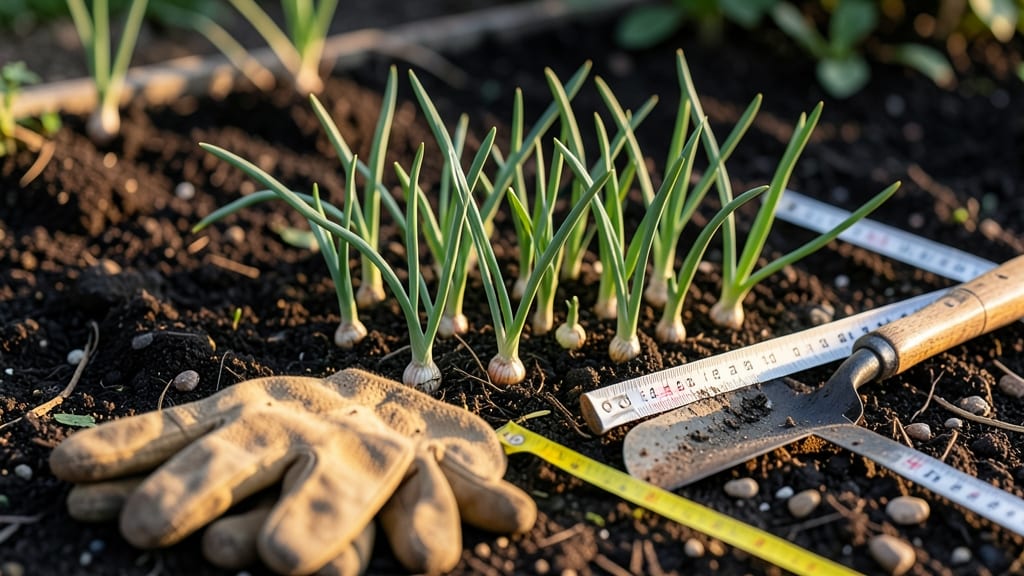
Planting Walla Walla onions the right distance apart ensures perfect bulbs—not too small, not too crowded, and ready for harvest by late summer.
Too close, and you’ll struggle with stunted growth and disease; too far, and you’ll waste precious garden space. The secret lies in balancing airflow, soil nutrients, and your garden’s layout—whether you’re working with rows or raised beds.
In this guide, I’ll break down the ideal spacing (6–12 inches apart), how to adjust for soil type and climate, and pro tips to maximize your yield without overcrowding.
You’ll learn how to mark rows like a pro, when to thin seedlings, and even how companion planting can boost your harvest—so you end up with plump, sweet onions instead of scrappy leftovers.

Optimal spacing for Walla Walla onions: bulb size vs. yield tradeoffs
Getting the spacing right for Walla Walla onions can mean the difference between perfectly sized bulbs and disappointing harvests. These onions thrive with 6 to 12 inches between plants, but the ideal distance depends on your bulb size goals and garden conditions.
Too tight, and you’ll get small, crowded onions; too wide, and you’ll waste precious garden space. Let’s break down the science behind spacing to maximize your yield while ensuring healthy air circulation.
Walla Walla onions are known for their large, sweet bulbs, but achieving that size requires balancing competition for nutrients and space for expansion.
If you’re growing them for green onions, you can plant closer (around 4 inches apart), but for full-sized bulbs, 6 to 12 inches is the golden range.
The key is understanding how soil fertility, variety characteristics, and even your climate influence the ideal spacing for your specific goals.
Air circulation is another critical factor. Onions are prone to fungal diseases like downy mildew and white rot, which thrive in humid, crowded conditions. Proper spacing reduces moisture retention on leaves, lowering disease risk. Additionally, even sunlight exposure is crucial—onions planted too closely will shade each other, leading to uneven growth and smaller bulbs. Think of spacing as an investment in both quantity and quality.
Now, let’s compare two common planting methods: traditional row planting and intensive bed planting. Traditional rows often use 12-inch spacing between plants and 24-inch rows, giving onions plenty of room to grow.
Intensive bed planting, on the other hand, might use 6-inch spacing in a raised bed or container, maximizing yield in limited space. Each method has tradeoffs—we’ll explore which works best for your garden setup.
From the table above, you can see that traditional row planting yields fewer but larger bulbs, ideal if you prioritize size over quantity. Meanwhile, intensive bed planting or square foot gardening maximizes yield in smaller spaces, though bulbs may be slightly smaller.
If you’re in a drought-prone area, hill planting (mounding soil around plants) can improve drainage and reduce competition for water, often resulting in larger bulbs despite closer spacing.
Another factor to consider is harvest timing. Onions planted too closely will mature unevenly, making it harder to harvest at the ideal stage. When bulbs are crowded, some may bolt prematurely (send up a flower stalk) or develop off-flavors due to stress.
Proper spacing ensures all onions reach maturity simultaneously, giving you a clean, uniform harvest with consistent flavor and size.
If you’re growing Walla Walla onions for storage, prioritize
Adjusting spacing for different garden conditions: soil, climate, and variety factors
Your Walla Walla onions won’t thrive with a one-size-fits-all spacing approach. Soil type, climate zones, and even daylight hours demand adjustments to avoid overcrowding or wasted space.
For example, heavy clay soil requires wider spacing (10–12 inches) to prevent rot, while sandy soil can handle closer planting (6–8 inches) for better moisture retention. Let’s break down how to tweak your spacing for peak performance.
Climate plays a surprising role too. In humid regions, space onions 8–10 inches apart to improve air circulation and reduce fungal risks like onion smut. Conversely, dry climates benefit from tighter spacing (6–8 inches) to conserve soil moisture.
Don’t forget long-day vs. short-day varieties: Long-day onions (like Walla Wallas) need consistent spacing (8–10 inches) to develop full bulbs, while short-day types can tolerate closer gaps (6 inches) in warmer zones.
Companion planting also influences spacing. Pairing onions with carrots (which break up soil crust) lets you plant onions 6–8 inches apart in rows, while lettuce interplanted between rows can reduce spacing to 5–6 inches without competition.
In raised beds, stagger plants in a grid pattern with 6-inch spacing to maximize vertical growth and yield.
🌱 Spacing Cheat Sheet for Walla Walla Onions
| Condition | Spacing Adjustment | Why It Matters |
|---|---|---|
| Heavy clay soil | 10–12 inches | Prevents rot from poor drainage |
| Sandy soil | 6–8 inches | Retains moisture better |
| Humid climate | 8–10 inches | Reduces fungal diseases |
| Dry climate | 6–8 inches | Conserves water |
| Raised beds | 6-inch grid | Maximizes vertical growth |
| Containers | 4–6 inches | Fits small spaces efficiently |
💡 Pro Tip: Use onion sets in containers for tighter spacing—just ensure pots are at least 6 inches deep.
Troubleshooting spacing mistakes early saves your harvest. Overcrowding leads to small, pithy bulbs and increased onion fly damage, while uneven spacing creates gaps where weeds thrive. If you notice yellowing leaves or stunted growth, thin seedlings to 6–8 inches apart immediately.
For second-year bulbing, widen spacing to 10–12 inches to accommodate larger bulb development.
In containers or small gardens, prioritize vertical growth by planting onions in grid patterns with 4–6 inches between plants. Use dwarf varieties or harvest green onions early to free up space for succession planting.
For companion crops, interplant carrots (which deter onion flies) or lettuce (which shades soil), adjusting onion spacing to 6 inches in mixed beds.
Remember: Soil health and climate are your best tools. Amend heavy soil with compost to justify tighter spacing, and mulch sandy soil to retain moisture for closer plants. With these adjustments, your Walla Walla onions will thrive—whether in a backyard plot, raised bed, or balcony container.