
Planting
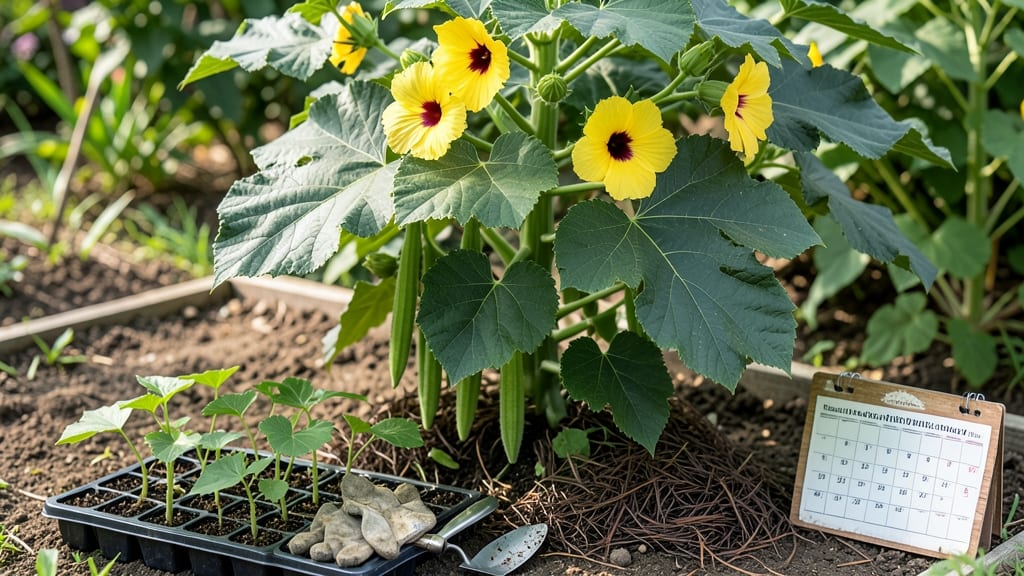
You can plant okra late into summer as long as it has at least 60 days of warm weather ahead — but timing is everything for avoiding bitter pods and stunted growth.
If you’ve ever wondered why your okra plants wilted before producing pods, timing might be the culprit — okra thrives in heat but has strict deadlines for planting success.
In USDA Zone 6a, where frost lingers until mid-April, the last safe window is early July, while warmer zones like Florida can push planting into August. The key is soil temperature: seeds won’t germinate below 60°F (15°C), and late starts risk immature harvests before frost.
Below, I’ll break down exact deadlines by zone, plus 3 heat-tolerant varieties that stretch your season and how to salvage a late planting with row covers or containers.

Okra planting deadlines by USDA zone: when heat tolerance fails
Okra is a heat-loving plant that refuses to germinate in cold soil, making planting deadlines critical for success. Unlike cool-season crops, okra won’t tolerate temperatures below 50°F (10°C), and seeds need soil warmth of 60°F (15°C) or higher to sprout reliably.
Missing these windows often means stunted growth or no harvest at all—so let’s break down the last viable planting dates by USDA zone to maximize your okra’s potential.
Your zone determines not just when to plant, but how long you have to harvest before fall frosts arrive. For example, gardeners in Zone 3 face a 60-day growing window, while those in Zone 10 can extend planting into late summer.
The key is balancing soil warmth with frost risk—plant too late, and your okra may bolt or fail to produce pods before cold snaps hit.
Below is a zone-by-zone summary of the latest safe planting dates, accounting for germination thresholds and harvest timelines. Use this as your guide to avoid the heartbreak of watching okra plants wilt before they bear fruit.
In Zones 3–4, your window is tight—plant after June 15 and expect a 60-day harvest window before frost. Use black plastic mulch to warm soil faster and extend the season.
In Zones 5–7, you have more flexibility, but avoid planting after mid-June unless you’re using row covers to protect late pods.
Gardeners in Zones 8–10 can push boundaries further, with July–August plantings yielding harvests into fall. However, even these zones face heat stress if planted too late—okra struggles in temperatures above
Signs your okra planting is too late (and how to fix it)
Okra is a heat-loving plant that bolts—or gives up—when temperatures dip below 60°F (15°C). If you planted too late, your okra might show stunted growth, yellowing leaves, or no flowers at all.
These signs mean your plants are struggling to mature before frost, but don’t despair—there are still ways to salvage your harvest.
First, check your local frost dates. Okra needs at least 60–75 days to produce pods, so planting after mid-summer in cooler zones (like USDA 5–7) is risky. If your area’s first frost is coming soon, your okra may never reach maturity, even if it looks healthy now.
⚠️ How Late Can You Plant Okra?
Last-minute okra? Plant no later than 75 days before your first frost. For example:
- USDA Zone 8: Plant by early August (frost ~Oct 15)
- USDA Zone 5: Plant by mid-July (frost ~Sept 15)
- Tropical Zones (10+): Can plant year-round with heat
Soil must stay above 60°F (15°C)—use a soil thermometer to check before planting.
If your okra shows yellowing leaves, it could signal cool soil or poor nutrient uptake. This often happens when roots struggle in chilly ground.
Test your soil—if it’s below 60°F (15°C), your okra may never thrive. A quick fix? Add compost or mulch to warm the soil faster.
Another red flag is no flowers or buds. Okra needs warm nights (70°F/21°C+) to bloom. If your plants are tall but flowerless, they’re likely too late for your climate.
Try moving pots to a sunny, sheltered spot or use a row cover to trap heat during the day.
For emergency fixes, try these tricks:
- Cold frames extend the season by 2–4 weeks in cooler zones.
- Row covers (like frost blankets) protect from light frosts.
- Containers let you move plants to warmer microclimates (e.g., near a south-facing wall).
If all else fails, focus on harvesting seeds instead of pods. Let a few plants go to seed—okra seeds are heat-tolerant and can be saved for next year’s earlier planting. With a little creativity, even late okra can still teach you valuable lessons for next season’s garden! 🌱