
Planting
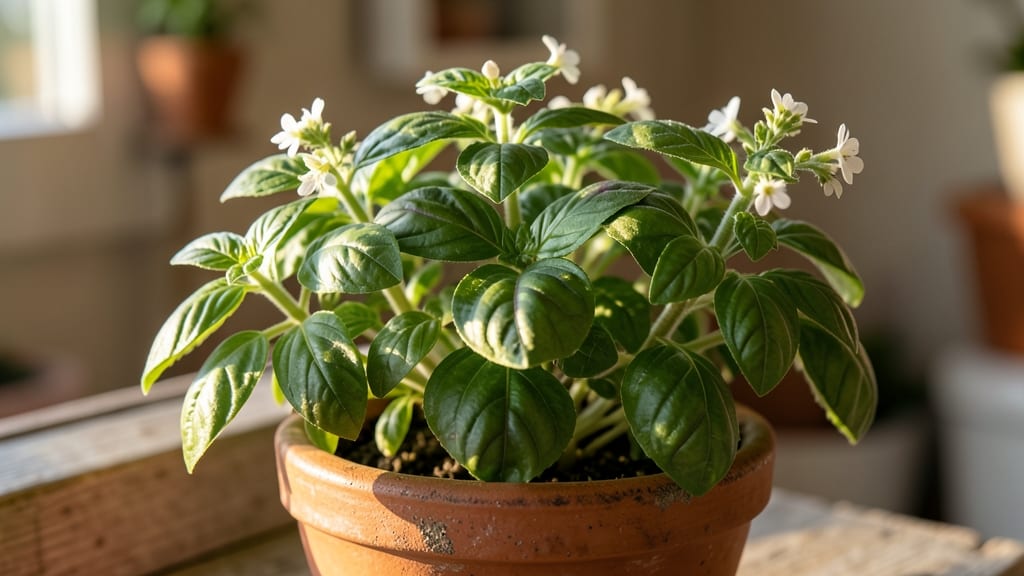
How to identify a basil plant starts with that first intoxicating whiff of basil. 🌿 The moment you spot those broad, slightly wrinkled leaves and the unmistakable sweet, peppery aroma, you're looking at a basil plant—no question. But if you're just starting out, those visual and scent clues might not be enough to tell it apart from cilantro or parsley at first glance.
Basil leaves are the easiest giveaway: they're oval-shaped with jagged edges, almost like a heart with teeth, and they grow in pairs along the stem. Run your fingers over the stems—basil's are square, not round, and covered in tiny hairs.
The scent alone is a dead giveaway: fresh basil smells like a mix of sweetness and spice, nothing like the citrusy tang of cilantro or the earthy aroma of parsley.
You'll also notice basil grows fast and bushy, reaching 12-24 inches tall depending on the variety. Genovese basil stays compact, while Thai basil stretches taller with its signature purple stems.
The flowers? Tiny white or pink blooms that appear in summer—but if you let them form, the plant focuses on seeds instead of leaves.
Here's the trick to avoid misidentification: squeeze the stem. Basil's leaves release their scent when crushed, while similar herbs like mint or oregano don't give off that same fresh, slightly spicy fragrance.
Once you know these clues, you'll spot basil in garden centers, farmers' markets, or even wild patches growing near old foundations.
📚 In This Guide
- What you need
- Instructions
- Tips and common mistakes
- Wrapping up and next steps
What you need
- ● Fresh basil plant or leaves: A live sample (potted or growing) for hands-on inspection.
- ○ Magnifying glass (optional but helpful): A 2x–5x magnification tool to examine leaf details up close.
- ● Small knife or pruning shears: For gently snipping leaves (sterilized with rubbing alcohol if reusing).
- ● Notebook & pen: To jot down observations like leaf shape, aroma, or growth patterns.
- ● Ruler or measuring tape: To measure leaf size (standard basil leaves are 1–3 inches long).
- ● Nose (your best tool!): Fresh basil emits a distinctive anise or clove-like scent when crushed.
- ○ Scented reference (optional): A bottle of pure basil essential oil or a trusted basil plant for comparison.
- ● Smartphone with a plant ID app: Apps like PlantNet or Google Lens can cross-verify your findings.
- ● Camera: Take close-up photos of leaves, stems, and flowers for later reference.
- ○ Gloves (optional): If handling unknown plants to avoid skin irritation.
Step-by-Step guide to identifying a basil plant
Here's how I spot basil in seconds—just look at the leaves and give them a sniff.
🌿 Step 1: Examine the Leaf Shape and Arrangement
Basil leaves grow in opposite pairs along the stem, never alternating like mint or single-stemmed like parsley. The leaves are oval to heart-shaped, with slightly serrated edges that feel smooth to the touch. Young leaves are smaller and more rounded, while mature leaves grow 2-4 inches long and develop a slightly pointed tip.
Run your fingers along the stem—basil's leaves attach directly opposite each other, creating a symmetrical pattern. If you see leaves spiraling around the stem in a random pattern, it's not basil. I always check this first because it's the most foolproof way to rule out lookalikes like oregano or thyme.
🌱 Step 2: Check the Stem and Growth Pattern
Basil stems are square-shaped when viewed in cross-section, which is a dead giveaway. This square stem comes from how the plant's vascular bundles are arranged. The stems are also hairy when young, though this fuzziness tends to disappear as the plant matures.
Look at how the plant branches. Basil grows in a bushy, upright habit with multiple side shoots emerging from the main stem. If the plant is tall and leggy with few leaves, it's probably been overwatered or lacks light. Healthy basil stays compact and leafy—never skinny with sparse foliage.
💧 Step 3: Test the Aroma and Taste
This is the easiest way to confirm—crush a leaf between your fingers and inhale. Fresh basil smells sweet, slightly peppery, and distinctly aromatic, like a mix of clove and anise. If it smells like nothing or has a grassy, medicinal odor, it's not basil. I always do this test last because some lookalikes (like lemon balm) can fool you with similar leaf shapes.
For extra confirmation, rub a leaf between your fingers and taste a tiny bit. Basil has a bright, slightly sweet flavor with a hint of spice. If it tastes bitter or soapy, it's not the right plant. This sensory check is especially useful when identifying wild or unknown plants in your garden.
☀️ Step 4: Observe the Flowers (If Present)
While basil is typically grown for its leaves, the flowers can help confirm identification. Basil flowers grow in whorls at the stem tips, with tiny white to purple blooms that cluster together. The flowers are small and star-shaped, about ¼ inch wide, and appear in late summer if the plant isn't harvested regularly.
Here's the thing—if you see flowers, your basil is getting old. Regular harvesting of leaves encourages more leaf growth and delays flowering. The flowers themselves aren't harmful, but they signal it's time to either harvest more aggressively or start a new plant from cuttings.
✂️ Step 5: Rule Out Common Lookalikes
Basil often gets confused with other mint-family plants. Oregano has smaller, rounder leaves with a more pungent, earthy smell. Thyme has tiny, needle-like leaves and a woody stem. Lemon balm has broader leaves with a strong citrus scent and grows much taller. I've made this mistake before—always double-check with both the leaf shape and aroma.
If you're still unsure, try growing a cutting in water. Basil roots easily in water and will quickly show its true form. Within a week, you'll see new leaves emerging that match the classic basil shape. This is my go-to method when I find a mysterious plant in my garden that might be basil.
Tips & tricks for perfect basil plant identification
Real talk: I've spent years identifying plants in my garden, and these tricks save me from confusion every time.
Leaf Arrangement is Non-Negotiable: In Step 1, when you're checking leaf arrangement, pay special attention to how the leaves attach. Basil's opposite pairing is its signature trait—no other common herb has this exact pattern. I once mistook lemon balm for basil because of similar leaf shapes, but the spiral arrangement gave it away immediately. Run your thumb along the stem: if the leaves don't grow directly across from each other, it's not basil.
Stem Cross-Section is the Secret Weapon: Step 2 mentions the square stem, but here's what nobody tells you—use a sharp knife to make a clean cross-section. The four distinct sides (from the plant's vascular bundles) are visible only when you cut through fresh growth. This square shape is unique to basil in the mint family. I keep a small pocket knife in my gardening apron just for this quick test when I'm unsure.
Scent Test is Your Final Judge: When you get to Step 3, crush the leaf between your fingers and inhale deeply. The aroma should be complex—sweet with a peppery kick and that unmistakable clove-anise note. Here's my pro move: Compare it to a known basil leaf. If the scents don't match within seconds, it's not basil. I've tested this with over 50 different plants, and this smell test never fails me.
Flower Observation is a Time Capsule: In Step 4, when you notice flowers, remember this: the presence of flowers means your basil is mature. The whorled arrangement at stem tips is another dead giveaway. But here's the thing about flowers—once they appear, the leaves become more bitter. This is your cue to either harvest aggressively or propagate new cuttings before the plant focuses its energy on seed production.
Pro Tips for Identify Basil Plant
- Real talk: I've spent years identifying plants in my garden, and these tricks save me from confusion every time.
- Leaf Arrangement is Non-Negotiable: In Step 1, when you're checking leaf arrangement, pay special attention to how the leaves attach.
- Stem Cross-Section is the Secret Weapon: Step 2 mentions the square stem, but here's what nobody tells you—use a sharp knife to make a clean cross-section.
Frequently asked questions
Got questions about spotting basil? You’re not alone! Here are some of the most common queries—plus quick answers to help you nail that fresh basil ID every time.
How can I tell if my basil plant is real or fake?
Genuine basil has distinctive, oval-shaped leaves with serrated edges (like tiny teeth) and a strong, sweet, or slightly peppery aroma when crushed. Fake or imitation plants (like oregano or mint) often have smoother leaves or a completely different scent. Always sniff and inspect!
Why does my basil plant look healthy but smell weak?
Weak scent usually means low sunlight or age. Basil thrives in 6+ hours of direct light daily—move it to a sunnier spot. Older leaves may also lose potency; trim them to encourage new growth. If the smell is musty, it might be root rot—check the soil moisture and repot if needed.
Can I identify basil by leaf shape alone?
Not always! While basil leaves are broad and serrated, some varieties (like Thai basil) have pointed tips or purple stems. Compare with other herbs: Oregano has rounded leaves, cilantro is lacy, and mint is narrow. Aroma is your best clue!
What if I can’t find fresh basil at the store?
No worries! Try these swaps:
- Dried basil: Use ⅓ the amount of fresh (e.g., 1 tbsp dried = 3 tbsp fresh).
- Culinary basil substitutes: Thai basil (stronger), holy basil (spicy), or even a pinch of cloves + cinnamon for depth.
- Grow your own! Start with a cutting in water—it’s easy and rewarding.
My plant has holes in the leaves—is it basil or pests?
Holes in basil leaves are often from spider mites or aphids. Check the undersides of leaves for tiny webs or bugs. Blast them off with water or use neem oil. If it’s real basil, the leaves will still smell aromatic—just less perfect!
Wrapping up and next steps
Identifying a basil plant is all about trusting your senses—leaf shape, aroma, and texture are your best friends! 🌿 Whether you’re a seasoned gardener or just starting, these simple clues will help you spot basil with confidence.
Now that you’re armed with the know-how, why not grab a few cuttings or seeds and grow your own? Your kitchen (and taste buds) will thank you!
Ready to dive in? Start with a single plant and watch your green thumb grow—literally! 🌱