
Planting
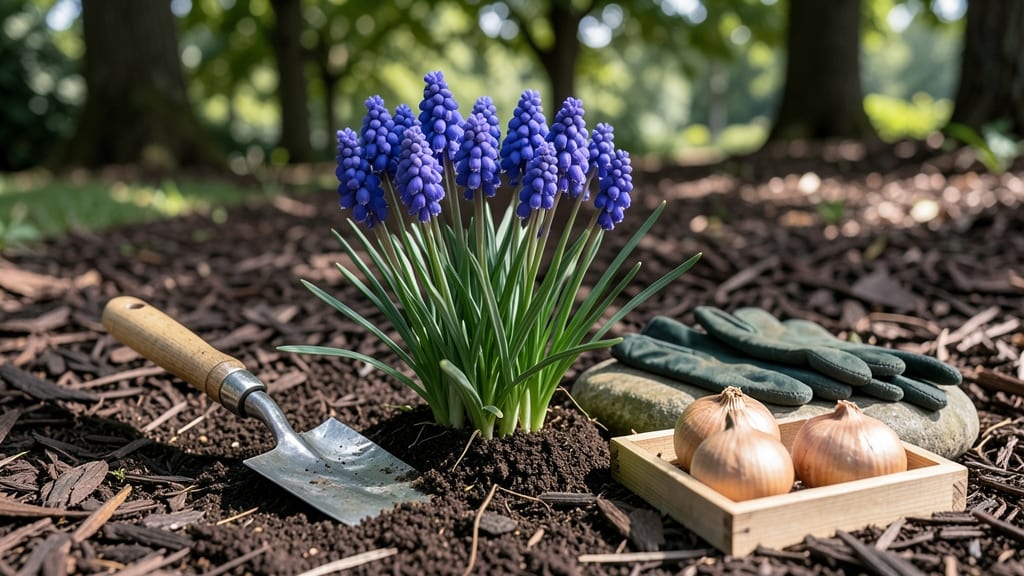
Planting muscari bulbs the right way unlocks a sea of blue blooms that return year after year with almost no effort.
Picture this: a garden bed bursting with grape hyacinths 🌸 in early spring, their delicate clusters swaying in the breeze. But here’s the catch—most gardeners miss the mark on bulb depth and spacing, leading to sparse blooms or no flowers at all.
The secret? Planting them 2-3 inches deep and 3-4 inches apart in well-draining soil, then letting nature do the rest.
Fall is the perfect time to plant muscari in USDA Zone 6a, giving the bulbs time to root before winter sets in. Whether you’re tucking them into a sunny border or a shady woodland garden, these dwarf perennials thrive with minimal fuss—just avoid soggy soil, and you’re golden.
In this guide, I’ll walk you through every step—from digging the perfect hole to pairing muscari with complementary plants for a show-stopping display. No more guesswork, just lush, reliable blooms every spring.

Optimal muscari bulb depth and spacing for maximum blooms
Getting your muscari bulbs planted at the right depth and spacing is the secret to those lush, dense clusters of blue blooms you dream about. Too shallow, and they’ll flop over; too crowded, and they’ll compete for nutrients.
The science is simple: 2-3 inches deep and 3-4 inches apart gives you the perfect balance for healthy growth and vibrant spring displays.
I’ve planted muscari in everything from sunny borders to shady woodland gardens, and these dimensions work reliably across soil types—whether you’ve got sandy loam or well-amended clay.
The key is ensuring your bulbs have enough room to establish roots while staying close enough to create that signature grape hyacinth carpet effect. Let’s break down the specifics to get your planting game on point.
Why depth matters: Planting muscari too deep (below 3 inches) can delay blooming, while shallow planting (under 1.5 inches) risks exposing bulbs to frost or drying out. The 2-3 inch range keeps them snug in the soil’s protective layer while allowing roots to spread naturally. Think of it like tucking them into a cozy blanket—just deep enough to stay warm but not buried alive.
For spacing, the 3-4 inch rule prevents overcrowding while maximizing your garden’s visual impact. When bulbs are too close (under 2 inches), they’ll compete aggressively for water and nutrients, leading to weaker stems and fewer blooms.
But when spaced just right, each plant gets enough elbow room to grow strong, resulting in those dense, uniform clusters that make muscari so stunning in spring borders.
🌱
Your soil type plays a surprisingly big role in determining the perfect depth. In sandy soil, where moisture drains quickly, I recommend planting muscari slightly shallower (2 inches) and mixing in a layer of compost to retain moisture.
For clay-heavy soil, go deeper (3 inches) and amend with perlite or coarse sand to prevent waterlogging—muscari bulbs rot faster than they bloom in soggy conditions.
Timing your planting is just as critical as the depth. Aim to get your bulbs in the ground 6-8 weeks before your first frost—typically September to early October in most USDA zones.
This gives the roots time to establish before winter dormancy. Pro tip: If you’re in a warmer climate (Zone 9+), plant in November to avoid summer heat stress on newly planted bulbs.
For containers, adjust both depth and spacing slightly. Plant muscari 2 inches deep and 2 inches apart in well-draining potting mix with added perlite. Containers dry out faster, so group them with other drought-tolerant bulbs like all
Step-by-step guide to planting muscari bulbs like a pro
Planting muscari bulbs is easier than you think, but getting those dense clusters of blue blooms requires precision. Whether you're adding them to containers, borders, or lawns, follow these steps to ensure vibrant spring displays.
I’ll walk you through everything from tools and timing to post-planting care—so you can skip the guesswork and enjoy effortless beauty.
Muscari, or grape hyacinths, love cool fall weather and well-draining soil. The key to success lies in proper depth and spacing, which prevents overcrowding and encourages strong root growth.
With the right approach, these bulbs will multiply over time, creating a stunning carpet of color year after year. Let’s dive into the step-by-step process.
🌱 Step-by-Step Planting Guide
Once your muscari bulbs are in the ground, minimal care is needed to keep them thriving. Water moderately during dry spells and avoid fertilizing after early spring, as too much nitrogen can reduce flowering.
In late summer or early fall, you can gently divide and replant bulbs to prevent overcrowding.
With these steps, your muscari bulbs will reward you with vibrant blue clusters year after year. The secret? Precision in planting and patience in care. Happy gardening! 🌸