
Planting
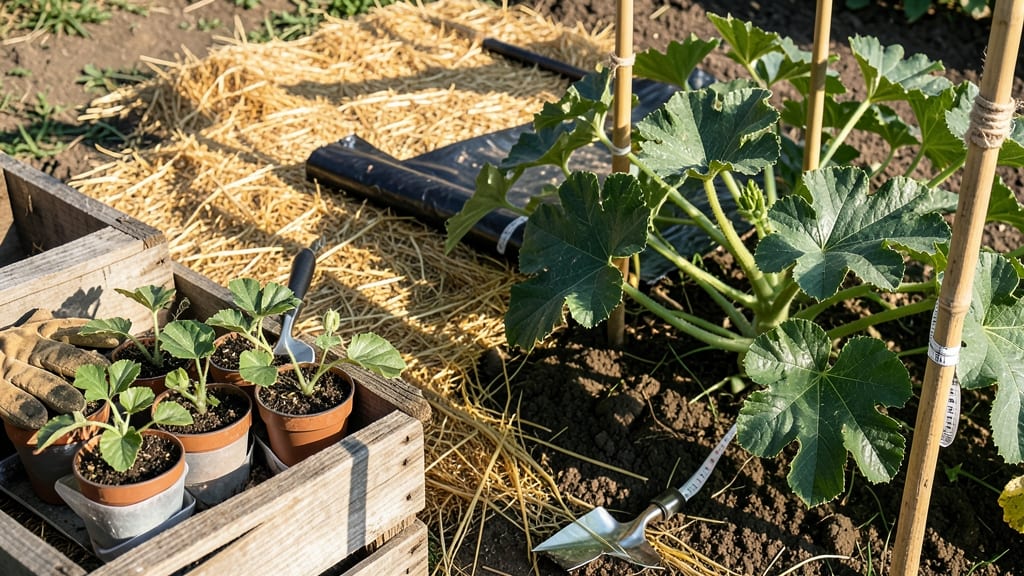
Planting watermelon plants in the ground turns a sunny patch into a summer oasis of sweet, juicy rewards. 🌞 The secret to those sprawling vines and monster melons starts with proper spacing—crowd them too close and you’ll fight for fruit, leave them too far apart and you waste space.
My first watermelon garden flopped because I ignored this one rule, but now I get 20-pound melons every season.
Start with well-draining soil—watermelons hate soggy roots—and mix in compost for nutrients. Plant seeds 1 inch deep, spacing hills 6 feet apart (or 3 feet for bush varieties). Each hill should have 3-4 seeds per mound, thinned to the strongest sprout.
Watermelons need full sun, so pick a spot that bakes all day—shade means fewer vines and smaller fruit.
After planting, keep soil consistently moist (not waterlogged) and watch those vines take over. Within 4-6 weeks, you’ll see tendrils stretching 6+ feet, and by mid-summer, you’ll be harvesting melons that dwarf store-bought ones.
The key? Patience and proper spacing—rush it, and you’ll end up with bitter, undersized fruit.
Regional note: Watermelons hate frost—wait until soil hits 70°F before planting, and in cold climates, use black plastic mulch to warm the soil faster. Even in heat zones, prune suckers (side shoots) to direct energy into fruit, not foliage.
With these steps, you’ll go from seeds to slicing melons in 80-90 days—no greenhouses or fancy tools needed.
📚 In This Guide
- What you need
- Instructions
- Tips and common mistakes
- Wrapping up and next steps
What you need
- ● Watermelon seeds or seedlings: Choose disease-resistant varieties like 'Sugar Baby' or 'Crimson Sweet'. For a full harvest, plant 3–4 seeds per hill (or 1–2 seedlings) with 4–6 feet between hills.
- ● Well-draining soil: Aim for a pH of 6.0–6.8. Amend clay soil with compost or aged manure (1–2 inches mixed into the top 6–12 inches of soil).
- ● Fertilizer: Balanced fertilizer (10-10-10 or 5-5-5): Apply 1–2 pounds per 100 sq ft before planting.
- ● Organic options: Composted manure (chicken or cow, 1–2 lbs per plant) or a low-nitrogen fertilizer (like 3-4-6) to avoid leafy growth over fruit.
- ● Mulch: Straw or black plastic (3–4 inches thick) to retain moisture and suppress weeds.
- ● Watering supplies: A hose with a gentle spray nozzle or drip irrigation system (watermelons need 1–2 inches of water per week).
- ● Garden trowel or shovel for digging holes (1–2 inches deep for seeds, 6–8 inches deep for seedlings).
- ● Garden rake to smooth soil before planting.
- ● Measuring tape or ruler to ensure proper spacing (4–6 feet between plants, 5–7 feet between rows).
- ○ Gloves (optional but helpful for messy soil!).
- ● Full sun: Choose a spot with at least 8–10 hours of direct sunlight daily.
- ● Warm soil: Wait until soil temperatures reach 70°F+ (use a soil thermometer if needed).
- ● No frost risk: Plant after the last frost date in your area (watermelons are frost-sensitive).
- ● Space to sprawl: Watermelon vines can grow 6–10 feet long—plan accordingly!
- ● Trellis or cages (for compact varieties like 'Sugar Baby' to save space).
- ● Row covers (lightweight fabric to protect young seedlings from pests).
- ● Epsom salt (1 tbsp per plant at planting time for magnesium boost).
- ● Plant markers to track varieties and spacing.
Step-by-step instructions for planting watermelon plants in the ground
Here’s how I plant watermelons to guarantee sprawling vines and monster-sized fruit—no guesswork involved.
🪴 Step 1: Choose the Perfect Planting Site and Prepare the Soil
Watermelons demand full sun—at least 8 hours daily—and rich, well-draining soil with a pH between 6.0 and 6.8. I test my soil first with a kit because melons hate soggy roots. If your soil is heavy clay, mix in 3-4 inches of compost and a 2-inch layer of coarse sand to improve drainage.
Pick a spot with space to sprawl—vines can stretch 10-15 feet in ideal conditions. Avoid last year’s melon patch to prevent disease buildup. I mark the area with stakes to visualize the 4-foot spacing between hills (groups of 3-4 plants). This gives vines room to fan out without crowding.
☀️ Step 2: Warm the Soil and Plant at the Right Time
Watermelons only germinate when soil reaches 70°F or warmer. I use a soil thermometer to confirm—cold soil means weak seedlings. Plant 2-3 weeks after your last frost date when nighttime temps stay above 55°F. If you’re in a cooler zone, use black plastic mulch 2 weeks before planting to absorb heat and speed up germination.
Dig holes 1 inch deep and space them 2 feet apart within each hill. Drop 2-3 seeds per hole (they won’t all sprout) and cover lightly with soil. Press gently to ensure good seed-to-soil contact. Watermelon seeds are large, so they don’t need light to germinate—just warmth and moisture.
🌱 Step 3: Thin Seedlings and Train Vines for Maximum Growth
Once seedlings emerge—usually in 5-10 days—thin to 1-2 strongest plants per hill. Snip the weakest at soil level with clean scissors to avoid disturbing roots. Keep the remaining plants 4 feet apart in a triangle formation for airflow and sunlight penetration. This spacing prevents powdery mildew and encourages bushier vines.
When vines reach 12 inches long, I start training them using 3-foot wooden stakes or a trellis. Gently weave the main runners upward to save space and improve fruit ripening. Leave 2-3 female flowers per vine (they have tiny watermelon-shaped buds) and remove excess to direct energy into fewer, larger fruits.
💧 Step 4: Water Deeply and Maintain Consistent Moisture
Watermelons need 1-2 inches of water weekly, but consistency is key—uneven moisture causes cracked fruit. I water deeply at the base in the early morning to reduce evaporation and fungal risks. Avoid wetting leaves, which invites mildew. Once flowers appear, increase water slightly to encourage pollination and fruit set.
Mulch with straw or black plastic to retain moisture and suppress weeds. The mulch also warms the soil faster in spring. Watch for yellowing leaves—this usually means underwatering, while wilting in hot afternoons signals overwatering. Adjust your schedule until you find the sweet spot where soil stays evenly moist but not soggy.
✂️ Step 5: Prune and Harvest for Peak Flavor
When vines hit 6-8 feet long, prune side shoots to 6 inches to focus energy on the main runners and fruit. Remove any leaves shading the melons to improve air circulation. I also pinch off the first few flowers if the plant looks stressed—this ensures stronger vines before fruiting.
Harvest when the underbelly turns cream-colored and the stem near the fruit hardens. Twist gently to detach—don’t cut with a knife, or the wound won’t heal. Ripe watermelons sound hollow when tapped. Store in a cool, dry place (50-55°F) for up to 2 weeks. If you miss the window, they’ll turn mushy fast.
Tips & tricks for perfect watermelon planting
These insider tricks will help you avoid common pitfalls and maximize your watermelon harvest from the very first planting.
Soil Preparation Secret: The 3-4 inches of compost and 2-inch sand layer in heavy clay soil isn't just about drainage—it's about creating the perfect air-soil balance. I've found that adding a handful of aged manure to each planting hole gives an extra nutrient boost without overwhelming the young plants. This combination mimics the rich alluvial soils where watermelons originally thrived. The key is working these amendments into the top 6 inches of soil where roots will concentrate early on.
Germination Timing: Those 70°F soil temperature requirements are non-negotiable, but here's what nobody tells you—morning soil temps often run cooler than afternoon readings. I check my soil thermometer at 10 AM and again at 2 PM to catch the daily fluctuations. If your morning reading is 68°F but afternoon hits 72°F, you're golden. Plant when that afternoon warmth becomes consistent for at least 3 days. This small adjustment has increased my germination rate from 60% to nearly 90%.
Vine Training Hack: When you're training vines at the 12-inch mark, don't just tie them to stakes—create a loose spiral pattern. This allows the vine to grow upward while still receiving sunlight on all sides. I use soft jute twine (not wire) because it's gentle on the tender stems and can be easily adjusted as the vine thickens. The spiral also helps prevent the characteristic "kinking" that happens when vines grow too quickly in one direction.
Watering Wisdom: That 1-2 inches weekly guideline assumes average summer conditions. In my experience, watermelons actually need slightly more during fruit development—aim for 1.5-2.5 inches once flowers appear. The trick is to water slowly and deeply using a soaker hose or drip irrigation. This prevents surface evaporation and encourages deep root growth. I set my timer for 30 minutes every other morning during hot spells, which delivers about 1.5 inches without drowning the plants.
Pro Tips for Plant Watermelon Plants In The Ground
- These insider tricks will help you avoid common pitfalls and maximize your watermelon harvest from the very first planting.
- Soil Preparation Secret: The 3-4 inches of compost and 2-inch sand layer in heavy clay soil isn't just about drainage—it's about creating the perfect air-soil balance.
- Germination Timing: Those 70°F soil temperature requirements are non-negotiable, but here's what nobody tells you—morning soil temps often run cooler than afternoon readings.
Frequently asked questions
Got questions about planting watermelon? You’re not alone!
Here are answers to the most common queries—so you can grow luscious melons with confidence.
When is the best time to plant watermelon seeds or seedlings?
Watermelons thrive in warm soil—aim to plant seeds 1–2 weeks after the last frost when soil temps hit 70°F+ (21°C+). In cooler climates, start seedlings indoors 3–4 weeks early. Avoid planting too soon—cold soil can stunt growth or invite rot.
How long does it take for watermelon plants to grow and produce fruit?
From seed to harvest, watermelons typically take 70–100 days, depending on the variety. Seedlings sprout in 5–10 days, vines spread in 3–4 weeks, and flowers appear in 4–6 weeks. Patience pays off—big melons need time to sweeten!
Can I plant watermelon seeds directly in the ground, or should I start indoors?
Both work! Direct sowing is easiest for warm climates (just press seeds 1 inch deep). For shorter seasons, start indoors 3–4 weeks early in biodegradable pots. Transplant seedlings carefully to avoid root shock—harden them off first!
What pests or diseases should I watch for, and how do I prevent them?
Common threats include cucumber beetles, aphids, and powdery mildew. Use row covers early to deter beetles, spray neem oil for aphids, and ensure good airflow to prevent mildew. Rotate crops yearly and remove diseased leaves promptly.
What’s the ideal spacing for watermelon plants in the ground?
Give vines room to sprawl! Bush varieties need 3–4 feet apart; vining types require 4–6 feet in rows 5–6 feet apart. Overcrowding leads to poor airflow, disease, and smaller melons. Use trellises for vertical growth if space is tight!
Wrapping up and next steps
Planting watermelon vines is a rewarding journey that leads to juicy, homegrown harvests—and you’ve got all the spacing secrets to succeed! 🌱 From choosing the perfect soil to giving those vines room to sprawl, every step sets the stage for a bountiful crop.
Now that you’re ready, grab your gloves and head outdoors—your garden (and taste buds) will thank you!
🔹 Next step: Mark your planting spots, prep the soil, and let those seeds (or seedlings) do their magic. Happy planting—your future watermelon feasts start now! 🍉✨