
Planting
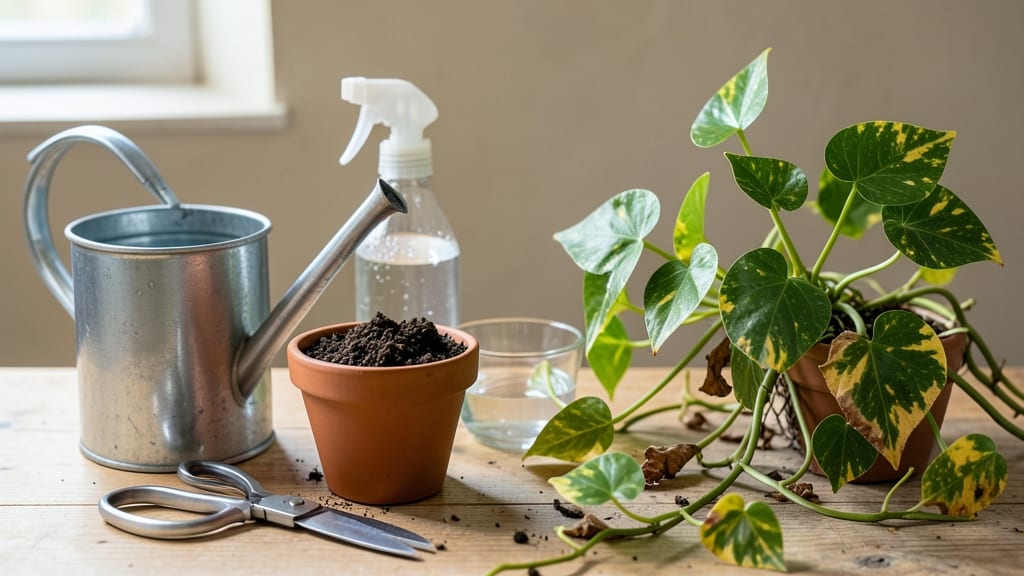
Your pothos plant might be beyond saving—unless you act now. 🌱 Drooping leaves don’t mean game over; they’re often a cry for help that can be fixed in 72 hours with the right moves.
I’ve nursed back more than a dozen pothos from the brink, and the key is diagnosing the problem fast before it spirals. The most common culprits are overwatering (soggy soil, yellow leaves) or underwatering (crispy edges, dry soil).
Pests like spider mites or root rot can also sneak in quietly, so check the roots and leaves first. A quick inspection tells you exactly what’s wrong—and how to fix it before it’s too late.
By the end of three days, you’ll see those leaves perk up again, vibrant green and full of life, if you catch it early. The secret isn’t just water or fertilizer—it’s understanding what your pothos really needs at that moment. Let’s turn this around before it’s too late.
Start with a soil check—stick your finger an inch deep. If it’s damp, hold off on watering; if it’s bone dry, give it a deep drink. Overwatering is the #1 killer, but underwatering stresses the plant just as much.
Drainage matters too—pothos hate soggy roots, so make sure your pot has holes or use a well-draining mix. Next, inspect the leaves for pests like spider mites (tiny webs on the undersides) or brown spots (fungus or overwatering).
Wipe leaves with a damp cloth to remove dust, which helps them breathe better. If the roots smell rotten, trim the bad ones and repot in fresh soil—your pothos will thank you.
The payoff? A revived pothos that grows faster and stays lush longer than ever. Once you fix the immediate issue, keep it in bright, indirect light and water only when the top inch of soil feels dry. Preventative care—like rotating the plant for even growth—keeps future problems at bay.
This works for any struggling pothos, whether it’s a mature plant or a young cutting. Follow these steps, and you’ll have a thriving vine in no time—no green thumb required, just attention to detail.
📚 In This Guide
- What you need
- Instructions
- Tips and common mistakes
- Wrapping up and next steps
What you need
- ● Pothos plant – The star of the show! (1-2 plants max for this rescue mission.)
- ● Room-temperature water – Lukewarm or room temp only (1-2 cups, depending on pot size).
- ● Well-draining pot – 1-2 inches larger in diameter than the current pot (if repotting is needed).
- ● Fresh potting mix – Lightweight, well-draining soil (1 bag, ~1 quart). Pro tip: Mix in perlite or orchid bark (20% of the mix) for extra drainage!
- ● Pruning shears or clean scissors – Sterilized with rubbing alcohol (to avoid spreading disease).
- ○ Misting bottle – Optional but helpful for humidity (if your home is dry).
- ● Household items for diagnosis: Tweezers (to check roots for pests).
- ● Rubbing alcohol (to clean tools or inspect leaves).
- ● Rooting hormone – Speeds up recovery if you’re propagating damaged stems.
- ● Humidity tray – A shallow tray with pebbles and water to boost moisture.
- ● Grow lights – If your pothos lacks natural light (12-14 hours/day).
- ● Fertilizer (balanced, diluted) – Wait 2-3 weeks post-revival before using.
Step-by-Step instructions for reviving a stressed pothos plant
Here’s how I nurse a pothos back to health—fast—using just what you already have.
💧 Step 1: Check the Roots and Soil for Water Issues
Gently remove the pothos from its pot and inspect the roots. Healthy roots are firm and white or light tan, while mushy black roots mean rot from overwatering. If the soil smells sour or clings to roots, it’s too wet. For underwatering, roots will be dry and brittle—like straw.
Use your finger to test moisture: if the top 2 inches feel dry, it’s time to water. If it’s still damp, wait 2-3 more days before checking again. Pothos hate soggy soil, so I always err on the side of dryness. Once you’ve diagnosed the problem, let’s fix it.
☀️ Step 2: Adjust Light and Watering Immediately
Move your pothos to bright, indirect light—near a window with sheer curtains works best. Direct sun burns leaves, while dim corners make them stretch leggy. You’ll see improvement in 24-48 hours: leaves perk up, and new growth appears within 7-10 days.
Water only when the top 1-2 inches of soil feel completely dry. Stick your finger in—if it’s damp, skip watering. Overwatering is the #1 killer, so I use a terracotta pot (it dries faster than plastic) and a saucer to catch excess water. Empty the saucer after 15 minutes to prevent root rot.
✂️ Step 3: Prune Damaged Leaves and Propagate Healthy Cuttings
Snip off any yellow, brown, or mushy leaves with clean scissors—these drain energy from the plant. Focus on leaves that feel squishy or have black spots. Healthy leaves should be firm, glossy, and dark green. Toss the trimmings (unless you’re saving them for propagation).
Take 3-4 inch cuttings from healthy stems, making sure each has at least 2-3 leaves and a node (the bump where roots grow). Place the cuttings in a jar of room-temperature water, ensuring the node is submerged. Roots should appear in 1-2 weeks—change the water every 3-4 days to prevent bacteria. This gives you backups while the main plant recovers.
🪴 Step 4: Repot Only If Necessary (Use the Right Soil Mix)
If the roots are circling the pot or the soil is compacted, repot into a container 1-2 inches larger than the current one. Use a well-draining potting mix (I mix 50% peat moss with 50% perlite for aeration). Avoid garden soil—it’s too dense and holds moisture too long.
Fill the new pot halfway with mix, place the pothos in, and add more soil around the roots. Press gently to remove air pockets but don’t compact it. Water lightly after repotting, then wait 3-5 days before watering again. This prevents transplant shock and gives roots time to adjust.
⏰ Step 5: Monitor and Maintain Recovery Conditions
Keep the pothos in its new spot for 7-10 days to assess progress. You’ll know it’s recovering when new leaves emerge and drooping ones firm up. If leaves stay limp, check for pests (like spider mites) or adjust light again—pothos are sensitive to sudden changes.
Water consistently but lightly, and avoid fertilizing for 4-6 weeks post-revival. Overfeeding stressed plants burns roots. Once it’s back to normal, you can resume monthly feeding with a balanced liquid fertilizer (diluted to half strength). Patience is key—most pothos bounce back within 2-3 weeks of proper care.
Tips & tricks for reviving a stressed pothos plant
Here's what nobody tells you about bringing your pothos back from the brink—these tricks make all the difference.
Root Inspection Secret: When checking roots in Step 1, look for a third color: grayish roots mean the plant's been underwatered for too long. These roots are still salvageable, but you'll need to soak the entire root ball in room-temperature water for 10 minutes before repotting to revive them. This gives the roots a chance to rehydrate before they adjust to their new environment.
Light Placement Hack: For that critical 24-48 hour improvement window in Step 2, position your pothos about 18 inches from an east-facing window. Morning light is perfect—it's bright enough to perk up leaves without the harshness of midday sun. If you only have south-facing windows, use a sheer curtain to diffuse the light and check leaves daily for any signs of browning.
Pruning Precision: In Step 3, when removing damaged leaves, don't just cut at the base—make your snips 1/4 inch above a leaf node (that little bump where leaves grow). This encourages new growth from that spot. For propagation cuttings, angle your snips just below a node at a 45-degree angle—this increases surface area for root development. I've found angled cuts produce roots 2-3 days faster than straight cuts.
Soil Mix Upgrade: While the 50% peat moss/50% perlite mix in Step 4 works well, I've had even better results adding 10% orchid bark to the mix. This improves aeration and helps retain just enough moisture without creating soggy conditions. If you don't have orchid bark, crushed charcoal works as a substitute—it prevents bacterial growth in the soil.
Pro Tips for Save A Pothos Plant
- Here's what nobody tells you about bringing your pothos back from the brink—these tricks make all the difference.
- Root Inspection Secret: When checking roots in Step 1, look for a third color: grayish roots mean the plant's been underwatered for too long.
- Light Placement Hack: For that critical 24-48 hour improvement window in Step 2, position your pothos about 18 inches from an east-facing window.
Frequently asked questions
Got questions about saving your struggling pothos? You’re not alone! Here are answers to the most common concerns—because even the hardiest plants need a little TLC sometimes.
Why is my pothos drooping so fast?
Pothos plants droop when they’re thirsty (most common!) or overwatered. Check the soil—if it’s bone-dry or soggy, that’s your culprit. Drooping can also signal root rot, pests, or sudden temperature changes. Act fast: adjust watering and inspect leaves for signs of stress.
How long does it take to revive a pothos?
With proper care, you’ll often see improvement in 24–72 hours. If the drooping is due to underwatering, leaves may perk up within a few hours after watering. For severe cases (like root rot), recovery can take 1–2 weeks. Patience is key—don’t give up if progress is slow!
Can I save a pothos with mushy stems?
Mushy stems usually mean root rot, but you can still try saving it! Trim the affected stems below the mushy part, let them dry for a day, and propagate in fresh, well-draining soil. If the roots smell foul or are black, it’s best to start fresh with healthy cuttings.
What if my pothos has yellow leaves?
Yellow leaves are often a sign of overwatering, but they can also mean nutrient deficiency or natural aging. Trim yellow leaves below the node (where leaves grow) to encourage new growth. Adjust watering and fertilize lightly (like with diluted houseplant food) to help it bounce back.
Is it too late if my pothos is completely limp?
Not necessarily! A completely limp pothos can still recover if the roots are healthy. Give it a deep watering (soak the soil thoroughly), then let it drain well. Place it in bright, indirect light and avoid touching the leaves. If it stays limp after 48 hours, check the roots—you may need to propagate healthy stems.
Can I revive a pothos without repotting?
Yes! If the soil is compacted or waterlogged, you can refresh it without full repotting. Gently loosen the top 2 inches of soil, mix in perlite or coconut coir for drainage, and water lightly. If the roots are severely bound, consider top-dressing with fresh soil or repotting in a slightly larger container.
Wrapping up and next steps
Reviving a struggling pothos doesn’t have to be stressful—just follow the right steps! With proper hydration, light adjustments, and a little TLC, you can often see improvement in just 72 hours. Remember, patience and consistency are key, and soon your pothos will be thriving again.
Now that you’re armed with the know-how, take the next step: check your plant’s progress daily and tweak care as needed. Happy growing—your green friend will thank you! 🌿✨