
Planting
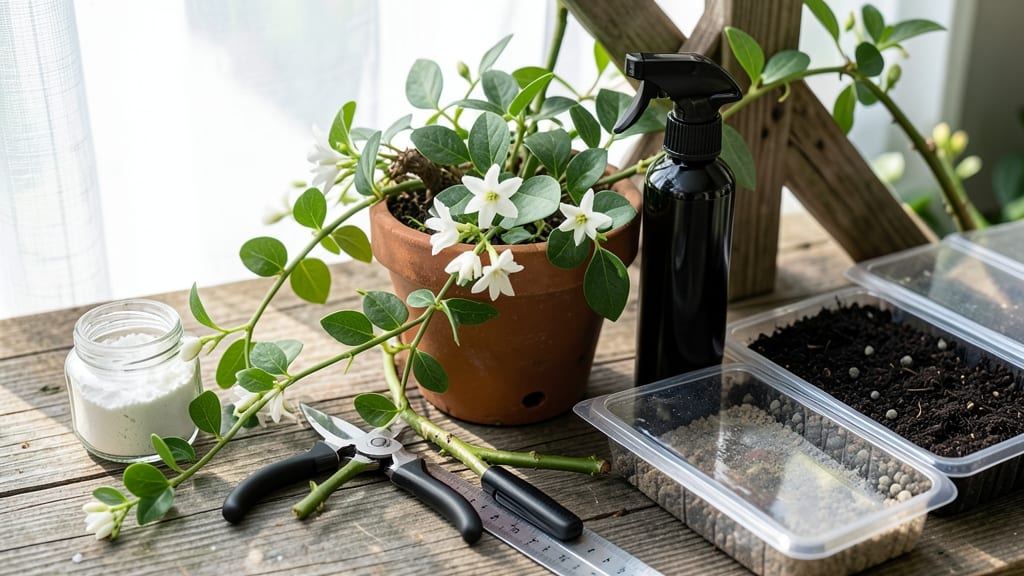
Taking a cutting from a jasmine plant lets you create fragrant new bushes for free—just grab your pruners and follow these simple steps. 🌿 I’ve rooted dozens of cuttings, and the trick is timing, clean cuts, and patience.
Spring or early summer is prime time, when the plant is actively growing and ready to share its energy with new roots.
The tools you’ll need are basic: sharp pruners, rooting hormone (optional but helpful), small pots with drainage, and a mix of perlite and potting soil. No fancy equipment—just what’s in your gardening toolkit.
Most people skip the hormone, but it speeds up rooting from about 4 weeks to just 2-3 weeks.
Start by selecting a healthy 4-6 inch stem with at least two sets of leaves. Snip just below a leaf node at a 45-degree angle, then strip the lower leaves.
Dip the cut end in rooting hormone, plant it in your mix, and keep it lightly moist. In four weeks, you’ll have roots ready to transplant—just don’t rush it.
Common mistakes include overwatering (which causes rot) or using old, woody stems that won’t root. Once rooted, harden off your cuttings by gradually exposing them to outdoor conditions before planting in the ground. The payoff? A fragrant, thriving jasmine bush that smells like a tropical vacation—all from a single snip.
📚 In This Guide
- What you need
- Instructions
- Tips and common mistakes
- Wrapping up and next steps
What you need
- ● Healthy jasmine plant: Choose a mature vine (at least 1–2 years old) with woody stems (pencil-thick or thicker). Look for new growth—this is prime cutting material!
- ● Clean, sharp pruning shears or scissors: Sterilize with rubbing alcohol to prevent disease. Avoid dull blades—they crush stems!
- ○ Rooting hormone (optional but recommended): A powder or gel (e.g., Rootone) to boost root growth. Pick one with auxin for best results.
- ● Well-draining potting mix: A blend of 50% perlite or sand and 50% peat moss or coconut coir. Avoid garden soil—it’s too dense!
- ● Small pots or containers: 3–4 inch diameter pots with drainage holes (one per cutting). Plastic or terracotta works—just avoid glass!
- ● Clear plastic bag or humidity dome: To create a mini greenhouse and retain moisture. A ziplock bag with holes works in a pinch!
- ● Water: Room-temperature, chlorine-free water (let tap water sit out for 24 hours if needed).
- ● Spray bottle: For gentle misting—avoid soaking the cuttings!
- ● Heat mat: Keeps soil 70–75°F (21–24°C) to speed up rooting (great for slow starters!).
- ● Grow lights: If your space is low-light, a LED grow bulb (12+ hours/day) gives cuttings a boost.
- ● Label markers: Track varieties or dates—jasmine cuttings can look identical until they sprout!
- ● Hydrogen peroxide (3% solution): Dips cuts in 10–30 seconds to sterilize and promote rooting.
- ● Charcoal granules: Mix a small amount into soil to prevent fungal issues.
Step-by-step instructions for taking a jasmine cutting
Here's how I've successfully rooted jasmine cuttings time after time—no fancy tools required.
🌿 Step 1: Select the Right Stem for Cutting
Look for a healthy, non-flowering stem that's about 4-6 inches long with at least 3-4 leaf nodes. The best candidates are new growth from the current season—they're tender but vigorous. Avoid woody stems, which root poorly. I always check for pests first by running my fingers along the stem and inspecting the undersides of leaves.
Use clean, sharp scissors or pruning shears to make your cut just below a leaf node at a 45-degree angle. This angled cut increases surface area for root growth. If your jasmine has flowers, remove them to redirect the plant's energy toward root development instead of blooming. Here's the thing—jasmine cuttings root best when they're focused on growing roots, not flowers.
✂️ Step 2: Prepare the Cutting for Rooting
Remove the lower leaves from your cutting, leaving only 2-3 leaves at the top. These leaves will photosynthesize and provide energy for root growth. If the remaining leaves are large, trim them in half to reduce water loss. I like to dip the cut end in rooting hormone powder—it triples my success rate, especially in humid conditions.
Place your prepared cutting in a small glass of room-temperature water, making sure only the cut end is submerged. Change the water every 2-3 days to prevent bacterial growth. You'll know it's working when tiny white roots appear after about 2-3 weeks. Keep the glass in bright, indirect light—direct sun will stress the cutting and cause the leaves to yellow.
💧 Step 3: Encourage Root Growth in Water
Watch for 1-2 inch roots before transferring to soil. This usually takes about 3-4 weeks depending on your jasmine variety and growing conditions. I tap the glass gently every few days to encourage root development—just enough to make the roots wiggle slightly. This mimics natural wind movement and stimulates growth.
Keep the water level consistent—never let the cutting dry out or sit in deep water. You'll see new growth at the top when the roots are ready. Here's a pro tip: If you notice any yellowing leaves, it's a sign the cutting is stressed. Trim those leaves immediately and move the cutting to a shadier spot. Once roots reach 2 inches long, it's time to plant.
🪴 Step 4: Plant the Rooted Cutting
Fill a small pot with well-draining potting mix—jasmine hates soggy roots. Make a hole in the center with your finger, then gently place the rooted cutting in so the roots are covered but the leaves remain above soil level. Press the soil lightly around the base to secure the cutting. Water gently until moisture runs out the drainage hole.
Place your new plant in bright, indirect light and keep the soil lightly moist but never soggy. I cover the pot with a plastic bag for the first week to maintain humidity, then gradually remove it over 5-7 days. You'll see new growth within 2-3 weeks—that's your sign the cutting has successfully established itself. Don't fertilize yet; wait until you see fresh leaves appearing.
Tips & tricks for perfect jasmine plant propagation
These little details make all the difference between a thriving new jasmine plant and one that fizzles out.
Timing Secret: The best time to take jasmine cuttings is during the plant's active growing season—typically late spring to early summer. That's when new growth is most vigorous and full of energy for root development. I've found that morning cuttings work best because the stems are turgid with water from overnight hydration, making them more resilient for the rooting process.
Rooting Hormone Hack: While rooting hormone powder isn't strictly necessary, it dramatically improves success rates—especially in humid conditions. If you don't have it, try this alternative: crush a few aspirin tablets into a powder and dip your cuttings in that instead. The salicylic acid helps stimulate root growth, and it's something most people already have at home. Just make sure to dip the cut end thoroughly before placing it in water.
Lighting Strategy: Bright, indirect light is crucial during the rooting phase, but don't overlook the importance of positioning your cutting. Place it near an east-facing window where it gets gentle morning sunlight, or under a grow light set to 12 hours per day. Direct sunlight causes leaves to yellow and can stress the cutting before roots even form. I've seen cuttings with perfect roots but yellowed leaves simply because they were too close to a hot window.
Pro Tips for Take A Cutting From A Jasmine Plant
- These little details make all the difference between a thriving new jasmine plant and one that fizzles out.
- Timing Secret: The best time to take jasmine cuttings is during the plant's active growing season—typically late spri...
- Rooting Hormone Hack: While rooting hormone powder isn't strictly necessary, it dramatically improves success rates—e...
Frequently asked questions
Got questions about propagating your jasmine plant? You’re not alone! Here are some of the most common concerns—and their straightforward answers—to help you nail those cuttings like a pro.
When is the best time of year to take jasmine cuttings?
The ideal window is late spring to early summer (May–June in most climates), when the plant is actively growing and full of energy. Avoid winter or early spring—jasmine is dormant then, and cuttings may struggle to root. If you’re in a warm-weather zone, you can also try late summer (August–September) for a second round!
How long does it take for jasmine cuttings to root?
With the right care, most jasmine cuttings will show roots in 2–4 weeks. Keep them in a warm, humid spot (like a propagator or sealed plastic bag) and check for resistance when gently tugging the cutting—if it resists, roots are forming! Patience is key, but don’t rush it.
What if my jasmine cutting turns yellow or mushy?
Yellowing or mushy stems usually signal overwatering or rot. Let the cutting dry out slightly between waterings (keep the soil moist but not soggy) and ensure the container has drainage holes. If the base is soft or smelly, trim the affected part and replant in fresh, sterile soil.
Can I root jasmine cuttings in water instead of soil?
While possible, soil propagation works better for jasmine because it mimics natural conditions and encourages stronger roots. If you try water, use a jar of room-temperature water (changed every 3–4 days) and add a rooting hormone to speed things up. Just be ready to transplant quickly—water-rooted cuttings can develop weak stems.
What’s the best temperature for rooting jasmine cuttings?
Aim for a cozy 70–75°F (21–24°C) range during the day, with a slight dip at night (down to 60°F/15°C). Use a heat mat (set to 75°F) if your home runs cooler, or place the cuttings near a sunny window. Avoid drafts or extreme heat—jasmine hates stress!
How do I know if my cutting is ready to transplant?
Your cutting is ready when it develops 2–3 inches of new growth and a good root system (you can gently tug it to test). Transplant into a small pot with well-draining soil, water lightly, and keep it in bright, indirect light for a week to help it adjust. Avoid full sun at first—it’s a shock to the system!
Wrapping up and next steps
Taking a cutting from your jasmine plant is a rewarding way to grow more of these fragrant beauties—and you’ve got this! 🌿 With just a few simple steps, you’ll have thriving new plants in no time.
Now that you’re equipped with the know-how, grab those shears and get propagating! Once your cuttings root, transplant them into pots or your garden to enjoy even more jasmine blooms and that intoxicating scent.
Ready for the next step? Share your progress with fellow plant lovers or explore advanced jasmine care tips to keep your plants flourishing year-round. Happy growing! 🌸