
Planting
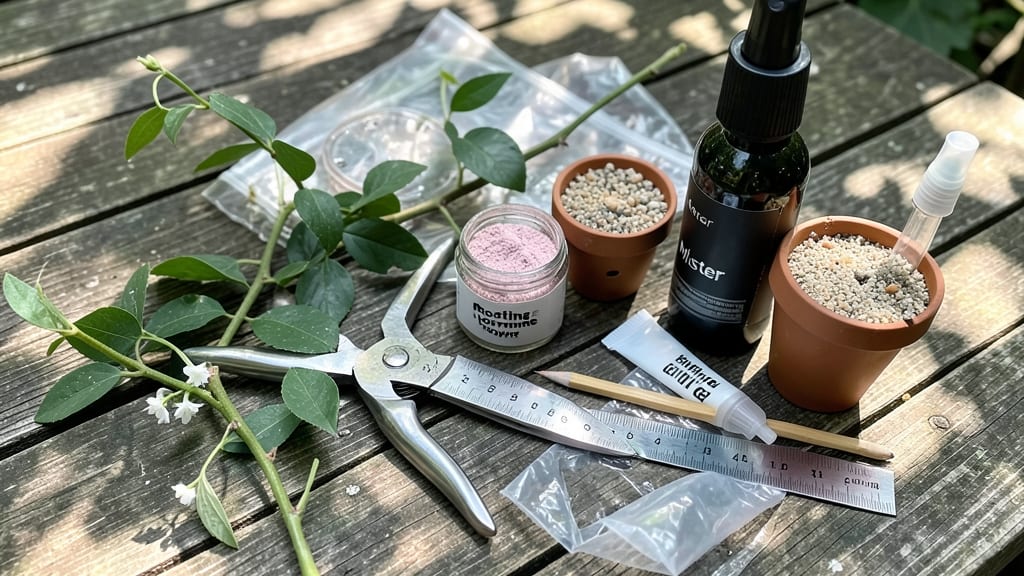
Taking jasmine cuttings in late spring gives you fragrant new plants by summer. 🌿 I've propagated jasmine this way for years, and the secret lies in timing, sharp tools, and patience. The right cuttings root easily if you follow a few simple steps—no greenhouse or fancy equipment needed.
You'll need clean pruning shears, rooting hormone (optional but helpful), a well-draining potting mix, and small pots or a propagation tray. The best cuttings come from healthy, non-flowering stems about 4-6 inches long with at least two leaf nodes. Timing matters too—spring and early summer offer the best success rates.
After trimming, dip the cut end in rooting hormone (if using) and plant it 2 inches deep in moist potting mix. Keep the soil consistently damp and maintain high humidity with a plastic bag or propagation dome. In about 4-6 weeks, you'll see new growth signaling successful rooting.
Once rooted, transplant carefully into individual pots and gradually acclimate to outdoor conditions before moving to their permanent home. With this method, you'll have multiple fragrant jasmine plants ready to fill your garden or share with friends by next season.
📚 In This Guide
- What you need
- Instructions
- Tips and common mistakes
- Wrapping up and next steps
What you need
- ● Jasmine plant cuttings: 4–6-inch-long, healthy stems (non-flowering, semi-hardwood or greenwood). Aim for 3–5 nodes per cutting.
- ● Sharp, clean pruning shears or scissors: Sterilized with rubbing alcohol to prevent disease (avoid dull tools—they crush stems!).
- ○ Rooting hormone (optional but recommended): A powder or gel (e.g., clonex or rootone) to boost success rates.
- ● Well-draining potting mix: A blend of peat moss, perlite, and sand (or a pre-made rooting mix like Pro-Mix).
- ● Small pots or containers: 4–6-inch diameter with drainage holes (or a propagator tray).
- ● Clear plastic bag or humidity dome: To retain moisture and create a greenhouse effect.
- ● Spray bottle: Filled with water to mist cuttings gently.
- ● Rubbing alcohol (70% isopropyl): For sterilizing tools.
- ● Heat mat: Keeps soil warm (70–75°F) to speed up rooting.
- ● Fungicide: Prevents mold if humidity is high (e.g., mycorrhizal fungi or neem oil).
- ● Label markers: To track cutting types and dates.
- ● Grow lights: If propagating indoors with low natural light.
Step-by-step instructions for propagating jasmine cuttings
Jasmine cuttings root easily with the right approach—here’s how I’ve perfected it over years of growing fragrant new plants.
🌿 Step 1: Select Healthy Stems for Cuttings
Choose 4-6 inch semi-hardwood stems from the current season’s growth—look for wood that’s green but slightly firm, not too soft or woody. The best cuttings have 3-4 leaf nodes (those small bumps where leaves attach), as roots will form there. Avoid stems with flowers or buds; you want energy focused on rooting, not blooming.
Use clean, sharp pruners to make a 45-degree angle just below a node. This increases surface area for root growth. I like to take cuttings in early summer when the plant is actively growing but hasn’t yet flowered—this gives roots time to establish before winter. Discard any stems with yellowing leaves or signs of disease.
💧 Step 2: Prepare Cuttings for Rooting
Remove the bottom set of leaves (about 1 inch from the stem base) to eliminate moisture loss and prevent rot. Leave the top 2-3 leaves intact—they’ll photosynthesize and feed the new roots. Dip the cut end in rooting hormone powder (optional but helpful for faster results). I tap the cutting lightly against the side of the container to remove excess powder—too much can suffocate the stem.
Fill a 4-inch pot with a well-draining mix (equal parts perlite and peat moss works perfectly). Moisten the mix until it’s evenly damp—not soggy, but not dry. Stick your finger in; it should feel like a wrung-out sponge. Make a 1-inch deep hole with your finger and insert the cutting, pressing gently to hold it in place. Space 4 cuttings per pot to avoid overcrowding.
☀️ Step 3: Create Ideal Conditions for Rooting
Place the pot in a bright, indirect light spot—no direct sun yet, as this can dry out the cuttings too quickly. A south-facing window with sheer curtains works well. Maintain 70-75°F temperatures; a heat mat under the pot can speed up rooting if your home runs cooler. Cover the pot with a clear plastic bag (like a ziplock with holes punched in it) to retain humidity—jasmine cuttings thrive in 80-90% humidity. Secure the bag loosely with a rubber band.
Water the soil only when the top inch feels dry—about once every 5-7 days. Overwatering is the #1 killer of cuttings. Mist the leaves lightly every few days to keep humidity high inside the bag. Roots typically form in 4-8 weeks, but don’t peek until then—disturbing them slows growth. You’ll know it’s working when new leaves appear at the top.
✂️ Step 4: Transplant and Care for New Plants
Once roots are established (gently tug on the cutting—resistance means roots), remove the plastic bag and transplant into individual 6-inch pots with regular potting mix. Water deeply to settle the soil, then reduce watering slightly—jasmine prefers slightly dry conditions between waterings. Place in morning sun for a week to harden off before moving to full sun.
Fertilize lightly with a balanced 10-10-10 solution at half strength after 4 weeks. Avoid heavy feeding until new growth appears—you want roots to strengthen before pushing foliage. Prune any yellow or damaged leaves that form during this transition. With patience, your cuttings will bloom in 1-2 years, filling your garden with that signature jasmine fragrance.
Tips & tricks for perfect jasmine cuttings propagation
Real talk: I’ve lost count of how many jasmine cuttings I’ve tried to root before finally nailing the perfect conditions. Here’s what I’ve learned the hard way—and how you can avoid my mistakes.
Timing is Everything: Early summer is your best window for taking jasmine cuttings because the plant’s energy is focused on growth, not flowering. If you miss this timing, late spring or early fall can work, but expect slightly slower rooting. The key is choosing stems that are semi-hardwood—firm enough to hold their shape but still green and flexible. These stems strike the perfect balance between established structure and active growth potential.
Rooting Hormone Hack: While rooting hormone powder is optional, I’ve found it cuts rooting time by nearly 30% when used correctly. The trick is to dip just the cut end and tap off the excess—too much powder can actually suffocate the stem. For an even faster start, try a gel-based rooting hormone instead; gels adhere better to moist cut ends and provide more consistent results. Just remember, even without hormone, jasmine cuttings root reliably with patience.
Humidity Control: That plastic bag isn’t just decoration—jasmine cuttings need 80-90% humidity to thrive. If you notice condensation dripping down the sides of your bag, you’ve hit the sweet spot. In dry climates, consider adding a tray of water with pebbles underneath the pot to boost humidity further. And here’s a pro move: Poke a few small holes in the bag if your kitchen stays consistently humid—this prevents mold while maintaining the right moisture level.
Transplanting Test: The gentle tug test is your best friend when checking for roots. If the cutting resists even slightly when you pull, roots have formed! But don’t yank too hard—you could damage the delicate new roots. For extra confidence, try the "soil shake" method: Gently shake the pot while holding the cutting. If soil moves but the cutting stays put, you’ve got roots. This method works especially well for jasmine, which can be finicky about transplant shock.
Pro Tips for Take Cuttings From Jasmine Plant
- Real talk: I’ve lost count of how many jasmine cuttings I’ve tried to root before finally nailing the perfect conditions.
- Timing is Everything: Early summer is your best window for taking jasmine cuttings because the plant’s energy is focused on growth, not flowering.
- Rooting Hormone Hack: While rooting hormone powder is optional, I’ve found it cuts rooting time by nearly 30% when used correctly.
Frequently asked questions
Got questions about propagating your jasmine plant? You’re not alone! Here are some of the most common queries—plus straightforward answers to help you master the art of taking cuttings like a pro.
When is the best time of year to take jasmine cuttings?
The ideal window is late spring to early summer (May–June), when new growth is vigorous and the plant is entering its active phase. Avoid winter or dormant periods—jasmine struggles to root in cooler temps. If you’re in a warm climate, year-round propagation is possible, but spring remains the gold standard for success.
How do I know if I’ve chosen a healthy cutting?
Look for 4–6-inch stems with 2–3 sets of leaves (the more nodes, the better!). The cutting should be firm, green, and free of damage—avoid woody or yellowing sections. A healthy cutting will also bend slightly (not snap) when tested, signaling it’s young and flexible.
Why aren’t my jasmine cuttings rooting?
Common culprits include poor lighting (too dark = weak roots), overwatering (root rot is a silent killer), or low humidity. Try these fixes:
- Move cuttings to bright, indirect light (east-facing windowsill or under grow lights).
- Use a humidity dome or plastic bag to trap moisture.
- Check your rooting hormone—if expired, it may not be effective.
Patience is key: rooting can take 2–6 weeks!
Can I root jasmine in water instead of soil?
Yes! Jasmine can root in water, but success rates are lower than soil propagation. If you try it:
- Use room-temperature, filtered water (chlorine can harm roots).
- Change the water every 3–4 days to prevent bacteria.
- Once roots hit 1–2 inches, transplant to soil—jasmine prefers to be dryer than its aquatic phase.
Pro tip: For higher success, dip the cutting in rooting hormone before submerging.
What’s the best temperature for rooting jasmine cuttings?
Jasmine thrives in 65–75°F (18–24°C) during rooting. Avoid drafts (like AC vents or cold windows) and keep cuttings consistently warm. A heat mat (set to 70°F) can speed up rooting by 30–50%. If your home runs cooler, a propagation station with a clear lid creates a mini greenhouse effect.
Wrapping up and next steps
Taking cuttings from your jasmine plant is a rewarding way to expand your fragrant garden with minimal effort!
With the right tools, patience, and a little care, you’ll soon have thriving new plants ready to climb and bloom. 🌱 Now that you’re armed with the know-how, it’s time to get your hands dirty—start with just one cutting and watch your green thumb grow!
Ready for more? Experiment with different jasmine varieties or try propagating other climbing plants like ivy or clematis. Happy gardening! 🌸