
Planting
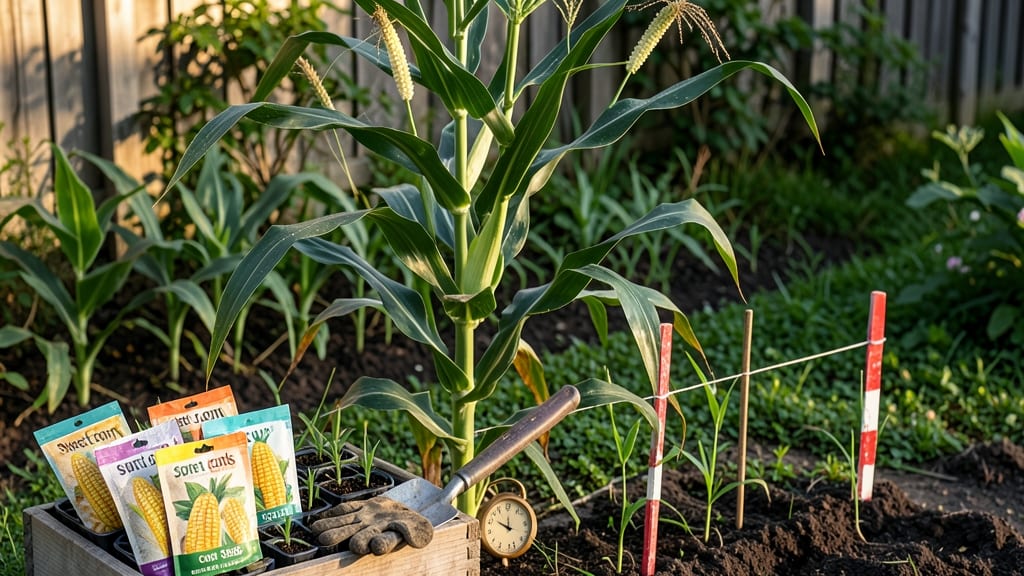
Whether it's too late to plant sweet corn depends on your growing zone: in Zones 3-5, you should sow by mid-June at the latest, while Zones 6-10 can extend planting to early July. Fast-maturing varieties (55-65 days) and 60+ frost-free days are essential for successful harvests. Shade cloth and row covers help protect young plants in cooler regions.
Your late-season corn success hinges on two key factors: timing and variety selection. 🌱 In cooler climates (Zones 3-5), even a two-week delay can push harvests into frost season, so opting for early-maturing hybrids (like 'Early Sunglow') is critical.
I've found that planting after June 15th in these zones often means sacrificing yield unless you use protective covers. Meanwhile, gardeners in Zones 6-10 have more breathing room, but should still aim for July 1st to ensure full maturation before fall frosts arrive.
For small gardens, consider these game-changers: black plastic mulch raises soil temperatures by 5-10°F, accelerating germination, while proper 12-inch spacing between plants improves air circulation and reduces disease risk. I've had great luck with succession planting in late June—sowing every 10 days gives staggered harvests even with limited space.
Just remember: late corn needs 1 inch of water per week and consistent nitrogen to compensate for its shortened growing window.
💡 In This Article
- Sweet Corn Planting Deadlines by USDA Hardiness Zone
- Late-Season Sweet Corn Success Hacks for Small Gardens
Sweet corn planting deadlines by USDA hardiness Zone
Sweet corn's late-season viability hinges on your zone's average first-frost date and how many frost-free days remain after planting. In Zones 3-5, where summers are short, you typically have just 90-120 days between last frost and first frost.
This means planting after June 15th risks immature ears before fall chills arrive. For example, in Zone 4 (like Minneapolis), the average first frost occurs September 20th, leaving only about 100 days for a full corn cycle.
The magic number is 60+ frost-free days after planting to reach harvest. Fast-maturing varieties like 'Ambrosia' (58 days) or 'Silver Queen' (60 days) are non-negotiable in late plantings.
In Zones 6-10, where summers last 150-200 days, you gain flexibility—Zone 7 (Atlanta) can plant until July 15th while Zone 10 (San Diego) might extend to August 1st. The key difference? Warmer nighttime temperatures in southern zones prevent stunted growth that cooler northern climates experience.
Here's how to calculate your window: subtract your last-frost date from your first-frost date, then subtract the corn variety's days to maturity.
For a 75-day variety in Zone 5 (last frost May 10th, first frost September 25th), you have 138 days total—leaving only 63 days after June 15th. That's cutting it close! 🌾
Frost risk varies dramatically by elevation too. A Zone 6 garden at 2,000 feet (like Denver) may face frosts 2 weeks earlier than one at sea level (like Houston).
Always check your microclimate—urban areas can be 5-10°F warmer than rural zones, potentially adding 7-10 extra days to your growing season.
What most gardeners overlook is how soil temperature affects germination. Corn needs soil at 60°F+ to sprout—cold soils delay emergence by 3-5 days per degree below 60°F. In late June plantings, soil temps in Zones 3-5 may still hover around 55°F, creating a 10-day lag before sprouts appear.
This is why black plastic mulch becomes your best friend in late plantings—it can raise soil temps by 10°F within days.
Pro tip: Use your local cooperative extension service to get hyper-local frost data. Their records often show 10-year averages that account for microclimates better than USDA zone maps.
For example, I once saw a Zone 5 garden in a sheltered valley extend corn planting to July 5th successfully when the extension office confirmed their 10-year average first frost was October 5th—not the September 25th shown on standard maps.