
Planting
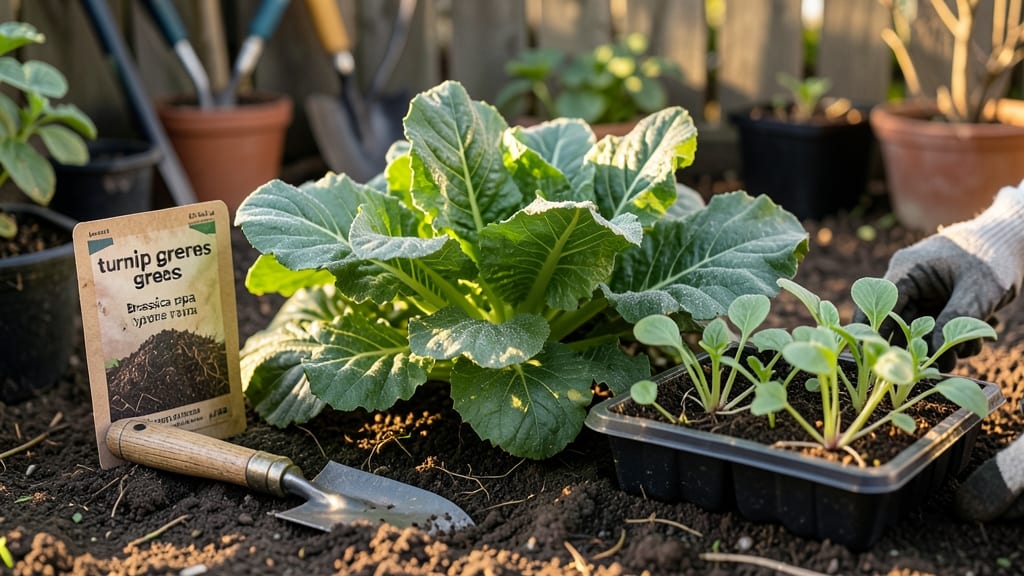
Planting turnip greens too late can mean bitter greens or no harvest at all—but with the right timing, you’ll still get a bountiful crop even in late summer.
If you’re staring at your garden plot wondering whether to sow those seeds now, the answer depends on your climate zone and how fast your variety grows. Turnip greens 🥬 are cold-hardy, but they need time to mature before frost hits.
In USDA Zone 6a, for example, the last window to plant for a fall harvest closes around mid-August.
Don’t panic if you’ve missed the ideal window—there are ways to extend your season. Whether you’re using row covers, choosing fast-maturing varieties, or planting in containers, this guide will help you calculate your last-chance planting date and avoid common mistakes.
By the end, you’ll know exactly when to stop sowing, how to push your planting boundaries, and what to watch for if your late-season crop starts struggling. Let’s get those turnip greens growing!

Turnip greens planting deadlines by USDA climate zone: when to stop sowing
Turnip greens thrive in cool weather and can survive light frosts, but their planting deadlines vary dramatically by USDA climate zone. Missing these windows means risking stunted growth, bitterness, or bolting before harvest.
I’ll break down the exact last-chance planting dates for each zone, plus how to push those boundaries with smart strategies.
Turnip greens are one of the most frost-tolerant greens you can grow, but they still need time to mature before winter sets in. In warmer zones (7-10), you can plant later into fall, while cooler zones (3-6) demand earlier sowing to avoid winter kill.
Let’s dive into the zone-by-zone deadlines so you can plan your last sowing with confidence.
📅 Key Rule: Aim to harvest turnip greens before hard frosts (below 20°F/-7°C). In most zones, this means stopping sowings 6-8 weeks before first frost. For example, if your first frost is November 15, your last planting should be by September 20.
| USDA Zone | Last Planting Window | First Frost Date | Harvest Before | Notes |
|---|---|---|---|---|
| Zones 3-4 | Mid-July to early August | October 1 - October 15 | First hard frost (below 20°F) | Use row covers to extend season; choose fast-maturing varieties (e.g., 'Southern Giant'). |
| Zones 5-6 | Late July to mid-August | October 15 - November 1 | First hard frost (below 20°F) | Can push to early September in Zone 6b with cold frames. Avoid planting after August 20 in Zone 5. |
| Zones 7-8 | Mid-August to early September | November 15 - December 1 | First hard frost (below 25°F/-4°C) | Ideal for fall/winter harvests. Plant every 2 weeks from August for staggered harvests. |
| Zones 9-10 | Late August to mid-October | December 15 - January 1 | Light frosts (above 28°F/-2°C) | Can grow year-round in mild winters. Use shade cloth in summer to prevent bolting. |
In Zones 3-4, your window is tight—sow by mid-August at the latest to ensure harvest before winter. These zones have the earliest frosts, so prioritize fast-maturing varieties like 'Purple Top White Globe' or 'Tokyo Cross'. If you miss this window, consider container growing under a porch with row covers.
Gardeners in Zones 5-6 have a slightly longer grace period, but don’t wait past early September. This is where succession planting shines: Sow a new batch every 2 weeks from July through August for continuous harvests.
For example, if your first frost is October 25, your last planting should be by September 10.
For Zones 7-10, the real magic happens in fall. In Zone 8, you can push sowings to early October if you protect seedlings with frost blankets.
In Zones 9-10, turnip greens are a winter crop—plant in September-October for harvests through spring. Just watch for bolting if temperatures rise above 80°F/27°C.
Pro tip: Check your local frost dates using the National Weather Service or Old Farmer’s Almanac, then count backward 6-8 weeks for your last planting. For example, if your first frost is November 10, your cutoff is September 15.
Write this date on your calendar—it’s your garden’s last call for turnip greens!
If you’re on the fence about late plantings, test a small batch with row covers or a mini greenhouse. Even in cooler zones, a 4x4 ft cold frame can extend your season by 3-4 weeks.
Just remember: Turnip greens hate heat, so avoid planting when daytime temps exceed 85°F/29°C.
For container gardeners, the rules relax slightly. Pots warm up faster than soil, so you can plant 1-2 weeks later than in-ground. Just ensure containers have drainage holes and use lightweight potting mix to prevent waterlogging. Place pots in partial shade during peak summer to slow bolting.
Finally, if you’re in Zone 9-10 and dreaming of year-round turnip greens
How to extend your turnip greens season: 5 proven late-planting strategies
Don't let the calendar fool you—turnip greens 🥬 can still thrive when planted late, especially with the right strategies. These cold-hardy greens tolerate light frosts and even grow better in cooler weather, making them perfect for extending your harvest window.
The key is knowing how to push your local planting limits without risking bitter or stunted crops.
Before you grab those seeds, check your last frost date—not the average, but your historical late-season frost. Most gardeners assume turnip greens need to be planted early, but with succession planting and protective methods, you can harvest well into fall or even winter in mild climates.
Let’s break down how to calculate your safe late-planting window and the tactics that work.
-
1Use frost forecasts to determine your local last-plant date. Aim for 6-8 weeks before frost for mature greens, or 4-6 weeks for baby leaves.
-
2Choose fast-maturing varieties like 'Tokyo Cross' (28 days) or 'Purple Top White Globe' (30 days) to squeeze in late harvests before cold sets in.
-
3Extend seasons with row covers or cold frames, which can push harvests 2-4 weeks later by trapping heat and shielding from light frosts.
-
4Plant in containers near a sunny wall or on a patio—this lets you move pots indoors or under cover if frost threatens.
-
5Succession plant every 2 weeks in late summer for a staggered harvest. Even if some crops fail, others will thrive.
For Zone 5-7 gardeners, late August is often the cutoff for outdoor planting, but with a low tunnel or cold frame, you can harvest until Thanksgiving. In Zones 8-10, turnip greens can grow year-round—just watch for heat stress in summer and plant shade cloth if needed.
My go-to method is using floating row covers over newly seeded beds to protect seedlings from unexpected cold snaps.
Pro tip: If your soil is still warm from summer, pre-cool it by watering deeply for 3 days before planting. Cooler soil helps prevent bolting (premature flowering) in late-season turnip greens.
Pair this with light mulch (straw or leaves) to insulate roots and retain moisture. This combo has saved my fall harvests more times than I can count!
Don’t forget to harvest strategically—cut outer leaves first to encourage regrowth. With these tactics, you’ll enjoy fresh turnip greens well beyond the traditional growing season. Just remember: patience and protection are your best tools for late-season success. 🌱