
Planting
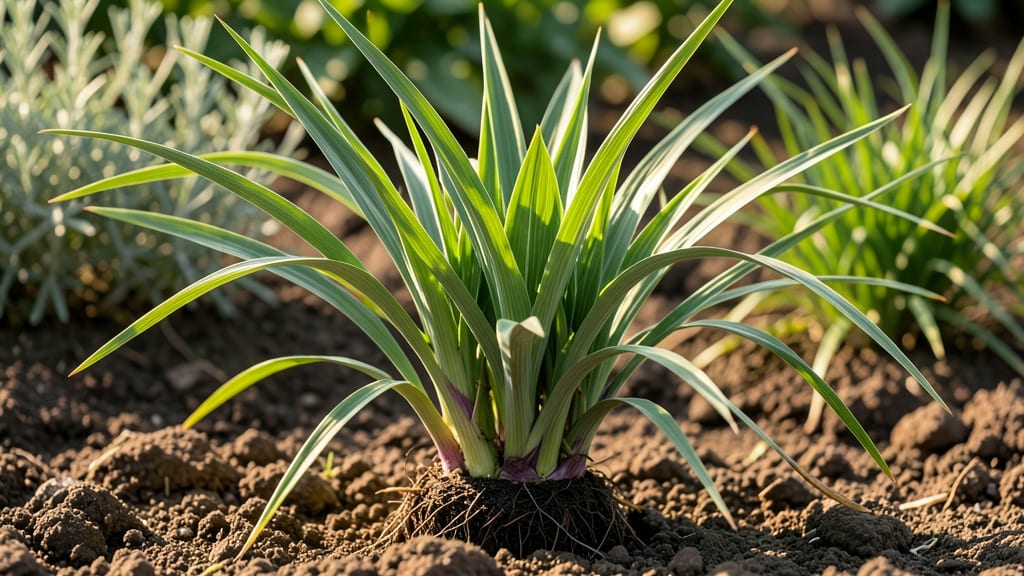
Lemongrass is not a true perennial in Zone 8—it typically survives winter only if planted in containers or heavily mulched, as cold snaps below 25°F can kill the roots. Most growers treat it as an annual or dig up rhizomes for indoor overwintering.
Lemongrass's tropical origins mean it's far more sensitive to cold than Zone 8's winter temperatures. 🌱 While it might sprout back in milder winters, the roots often succumb to sudden freezes below 25°F, which is common in this zone.
Many gardeners I've spoken with swear by overwintering cuttings indoors—simply trim the stalks, store them in water, and they'll regrow come spring. The key is understanding that Zone 8's "perennial" label doesn't apply here unless you're willing to put in extra effort.
What's interesting is how this compares to other herbs—rosemary, for example, thrives in Zone 8 winters with minimal care. 🌿 The difference comes down to root hardiness: lemongrass's fibrous roots simply can't handle prolonged cold exposure like woody perennials.
That's why container growing becomes such a game-changer—it gives you the flexibility to move plants to protected areas when temperatures drop.
💡 In This Article
- Why Lemongrass Struggles in Zone 8 Winters
- Proven Survival Strategies for Zone 8 Growers
Why lemongrass struggles in Zone 8 winters
Lemongrass (Cymbopogon citratus) originates from tropical regions where temperatures rarely drop below 50°F, making it fundamentally ill-equipped for Zone 8's winters. The plant's fibrous root system lacks the protective insulation found in hardy perennials like rosemary, which stores nutrients in woody stems to survive 10-20°F dips.
When Zone 8 temperatures plummet below 25°F, lemongrass roots begin to suffer irreversible cellular damage—a process called "freeze-thaw injury"—where ice crystals rupture cell walls, killing the plant from the ground up. 🌡️
The real vulnerability lies in the plant's cold acclimation limits. Unlike cold-hardy herbs that gradually toughen through autumn, lemongrass has no natural mechanism to harden its tissues. Studies show that even a single night below 28°F can reduce survival rates by 70% in outdoor plantings.
This explains why gardeners in Southern California or Georgia—both Zone 8 areas—often treat lemongrass as an annual despite its tropical appearance. The contrast with mint (Mentha spp.), which thrives in Zone 8 with 30-40°F tolerance, highlights how root structure determines winter hardiness.
What makes this especially tricky is Zone 8's microclimate variability. While some areas might experience mild winters with highs in the 50s°F, sudden Arctic blasts can push temperatures to 15°F within 24 hours. Lemongrass's shallow root system—typically only 12-18 inches deep—has no buffer against these rapid shifts.
Even mulching with 6-8 inches of straw or leaves only provides 2-4°F of additional protection, barely enough to offset a hard freeze. 🌿
Botanically, lemongrass's struggle stems from its classification as a monocotyledon, which generally have less cold-resistant root structures compared to dicot perennials. The plant's primary survival strategy—rapid regrowth from rhizomes in warm conditions—becomes a liability when winter sets in.
Unlike perennial herbs that enter dormancy, lemongrass remains metabolically active until killed by frost, depleting its energy reserves. This metabolic rigidity is why even established plants often fail to recover after winter, despite appearing healthy in fall.
Gardeners often overlook the rhizome depth factor. While lemongrass spreads aggressively in warm weather, its rhizomes rarely penetrate below 10 inches, leaving them exposed to ground-level cold. In contrast, hardy perennials like oregano develop root systems that extend 24+ inches deep, accessing warmer soil layers.
This shallow growth habit explains why container-grown lemongrass—where roots can be buried deeper in soil—often survives where in-ground plantings fail. The solution lies in understanding these botanical limitations rather than assuming Zone 8's "perennial" label applies universally. 🔍
What most growers don't realize is how soil temperature plays a critical role. Even when air temperatures hover around 32°F, soil at 6 inches depth can remain 10°F warmer, creating a narrow survival window.
This is why raised beds or black plastic mulch (which raises soil temps by 4-6°F) become essential tools for Zone 8 gardeners attempting to overwinter lemongrass. The key insight is that lemongrass's tropical nature isn't just about leaves—it's a systemic limitation affecting every part of the plant's biology. ✨