
Planting
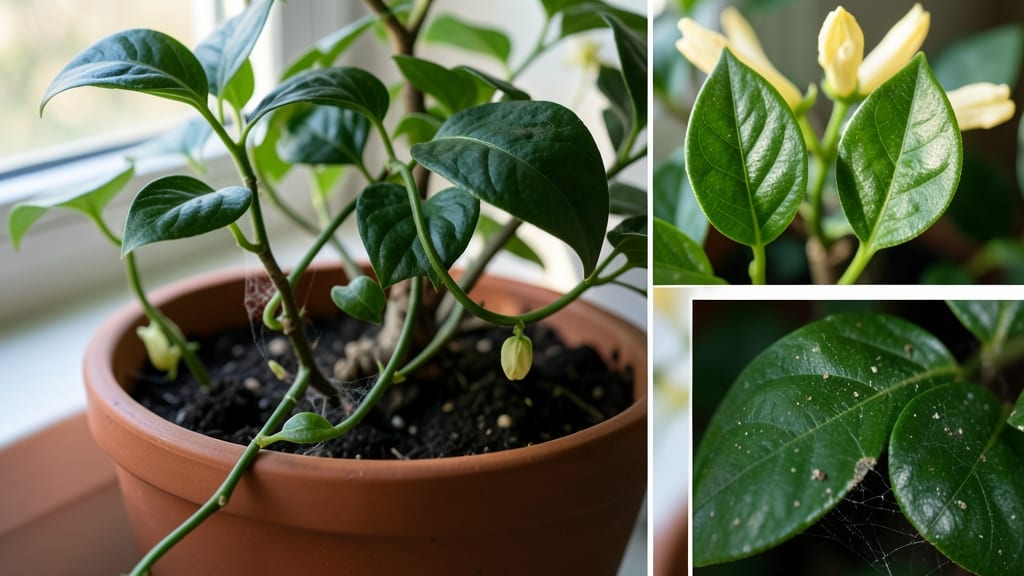
Your jasmine plant’s fragrant leaves curling? That’s your plant’s SOS signal—and the good news is, it’s almost always fixable. 🌿 I’ve nursed back more than my share of jasmine plants from this exact problem, and the key is acting fast before the damage spreads.
What starts as a simple stress reaction can turn into a full-blown decline if you wait too long, but with the right moves, you’ll have those glossy leaves back in just days.
The most common culprits are overwatering (the #1 mistake), pests like spider mites hiding on the undersides of leaves, or sudden temperature swings. I’ve seen jasmine plants recover from all three—even when the leaves looked like they’d been crumpled by a child’s fingers.
The fix isn’t complicated: check the soil moisture, inspect the leaves for tiny webs or bugs, and adjust your care routine based on what you find. Most of the time, it’s just a matter of getting back to basics.
Within a week of proper care, you’ll notice new growth pushing out straight and vibrant. The secret is consistency: keep the soil lightly moist but never soggy, protect your plant from drafts, and give it bright but indirect light.
That intoxicating jasmine scent you love comes from healthy leaves, and once you’ve got the curling under control, your plant will reward you with blooms that’ll make your whole yard smell like a tropical paradise.
If the curling persists after two weeks of adjustments, it might be time to check for root rot or nutrient deficiencies—those require a deeper dive. But in 90% of cases, this is a quick fix.
Think of it like giving your jasmine a spa day: a little attention, the right treatments, and it’ll be back to its best self in no time.
Root Causes of Curling Leaves
Understanding why your jasmine plant’s leaves are curling starts with identifying the underlying stressor. These delicate, fragrant plants are sensitive to environmental shifts, and curling often signals a cry for help. Below, we break down the most common culprits—each with a scientific twist to help you diagnose the issue accurately.
Jasmine plants thrive in consistently moist but well-draining soil. When watering habits go awry, the leaves react by curling as a protective measure.
- Underwatering (🌡️ Drought Stress) - Why it happens: When soil moisture drops below 30-40%, jasmine roots struggle to absorb water efficiently.
The plant conserves moisture by reducing leaf surface area—hence the curl. - Key signs: Dry, crispy leaf edges, wilting, and a soil moisture test (stick your finger 1-2 inches deep; if it’s bone-dry, you’re underwatering). - Science angle: Abscisic acid, a plant stress hormone, accumulates in roots under drought conditions, triggering stomatal closure (tiny leaf pores) and curling.
- Overwatering (🌧️ Root Rot Risk) - Why it happens: Jasmine hates soggy feet. Excess water displaces oxygen in the soil, suffocating roots.
As roots suffocate, they can’t transport nutrients, leading to cellular hypoxia—cells starve for oxygen, causing leaves to curl upward in a desperate gasp for air. - Key signs: Yellowing leaves, mushy stems, and soil that smells like rot or stays clumpy even after drying. - Pro tip: 💡 Use a moisture meter or the "squeeze test"—if water drips out when you press the soil, it’s too wet.
Jasmine plants (Jasminum spp.) are tropical or subtropical, meaning they hate sudden temperature swings or intense heat.
- Heat Stress (🔥 Transpiration Overload) - Why it happens: When temperatures exceed 90°F (32°C), jasmine leaves lose moisture faster than roots can replenish it.
The plant curls leaves to minimize surface area and reduce water loss—a survival tactic called transpiration reduction. - Key signs: Leaves curl downward (unlike underwatering, which curls upward) and may develop sunburn spots (brown, crispy patches). - Science angle: High heat increases ethylene production, a gas that accelerates leaf senescence (aging), leading to premature curling.
- Cold Damage (❄️ Chilling Injury) - Why it happens: Temperatures below 50°F (10°C) can disrupt cell membrane integrity in jasmine leaves.
Cold causes lipid peroxidation—cell membranes break down, leading to plasmolysis (cells shrinking and pulling away from leaf edges). - Key signs: Leaves curl tightly inward, turn dark green or purple, and may develop water-soaked spots. - Actionable fix: If your jasmine is outdoors, acclimate it gradually to cooler temps and protect it from wind (which exacerbates cold stress).
Tiny pests like spider mites, aphids, or scale insects feed on jasmine sap, disrupting nutrient flow and causing leaves to curl.
- Spider Mites (🕷️ Sap-Sucking Sabotage) - Why it happens: These microscopic pests pierce leaf cells to drink sap, injecting toxic saliva that triggers phytohormonal imbalances (too much jasmonic acid).
The plant responds by curling leaves to protect damaged tissue. - Key signs: Fine webbing on undersides of leaves, bronzing or stippling (tiny yellow dots), and leaves curling upward at the edges. - Science angle: Mite saliva contains elicitors that activate the plant’s defense genes—sometimes overactivating, leading to deformities.
- Aphids or Scale (🐜 Nutrient Theft) - Why it happens: Clusters of these pests block stomata (leaf pores) and suck out nutrients, starving the plant.
The lack of cytokinins (growth hormones) causes new leaves to emerge curled. - Key signs: Sticky residue (honeydew), black sooty mold (a fungus growing on honeydew), and puckered, distorted leaves.
Jasmine plants need balanced nutrients to thrive. Deficiencies in nitrogen, magnesium, or potassium can cause curling.
- Nitrogen Deficiency (💀 Protein Starvation)
- Key signs: Older leaves curl first, followed by yellowing between veins.
A deficiency disrupts photosynthesis, causing interveinal chlorosis (yellowing between veins) and cupping/curling as cells struggle to function. - Key signs: Leaves curl along the edges, with a mottled yellow-green pattern.
- Potassium Deficiency (💥 Cell Weakness) - Why it happens: Potassium regulates cell turgor pressure (the "plumpness" of cells).
Without it, cells lose rigidity, leading to weak, curling leaves that are prone to tearing. - Key signs: Leaf edges curl downward, and older leaves develop brown, dead spots.
Too much fertilizer—or the wrong type—can burn roots and leaves, causing curling.
- Salt Burn (🧂 Ionic Imbalance) - Why it happens: Over-fertilizing (especially with synthetic fertilizers) builds up salt in the soil, disrupting the plant’s ability to absorb water.
Roots suffer osmotic stress, and leaves curl as a response. - Key signs: Crispy, brown leaf tips, curling outward, and white crust on soil surface.
- Herbicide or Pesticide Drift (🚫 Chemical Shock) - Why it happens: Even residual herbicides in soil or overspray can damage jasmine leaves.
Chemicals like glyphosate disrupt cell division, leading to malformed, curled growth. - Key signs: Uneven curling, bleeding sap from edges, and stunted new growth.
Revive Your Jasmine’s Health
Seeing your jasmine plant’s leaves curl can be frustrating, but with the right care, you can bring it back to its lush, fragrant best. Below are targeted solutions for the most common causes—from overwatering to pests—along with easy prevention tips to keep your plant thriving.
If your jasmine’s leaves are curling due to soggy roots, act fast to prevent root rot.
🔥 Fix It Now
- 🌱 Step 1: Check the Soil – Stick your finger 1-2 inches into the soil. If it’s damp, hold off on watering.
- 👨🍳 Step 2: Repot if Needed – If the soil is waterlogged, gently remove the plant, trim any mushy roots, and repot in fresh, well-draining potting mix.
- 🥘 Step 3: Adjust Watering – Water only when the top inch of soil feels dry. Ensure the pot has drainage holes.
💡 Prevention Tips
- Use a mix of potting soil, perlite, and sand for better aeration.
- Avoid letting the plant sit in saucers of water.
- Consider a self-watering pot with a moisture meter for consistency.
Dry, crispy, or curled leaves often signal thirst—or too much sun without enough hydration.
🔥 Fix It Now
- 🌱 Step 1: Water Deeply – Soak the soil until water drains from the bottom, then let excess drain away.
- 👨🍳 Step 2: Mist the Leaves – Lightly mist foliage in the morning to boost humidity, especially in hot climates.
- 🥘 Step 3: Move to Partial Shade – If scorched, relocate to indirect sunlight (3-6 hours daily).
💡 Prevention Tips
- Water in the morning to reduce evaporation.
- Group plants together to create a microclimate with higher humidity.
- Use a humidity tray (pebbles + water) under the pot.
Curling leaves can also mean tiny invaders like spider mites, aphids, or fungal infections are at work.
🔥 Fix It Now
- 🌱 Step 1: Inspect Leaves – Look for webs, sticky residue (honeydew), or discoloration.
- 👨🍳 Step 2: Treat Infestations
- For mites/aphids: Spray with neem oil or insecticidal soap (follow label instructions).
- For fungus: Prune affected leaves and apply a fungicide (copper-based works well).
- 🥘 Step 3: Quarantine if Needed – Isolate the plant until pests are gone to prevent spread.
💡 Prevention Tips
- Wipe leaves with a damp cloth weekly to remove dust and deter pests.
- Avoid over-fertilizing, which attracts pests.
- Rotate plants regularly for even sunlight exposure (prevents stress).
Sudden cold drafts or strong winds can cause leaves to curl as a protective response.
🔥 Fix It Now
- 🌱 Step 1: Shelter the Plant – Move indoors or to a covered patio if temperatures drop below 50°F (10°C).
- 👨🍳 Step 2: Protect from Wind – Use a windbreak (like a lattice or sheer curtain) if outdoors.
- 🥘 Step 3: Acclimate Gradually – If bringing inside, do so slowly to avoid shock.
💡 Prevention Tips
- Place jasmines near walls or fences to block harsh winds.
- Avoid placing near AC vents, doors, or windows that open frequently.
- Use a heat lamp in winter if growing in a cooler climate.
With these fixes, your jasmine should bounce back in 1-2 weeks. Monitor closely and adjust care as needed—your fragrant blooms will thank you!
Frequently asked questions
Why do my jasmine leaves curl upward vs. downward?
Upward curling usually means underwatering or pest damage—your plant is trying to conserve moisture or protect itself from sap-sucking insects like spider mites. Downward curling often signals overwatering or heat stress, where leaves droop to reduce water loss. Check the soil moisture and inspect leaf undersides for tiny webs or pests.
Can I save my jasmine if half the leaves are curled?
With quick action, most jasmine plants recover fully. Start by adjusting watering (let soil dry between waterings) and check for pests. Prune severely curled leaves to redirect energy to healthy growth. Within 2-3 weeks of proper care, new leaves should emerge straight and vibrant.
Will neem oil work for jasmine leaf curling caused by pests?
Yes! Neem oil is excellent for spider mites and aphids—the #1 culprits behind curling. Mix 1 teaspoon neem oil + 1 teaspoon mild soap per quart of water, spray leaves thoroughly (both sides), and repeat every 5-7 days until pests disappear. Always test on a small area first—jasmine is sensitive to strong chemicals.
How do I know if my jasmine needs more light?
Look for leaves curling downward with yellow patches—this is classic light deprivation. Jasmine thrives in bright, indirect light (3-6 hours daily). Move it near an east-facing window or under grow lights 12 inches away. Avoid harsh afternoon sun, which causes sunburn.
Can I use coffee grounds to fix jasmine leaf curling?
Coffee grounds can help with nutrient deficiencies (like nitrogen) that cause curling, but use them carefully. Mix 1 part used grounds to 3 parts soil and apply lightly—too much can compact soil and worsen drainage. For best results, pair with a balanced fertilizer and monitor soil moisture closely.