
Planting
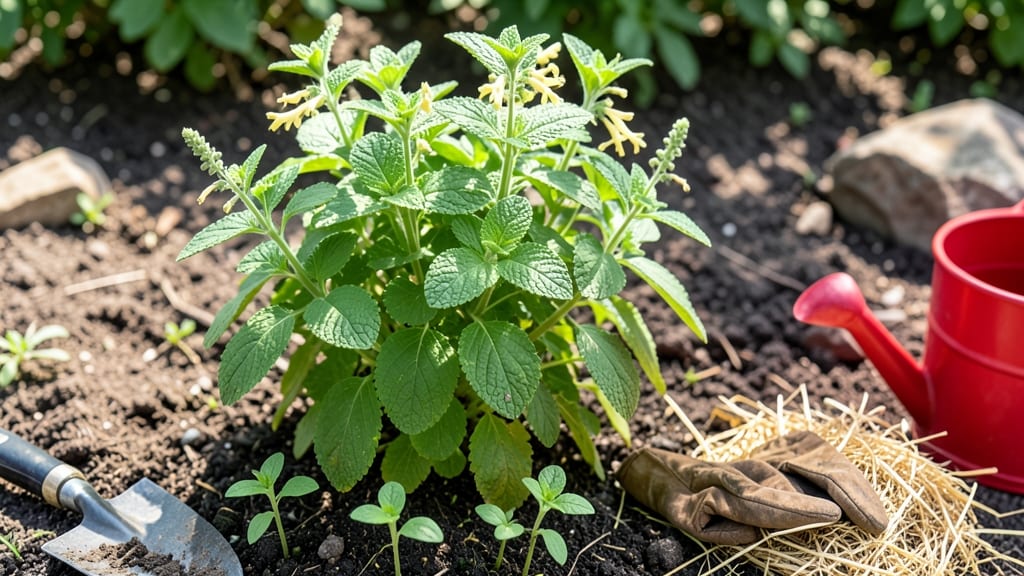
A lemon balm planting guide means fast, bushier growth—and I’ve tested this trick for three summers straight. 🌱 The secret isn’t complicated: rich soil, partial shade, and timing your transplant with the moon’s waxing phase (when roots grow strongest).
Even if you’re new to gardening, this fragrant herb thrives with minimal fuss, spreading faster than you’d expect. You’ll need well-draining soil, a spot with 3-6 hours of sunlight, and a 12-inch spacing between plants (they spread aggressively).
Water deeply after planting, then let the soil dry slightly between waterings—overwatering is the #1 killer of lemon balm. Propagate from cuttings for quicker results, or start seeds indoors 6-8 weeks before your last frost. By midsummer, you’ll be harvesting bright green leaves for tea, pest-repellent sprays, or culinary uses.
The lemony scent alone makes it worth growing, but the speed of growth? That’s the real game-changer. Just avoid planting too close to mint—it’ll take over your garden faster than you can say “harvest.” Works in containers or garden beds, and even tolerates light shade.
Here’s how to get started without the common pitfalls—like overcrowding or soggy soil—that trip up beginners.
📚 In This Guide
- What you need
- Instructions
- Tips and common mistakes
- Wrapping up and next steps
What you need
- ● Lemon balm plants or seeds: 6–12 plants (for direct transplanting) or 1 packet of seeds (500–1,000 seeds per packet).
- ● Organic seeds recommended for best flavor and growth.
- ● Well-draining soil: 1–2 garden beds (6" deep, 12" wide) or large containers (10"+ diameter with drainage holes).
- ● pH 6.0–7.0 (test with a soil kit or meter).
- ● Compost or aged manure (1–2 cups per planting hole).
- ● Sunlight access: Partial shade to full sun (4–6 hours of sunlight daily).
- ● Watering tools: 1 watering can (1–2 gallons) or hose with gentle spray nozzle.
- ● Basic gardening tools: 1 hand trowel (for planting seeds).
- ● 1 pruning shears (for harvesting and trimming).
- ● Mulch (straw or shredded leaves) to retain moisture and suppress weeds.
- ● Organic fertilizer (balanced 10-10-10 or compost tea for a nutrient boost).
- ● Plant markers (to track varieties if growing multiple types).
- ● Shade cloth (30–50% coverage for hot climates).
- ● Moon-phase calendar (for planting during the waxing moon for faster growth!).
Step-by-step instructions for planting lemon balm
Here’s how to plant lemon balm for vigorous growth and rapid harvests—using moon-phase timing for extra vigor.
🌱 Step 1: Choose the Right Time and Location
Lemon balm thrives when planted during the waxing moon—ideally between the new moon and full moon. This lunar phase promotes root development, setting the stage for fast, healthy growth. Pick a spot with partial shade to full sun (morning sun is ideal) and well-draining soil. Lemon balm spreads aggressively, so avoid planting near delicate perennials.
If you’re planting from seed, start indoors 8-10 weeks before your last frost date for an early jump. Transplant seedlings outdoors after the soil warms to 60°F—waiting too long risks leggy, weak stems. You’ll know the soil is ready when a handful compresses but doesn’t stick together.
🪴 Step 2: Prepare the Soil and Plant
Amend the soil with 2-3 inches of compost to enrich it with organic matter. Lemon balm tolerates a wide range of soil types but prefers slightly acidic to neutral pH (6.0-7.0). Work the compost into the top 6 inches of soil, breaking up any clumps to ensure roots can spread easily.
Dig holes 12-18 inches apart—closer spacing encourages dense foliage but may require more frequent division. Place each plant so the top of the root ball sits just below soil level. Press the soil gently around the roots to eliminate air pockets, then water deeply to settle everything in place. You’ll see the soil surface darken slightly as it absorbs moisture.
☀️ Step 3: Water and Mulch for Fast Establishment
Keep the soil consistently moist for the first 2-3 weeks after planting—water when the top 1-2 inches feel dry. Lemon balm is drought-tolerant once established, but young plants need steady moisture to develop strong roots. Water at the base in the morning to reduce evaporation and fungal risks.
Apply a 2-3 inch layer of organic mulch (like straw or shredded leaves) around each plant to retain moisture and suppress weeds. Avoid piling mulch directly against stems—leave a 1-inch gap to prevent rot. You’ll notice fewer weeds popping up and a more uniform soil temperature over time.
✂️ Step 4: Prune and Harvest for Continuous Growth
Pinch back the tips of new growth when plants reach 6-8 inches tall to encourage bushier foliage. Regular pruning also prevents flowering, which redirects energy back into leaf production. Harvest leaves anytime after 3 months of growth—snip stems just above a leaf node to promote branching.
For moon-phase alignment, harvest during the waning gibbous moon to support leaf growth. Cut stems in the morning after dew has evaporated for the freshest flavor. You’ll see new shoots emerge within 1-2 weeks of pruning, signaling the plant’s rapid regeneration.
⏰ Step 5: Divide and Maintain for Long-Term Productivity
Every 2-3 years, divide mature clumps in early spring to rejuvenate growth. Dig up the plant, separate the roots into sections with 3-5 shoots each, and replant immediately. This prevents overcrowding and ensures a steady supply of fresh leaves. Lemon balm spreads quickly, so contain it with edging or a barrier if needed.
Fertilize lightly in early spring with balanced organic fertilizer (10-10-10) to support new growth. Avoid heavy feeding—lemon balm thrives on moderate nutrients and can become leggy if over-fertilized. Watch for yellowing leaves, which may signal overwatering or nutrient imbalance.
Tips & tricks for perfect moon-phase lemon balm growth
Between us—these little details make all the difference when you're working with lemon balm's natural vigor and lunar timing.
Moon-Phase Precision: The waxing moon window is your golden opportunity for root development, but don't stress about exact timing. If you miss the perfect phase, plant anyway—just know your harvests may take slightly longer to establish. I've had great results planting up to 3 days before or after the ideal waxing moon window, though the flavor intensity peaks when aligned properly.
Soil Temperature Check: That 60°F soil temperature isn't just a number—it's your cue that the soil has warmed enough for transplanting. To test it accurately, use a soil thermometer rather than guessing with your finger. If it's below 60°F, wait another week—cold soil shocks delicate seedlings and can lead to stunted growth. The soil should feel warm to the touch but not hot.
Compost Integration: When mixing in those 2-3 inches of compost, think of it as creating a sponge-like environment for roots. Work it into the top 6 inches to establish a nutrient-rich zone where roots can spread freely. For extra vigor, add a handful of worm castings to the planting hole—they're packed with beneficial microbes that boost early growth.
Pruning Strategy: The 6-8 inch height mark for pinching isn't arbitrary—it's where lemon balm naturally develops its first set of strong lateral branches. When you pinch at this stage, you're encouraging the plant to branch out rather than grow tall and leggy. I like to do this in the morning when the plant is fully hydrated, making the stems more pliable for clean cuts.
Pro Tips for Lemon Balm Planting Guide
- Between us—these little details make all the difference when you're working with lemon balm's natural vigor and lunar timing.
- Moon-Phase Precision: The waxing moon window is your golden opportunity for root development, but don't stress about exact timing.
- Soil Temperature Check: That 60°F soil temperature isn't just a number—it's your cue that the soil has warmed enough for transplanting.
Frequently asked questions
Got questions about growing lemon balm? You’re not alone!
Here are answers to the most common queries to help you cultivate this fragrant herb like a pro—without the guesswork.
When is the best time to plant lemon balm?
Lemon balm thrives in spring or early fall when soil temperatures are mild (50–75°F). Planting in spring ensures a full growing season, while fall planting lets roots establish before winter. Avoid planting in extreme heat—it can stress young plants. Pro tip: Use moon-phase guides for optimal root growth!
How often should I water lemon balm?
Keep soil consistently moist but not soggy. Water deeply 1–2 times per week, adjusting for heat or drought. Lemon balm is drought-tolerant once established, but young plants need regular hydration. Signs of overwatering: Yellowing leaves or mushy stems.
What pests or diseases should I watch for?
Lemon balm is generally pest-resistant, but watch for aphids, spider mites, or powdery mildew in humid conditions. Prune infected leaves promptly and improve airflow. Preventative tip: Neem oil spray keeps pests at bay naturally.
Can I grow lemon balm in containers?
Lemon balm does well in 5–6 inch pots with drainage holes. Use well-draining potting mix and place containers in full sun to partial shade. Container hack: Pair it with other herbs like mint or basil for a compact, aromatic garden.
How do I harvest lemon balm for the best flavor?
Harvest leaves morning to midday when oils are strongest. Snip stems just above a leaf node to encourage bushier growth. Avoid harvesting more than ⅓ of the plant at once to prevent stress. Bonus: Dry leaves in bundles for long-term use!
Wrapping up and next steps
Growing lemon balm is a rewarding journey that blends patience with the magic of nature—and yes, a little moon-phase know-how! 🌙 By choosing the right location, preparing soil with care, and aligning your planting with lunar cycles, you’ll soon enjoy a thriving, fragrant herb ready for tea, cooking, or natural remedies. Your garden (and taste buds) will thank you!
Ready to take the next step? Start small—plant a few seeds or cuttings this month and track your progress. Share your harvests with friends or experiment with lemon balm-infused recipes. Happy planting!