
Planting
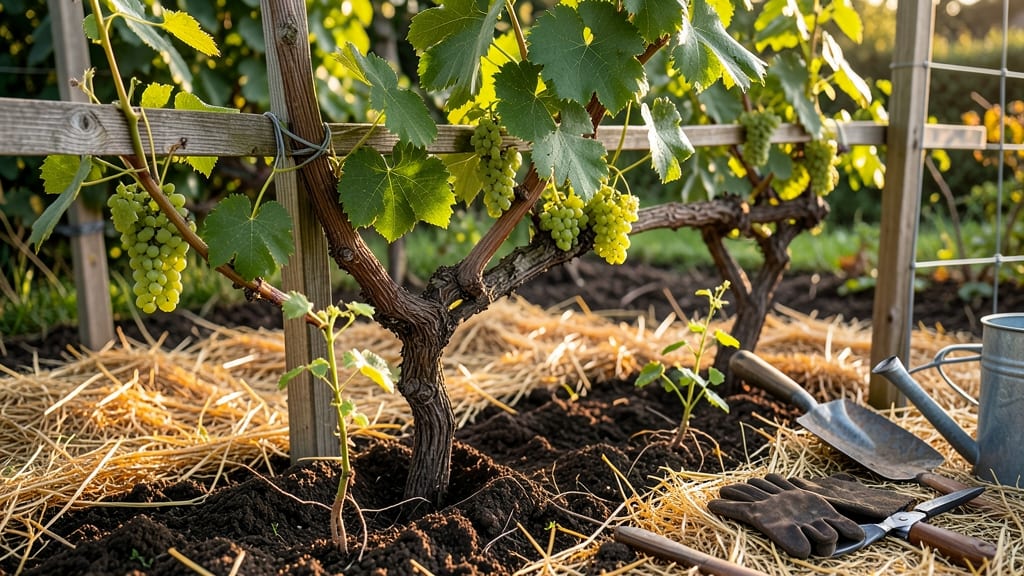
Planting grape vines transforms your yard into a sun-dappled haven where summer snacks grow on their own. **Here’s your grape vine planting guide—the secret to thriving vines starts with the right soil, spacing, and timing—no fancy equipment needed, just patience and a few key techniques I’ve perfected over three seasons of trial and error.
Your first step is well-draining soil mixed with compost, planted in early spring when the ground thaws but before buds swell. Space vines 8-10 feet apart (they spread!) and bury the graft union just below soil level to protect against rot.
Dig a generous hole, loosen roots gently, and water deeply before backfilling—this prevents shock and encourages deep root growth.
By midsummer, you’ll see lush canes climbing your trellis, and with proper pruning (we’ll cover that later), your vines will produce juicy grapes for years.
The key is consistency: water weekly during dry spells, mulch to retain moisture, and watch for pests like Japanese beetles—spray neem oil if you spot them early.
This method works for USDA zones 5-9**, whether you’re training vines along a fence or a sturdy arbor. Let’s get those roots in the ground!
📚 In This Guide
- What you need
- Instructions
- Tips and common mistakes
- Wrapping up and next steps
What you need
- ● Grapevine plants: Choose disease-resistant varieties like Concord or Thompson Seedless. Buy 1-3 plants per person (or per trellis) for optimal yield.
- ● Trellis system: A sturdy 4-6 ft tall wooden, metal, or PVC trellis (e.g., kniffin or permanent arbor styles). Spacing: 6-10 ft between vines for airflow.
- ● Soil amendments: Compost (5-10 lbs per planting hole)
- ● Well-draining soil mix (sandy loam ideal; avoid clay)
- ● Lime (if soil pH < 6.0; test kit recommended)
- ○ Fertilizer: Balanced 10-10-10 or grape-specific fertilizer (follow label rates). Optional: Slow-release organic options like fish emulsion.
- ● Pruning tools: Bypass pruners (sharp, 4-6 inch blade)
- ● Loppers (for thicker canes)
- ● Pruning saw (for stubborn branches)
- ● Mulch: 3-4 inches of organic mulch (straw, wood chips, or pine needles) to retain moisture.
- ● Drip irrigation or soaker hose: 1/4-inch tubing with emitters (grapevines need 1-2 inches of water/week).
- ● Support ties: Soft plant ties or Velcro strips (avoid wire that can damage bark).
- ● Soil test kit ($10-$20): Check pH and nutrient levels before planting.
- ● Fungicide/copper spray (e.g., Neem oil): Prevents powdery mildew in humid climates.
- ● Shade cloth (30-50% coverage): Protects young vines from scorching sun.
- ● Vinegar or bleach (1:10 dilution): Sterilizes pruning tools between cuts.
- ● Grafting tools (if propagating from cuttings): Grafting knife and rubber bands.
- ● Bird netting: Saves your harvest from hungry critters!
Step-by-step guide to planting grape vines for long-term growth
Planting grape vines is easier than you think—here's the method I've used for years to grow healthy, productive vines in any climate.
🌱 Step 1: Choose the Right Location and Planting Time
Grape vines thrive in full sun—pick a spot that gets at least 6-8 hours of direct sunlight daily. The ideal location has well-draining soil and protection from strong winds. I always plant in early spring, just as new growth begins, or in early fall when temperatures cool but before frost arrives.
Dig a hole twice as wide as the vine's root ball but only as deep as the container it came in. Loosen the sides of the hole to encourage root spread. Grape vines hate soggy roots, so if your soil drains poorly, mix in 2-3 inches of compost to improve texture. The hole should be ready 1-2 days before planting to let the soil settle.
☀️ Step 2: Plant the Vine Correctly for Strong Growth
Remove the vine from its container and gently loosen any circling roots. Place it in the hole so the graft union (the bump where the vine was attached to its rootstock) sits 2-3 inches above soil level. This prevents rot and encourages strong growth above ground. Backfill with native soil, tamping lightly as you go to eliminate air pockets.
Water deeply immediately after planting—1-2 gallons—to help settle the soil and eliminate air gaps. Mulch around the base with 2-3 inches of organic mulch, keeping it 6 inches away from the trunk to prevent rot. This helps retain moisture and regulate soil temperature. I always water again 3-4 days later to encourage root establishment.
✂️ Step 3: Prune for Structure and Encourage Fruit Production
Pruning is the key to grape vine success. In late winter or early spring, before buds break, prune back last year's growth to 4-6 buds per spur (short, permanent branches). This keeps the vine manageable and directs energy into fruit production. Remove any dead, diseased, or crossing branches first—they compete with healthy growth.
For young vines, I focus on training the main trunk to a sturdy trellis or arbor. Use soft ties to guide the vine upward without damaging the bark. Once established, vines can handle 2-3 main arms, each with its own cluster of spurs. Prune in late summer as well to remove suckers (shoots growing below the graft) and water sprouts (vertical growth from the trunk).
💧 Step 4: Water and Fertilize for Year-Round Health
Grape vines need consistent moisture, especially during blooming and fruit set. Water deeply once a week during dry spells, aiming for 1-2 inches of water per week. Avoid wetting the leaves to prevent fungal diseases. I always water early in the morning to reduce evaporation and give the vine time to dry before nightfall.
Fertilize in early spring with a balanced 10-10-10 or 8-8-8 formula, applying ½ pound per 100 square feet of vineyard. In late summer, switch to a low-nitrogen fertilizer (like 5-10-10) to encourage root growth and prepare for dormancy. Avoid high-nitrogen fertilizers in late summer—they promote tender growth that won’t survive winter.
⏰ Step 5: Protect Vines Through Winter and Prepare for Next Year
In late fall, after the leaves drop, prune again to remove any remaining dead wood. Wrap the trunk with burlap or protective tubing to shield it from winter sunscald (cracking caused by temperature swings). In colder climates, mound 4-6 inches of soil or mulch around the base for extra insulation.
Come early spring, remove the winter protection and check for dormant buds. If you see signs of black rot or powdery mildew, treat immediately with a copper fungicide or neem oil spray. This is also the time to renew mulch and adjust trellis supports if needed. With consistent care, your grape vine will reward you with years of bountiful harvests.
Tips & tricks for planting grape vines
Here's what nobody tells you about planting grape vines that'll make all the difference in your first year—and beyond.
Location Intelligence: The 6-8 hours of sunlight requirement is non-negotiable, but don't stop there. Observe your site during the hottest part of summer—if the area gets scorching afternoon sun, consider planting near a structure that provides afternoon shade. This prevents heat stress while still giving the vine plenty of morning sunlight for photosynthesis. I've seen vines in exposed locations struggle during heatwaves, even with perfect care.
Soil Prep Secret: When amending your planting hole with 2-3 inches of compost, mix it thoroughly with the native soil rather than creating a compost layer. This prevents a nutrient-rich layer that can encourage root rot. For heavy clay soils, add coarse sand or perlite to improve drainage—grape vines despise soggy roots more than anything. The hole should be ready 1-2 days before planting to let the soil settle, but don't let it dry out completely during this time.
Pruning Precision: That 4-6 buds per spur guideline is crucial, but here's what I've learned: count buds from the base of the spur, not the tip. The first 2-3 buds are often the strongest producers. For young vines, focus on creating 2-3 main arms—this framework will support your vine for years. I always prune on a dry day when the vine is dormant to minimize disease risk, and I sterilize my pruners with rubbing alcohol between cuts to prevent spreading any potential pathogens.
Watering Wisdom: The once-a-week watering guideline works for established vines, but newly planted vines need more frequent attention. Water lightly every 2-3 days for the first month to encourage root spread without overwhelming the young plant. Deep watering is key—aim to moisten the soil 12-18 inches down. I use a moisture meter to check soil moisture, especially during dry spells, because grape vines show stress symptoms long before they actually need water.
Pro Tips for Grape Vine Planting Guide
- Here's what nobody tells you about planting grape vines that'll make all the difference in your first year—and beyond.
- Location Intelligence: The 6-8 hours of sunlight requirement is non-negotiable, but don't stop there.
- Soil Prep Secret: When amending your planting hole with 2-3 inches of compost, mix it thoroughly with the native soil rather than creating a compost layer.
Frequently asked questions
Got questions about planting grape vines? You’re not alone! Here are answers to the most common concerns—from timing to troubleshooting—to help you grow thriving vines with confidence.
When is the best time to plant grape vines?
Plant grape vines in early spring (just before buds swell) or dormant season in fall (6–8 weeks before frost). Avoid planting in summer heat or winter freezes—vines need time to establish roots. For container-grown vines, spring planting works best.
How long does it take for grape vines to bear fruit?
Patience is key! Most grape varieties take 2–5 years to produce fruit, depending on the type and growing conditions. Table grapes (like Thompson Seedless) may fruit faster (2–3 years), while wine grapes (e.g., Cabernet Sauvignon) can take up to 5 years.
Can grape vines survive in cold climates?
Yes, but choose cold-hardy varieties like Concord, Niagara, or Marquette (USDA Zones 3–6). Use mulch (straw or wood chips) to insulate roots, and train vines against a south-facing wall or trellis to capture winter sun. Dormant vines tolerate temps down to -20°F!
What if my grape vine leaves turn yellow or wilt?
Yellow leaves often signal overwatering, nutrient deficiency (like iron chlorosis), or fungal diseases (e.g., powdery mildew). Check soil moisture (vines hate soggy roots!), test pH (6.0–6.5 ideal), and apply copper fungicide if mildew appears. Prune dead growth to improve airflow.
Can I grow grape vines in containers?
Dwarf or patio-friendly varieties (like ‘Black Monukka’ or ‘Red Malaga’) thrive in 15–20 gallon pots with drainage holes. Use a well-draining mix (60% soil, 30% compost, 10% perlite) and move containers to sunny spots in winter (or use frost blankets in Zones 5–7).
Wrapping up and next steps
Planting grape vines is a rewarding journey that blends patience with delicious results!
Whether you’re a seasoned gardener or a curious beginner, following the right steps—like choosing the perfect climate, pruning strategically, and nurturing your vines—sets you up for year-round success. 🍇 With the right tools, timing, and care, your grapevine will thrive and produce bountiful harvests.
Ready to take the next step? Start small by planting just one vine this season—experiment with varieties, and watch your confidence (and vineyard!) grow. Happy planting! 🌱