
Planting
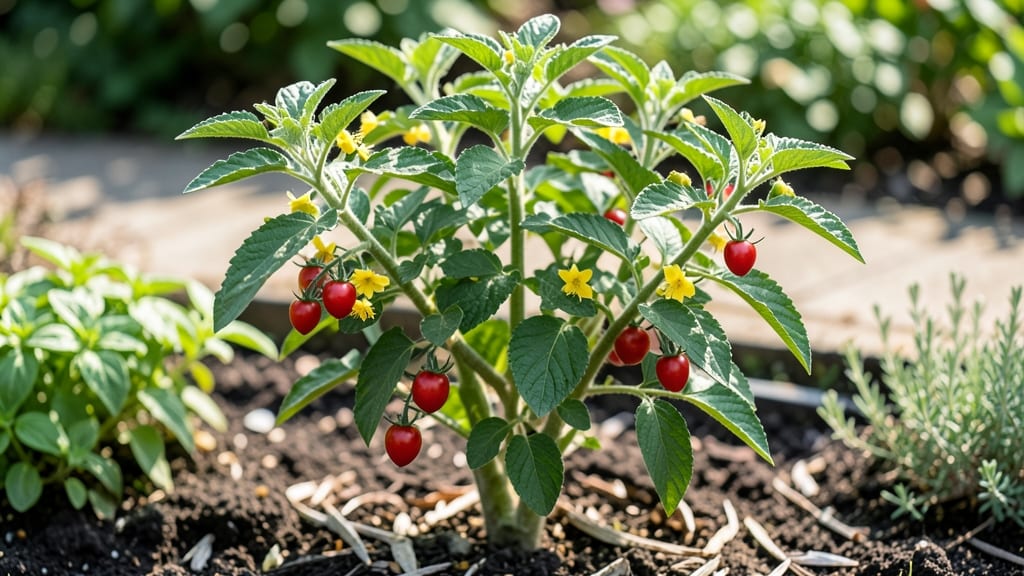
The litchi tomato plant grows faster than you’d expect—ready to harvest in just 50 days from transplant. 🌱 I’ve grown them for three summers now, and they’ve become my go-to for quick, sweet tomatoes that outpace even the fastest heirlooms.
The secret lies in their compact growth habit and relentless productivity, even in containers. You’ll need well-draining soil, a sunny spot with at least 6-8 hours of light daily, and a sturdy cage or trellis to support their vines.
Unlike beefsteak varieties, these stay manageable—perfect for small spaces or balconies. Water consistently but avoid soggy soil, and feed with a balanced fertilizer every 2-3 weeks once flowers appear. The payoff? Juicy, cherry-sized tomatoes with a flavor that rivals vine-ripened heirlooms, but without the wait.
Prune suckers regularly to boost airflow and fruit production, and harvest frequently to encourage more blooms. By mid-summer, you’ll be snipping baskets of tomatoes weekly. They’re tougher than they look too—resistant to common diseases like blight, though aphids can still be a nuisance.
A strong spray of water usually clears them up before they cause damage. Once you try Litchis, you’ll wonder why you ever grew anything else!
📚 In This Guide
- What you need
- Instructions
- Tips and common mistakes
- Wrapping up and next steps
What you need
- ● Litchi tomato seeds or seedlings: Choose disease-resistant varieties like 'Litchi' or 'Litchi Sweet.' Buy 5–10 seeds (or 3–5 seedlings) for a small harvest.
- ● Containers or garden bed: Containers: 5–10 gallon pots (1 per plant) with drainage holes.
- ● Garden bed: Well-draining soil, 6–12 inches deep, in full sun (6+ hours/day).
- ● High-quality potting mix: 1–2 bags (sterile, well-draining blend with compost or coconut coir).
- ● Fertilizer: Balanced organic fertilizer (e.g., 5-5-5 or 10-10-10) for planting.
- ● Tomato-specific fertilizer (high in potassium/phosphorus) for flowering/fruiting (e.g., 7-9-5).
- ● Watering can or hose with gentle nozzle: Avoid splashing soil on leaves to prevent disease.
- ● Support system: Cages (5–6 ft tall) or stakes (6 ft long) for indeterminate varieties.
- ○ Twine or soft plant ties (optional, for securing vines).
- ● Pruning shears or scissors: Sharp, clean tools for trimming suckers and dead leaves.
- ● Mulch: Straw or shredded leaves to retain moisture and suppress weeds.
- ● Drip irrigation kit: Automates watering and saves time.
- ● Mycorrhizal fungi: Boosts root health and nutrient absorption.
- ● Row covers: Protects seedlings from pests or frost (if growing in cooler climates).
- ● Grow lights: Extends growing season indoors or in low-light areas.
- ● pH testing kit: Ensures soil pH is 6.0–6.8 (ideal for tomatoes).
Step-by-Step guide to growing Litchi tomato plants
Here's how to cultivate this fast-growing variety for continuous harvests—no matter your growing zone.
🌱 Step 1: Start Seeds Indoors for Early Growth
Litchi tomatoes thrive when started indoors 6-8 weeks before your last frost date. Fill 2-3 inch deep seedling trays with sterile seed-starting mix (never garden soil—it’s too dense). Moisten the mix until it feels like a damp sponge, then press it down gently to remove air pockets. I like to tap the tray on the counter once to settle everything evenly.
Plant 2-3 seeds per cell at a depth of ¼ inch—any deeper and they’ll struggle to break through. Cover lightly with additional mix, then mist the surface until evenly damp. Place the tray in a warm spot (75-85°F)—a seedling heat mat speeds germination dramatically. Expect sprouts in 5-10 days, but don’t rush watering once they appear. Trapped moisture invites damping-off, which collapses seedlings overnight.
☀️ Step 2: Provide Optimal Light for Strong Seedlings
The moment those first leaves appear, move seedlings under 14-16 hours of bright light daily. A south-facing window won’t cut it—you’ll see leggy, weak stems reaching for sunlight. Instead, use a full-spectrum LED grow light positioned 2-4 inches above the plants. Raise it as they grow to maintain that gap.
Strong Litchi seedlings have thick stems and deep green leaves spaced closely together. If stems stretch thin and pale, your light’s too far away. Watch for first true leaves (the second set after the initial cotyledons)—this is your cue to start fertilizing lightly with a balanced liquid fertilizer (half-strength) every 2 weeks. Over-fertilizing now burns tender roots.
🪴 Step 3: Transplant Outdoors After Hardening Off
Two weeks before your last frost, begin hardening off seedlings by placing them outside in a sheltered, shaded spot for 1-2 hours the first day. Gradually increase outdoor time by 1 hour daily over 10-14 days, slowly introducing more sun and wind. This toughens stems and prevents transplant shock.
Choose a sunny spot with 6+ hours of direct light and well-draining soil. Litchi tomatoes hate soggy roots, so amend heavy soil with compost to improve drainage. Plant seedlings 18-24 inches apart in rows 3 feet apart—crowding reduces airflow and invites disease. Water deeply at the base after transplanting to settle roots.
💧 Step 4: Water and Fertilize for Fast Growth
Litchi tomatoes grow quickly, so water deeply 1-2 times weekly—until top 2 inches of soil feel dry. Water at the base in the morning to prevent fungal diseases. Avoid wetting leaves, which can spread blight. A 5-gallon bucket with a soaker hose makes this easy—just attach it to your watering system and let it run for 20-30 minutes.
Feed plants every 2 weeks with a tomato-specific fertilizer (high in phosphorus for flowering). I switch to fish emulsion once fruit sets to boost sweetness. Prune suckers (the shoots growing between the stem and branches) to direct energy into fruit production. You’ll see first flowers in 4-6 weeks, and fruit will follow shortly after.
✂️ Step 5: Prune and Harvest for Continuous Yield
Prune aggressively to encourage bushier growth and larger fruit. Remove lower leaves up to 12 inches from the ground to improve airflow and prevent soil-borne diseases. Pinch back the top growth once the plant reaches your trellis (usually 6-8 feet tall) to redirect energy into fruit. I tie stems to the trellis with soft plant ties every 12 inches to prevent snapping in wind.
Harvest Litchi tomatoes when fully red and slightly soft—they won’t ripen further off the vine. Pick in the morning for best flavor. With proper care, you’ll get continuous harvests for 6-8 weeks. Save seeds from your best fruit by scooping them out, rinsing, and drying on a paper towel for next season’s plants.
Tips & tricks for growing Litchi tomato plants
Here's what I learned after years of growing these prolific producers—tricks that'll help you avoid common pitfalls and maximize your harvest.
Seed Starting Secret: For faster germination in Step 1, try soaking your seeds in warm water for 4-6 hours before planting. The warm water jumpstarts the seeds, and I've seen sprouts appear in just 3-5 days instead of the usual 5-10 days. Just be sure to use room-temperature water—not boiling—and plant immediately after soaking to prevent drying. The 75-85°F warm spot you're already using will work even better with pre-soaked seeds.
Lighting Hack: In Step 2, if you notice seedlings stretching toward the light (a sign of etiolation), it's time to adjust your setup. Move the grow light closer to just 1-2 inches above the tallest seedlings for 24 hours to help them recover. This creates a more compact growth habit. I also recommend rotating the tray quarter-turn daily to prevent uneven growth toward the light source—your seedlings will grow straighter and stronger.
Transplanting Timing: When hardening off in Step 3, pay close attention to nighttime temperatures. If nights dip below 50°F, extend the hardening process by 2-3 days and use shade cloth during the longest part of the day. Litchi tomatoes are sensitive to cold, and sudden temperature drops can shock the plants. I've found that gradually introducing them to cooler nighttime temps (by 5°F increments daily) prevents transplant shock completely.
Pruning Strategy: For Step 5, here's my pruning schedule that guarantees continuous harvests: Remove suckers (those shoots between stem and branches) when they're 2-3 inches long—never let them grow larger or they'll compete with fruit production. After the first harvest wave, switch to a "two-leaf pruning" method: Always leave two leaves above each fruit cluster before pinching back growth. This maintains airflow while maximizing fruit set.
Pro Tips for Litchi Tomato Plant
- Here's what I learned after years of growing these prolific producers—tricks that'll help you avoid common pitfalls a...
- Seed Starting Secret: For faster germination in Step 1, try soaking your seeds in warm water for 4-6 hours before pla...
- Lighting Hack: In Step 2, if you notice seedlings stretching toward the light (a sign of etiolation), it's time to ad...
Frequently asked questions
Got questions about growing litchi tomatoes? You’re not alone!
Here are some of the most common queries from gardeners—plus quick, practical answers to help you cultivate this fast-growing, flavor-packed variety like a pro.
How long does it take for litchi tomato plants to bear fruit?
Litchi tomatoes are fast—expect the first fruits in 45–60 days from transplanting, depending on your climate and growing conditions. With proper care (sunlight, water, and nutrients), you can enjoy a near-continuous harvest for months! Pro tip: Prune suckers early to redirect energy to fruit production.
Can I grow litchi tomatoes indoors or in containers?
Litchi tomatoes thrive in 5-gallon containers or larger with well-draining soil. Place them in a sunny spot (south-facing window or grow lights) and ensure pots have drainage holes. For indoor success, use a balanced fertilizer every 2–3 weeks and pollinate by gently shaking plants or using a small brush.
What’s the best way to prune litchi tomato plants?
Prune to boost airflow and fruit production: Remove suckers (shoots between the stem and branches) and lower leaves. Leave 2–3 main stems and prune back about one-third of the plant when it hits 3–4 feet tall. Avoid over-pruning—too little foliage reduces photosynthesis and fruit yield.
Why are my litchi tomatoes cracking or splitting?
Cracking usually happens due to inconsistent watering—soaking dry soil, then drying it out again. Keep the soil evenly moist (not soggy) and mulch to retain humidity. For extra insurance, water deeply in the morning and avoid heavy irrigation late in the day.
Are litchi tomatoes hybrid or heirloom?
Litchi tomatoes are hybrid varieties, bred for disease resistance, fast growth, and sweet flavor. While they won’t produce seeds true to type, they’re easy to grow and perfect for beginners. For seed-saving, consider heirloom alternatives like ‘Black Krim’ or ‘Cherokee Purple’—but litchi’s speed and productivity make them a favorite!
Wrapping up and next steps
Growing litchi tomato plants is a rewarding journey that brings vibrant flavors and year-round harvests to your garden! 🌱 These fast-growing varieties thrive with the right care—whether you’re a beginner or a seasoned gardener.
With their disease resistance and compact size, they’re perfect for containers, small spaces, or even your kitchen windowsill.
Now that you’re armed with tips and answers to common questions, take the next step—plant your seeds or seedlings today! Watch them flourish, and soon you’ll be enjoying sweet, juicy tomatoes that taste like sunshine. Happy gardening! 🌿